Tokyo Streets: Asakusa & Sumida River Walk
Asakusa is where many begin their exploration of Tokyo, and for good reason. It's the city's oldest surviving district, one of the few corners that carries a sense of what Edo — Tokyo's former self — might have felt like before the bombings of the Second World War erased most of it. The northeast sits low and quiet along the banks of the Sumida River, calm and unhurried in a way the rest of the city rarely is.
Its center is the Senso-ji Buddhist Temple, iconic temple in the city, dedicated to Bodhisattva Kannon. The legend behind it is simple: in the seventh century, two fishermen brothers pulled a statue of Kannon from the river, and the head of their village, recognizing it as sacred, converted his home into a shrine to house it. The temple that stands today was rebuilt after the war, but the story behind it remained.

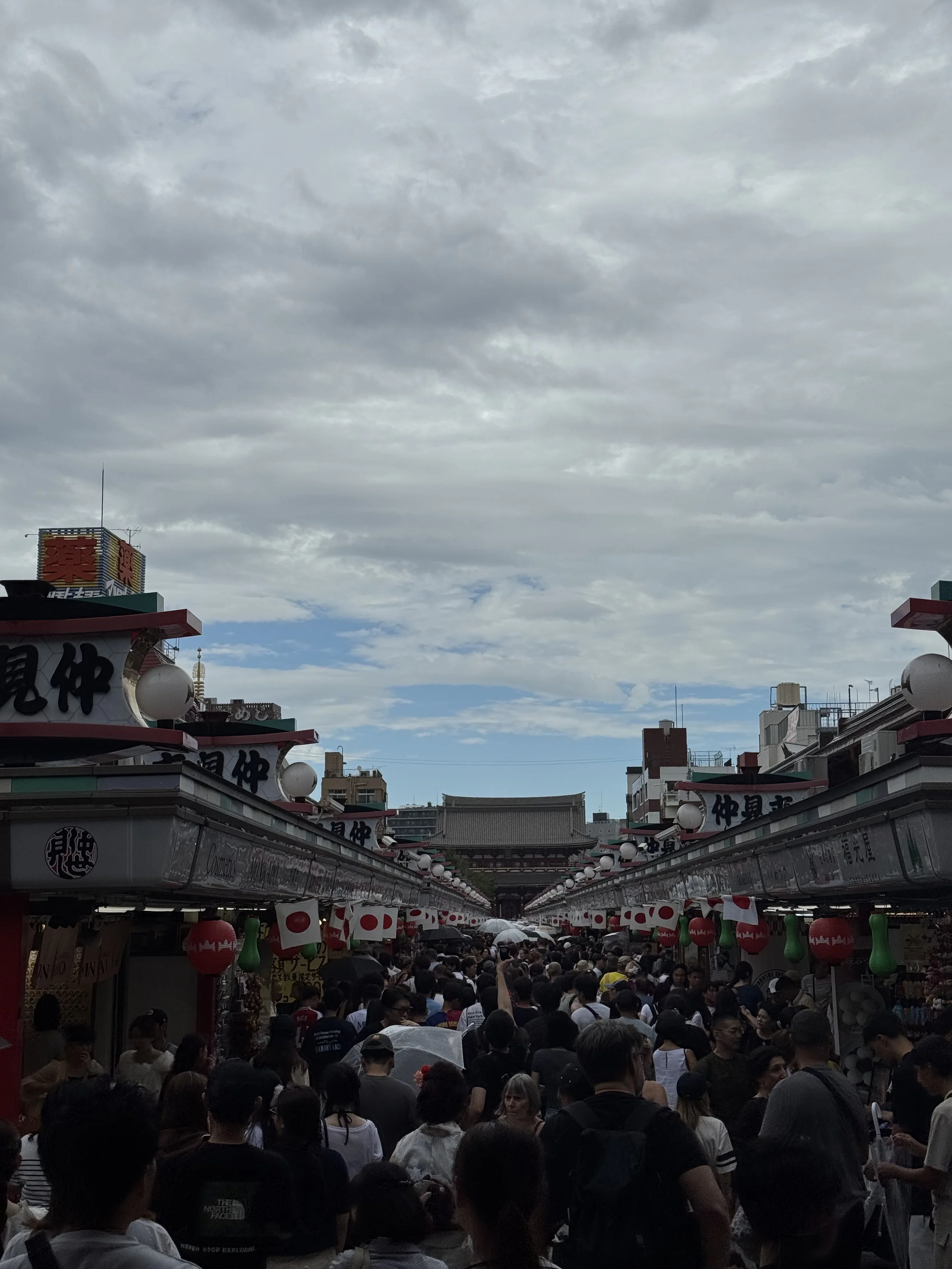
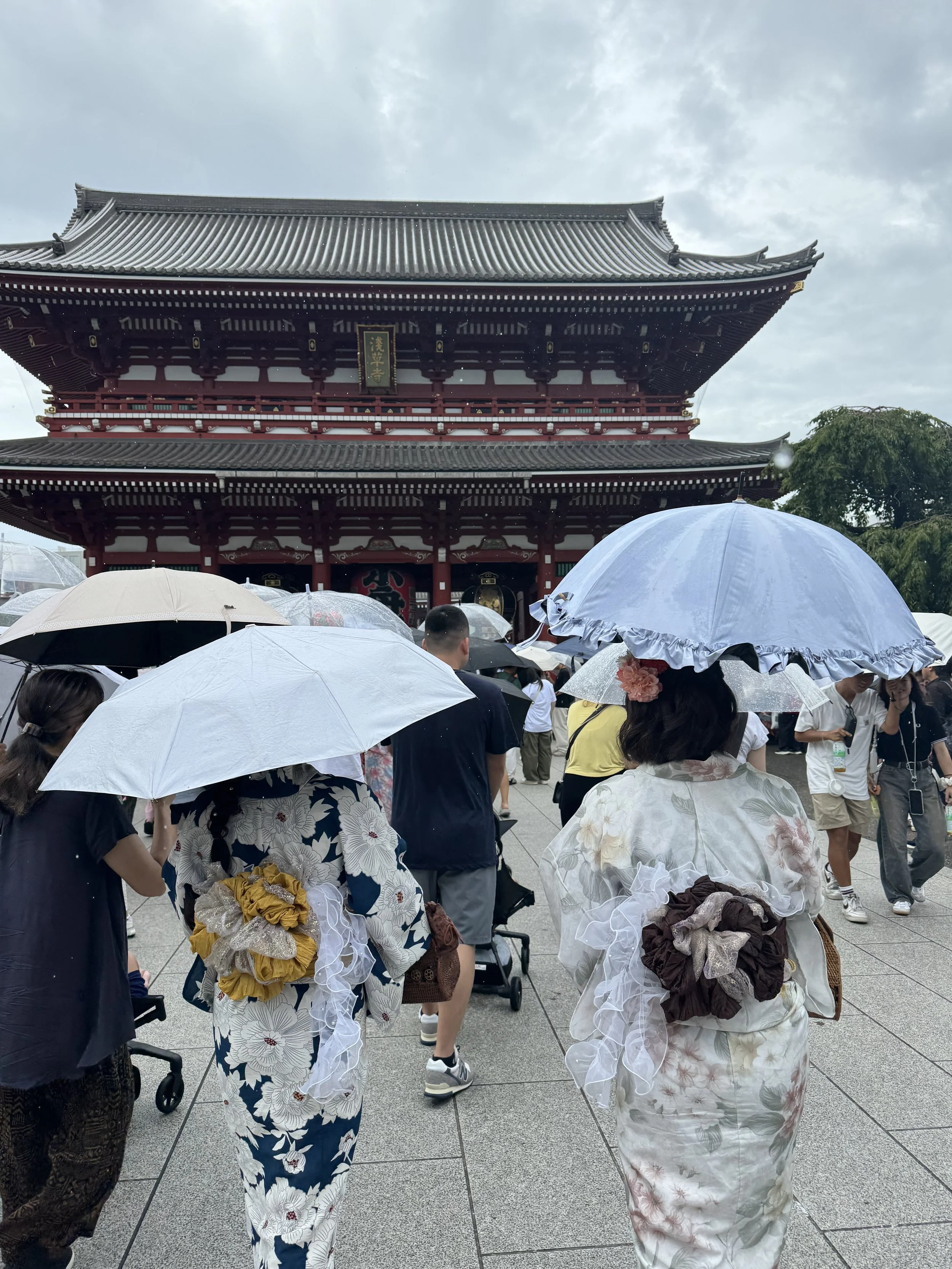
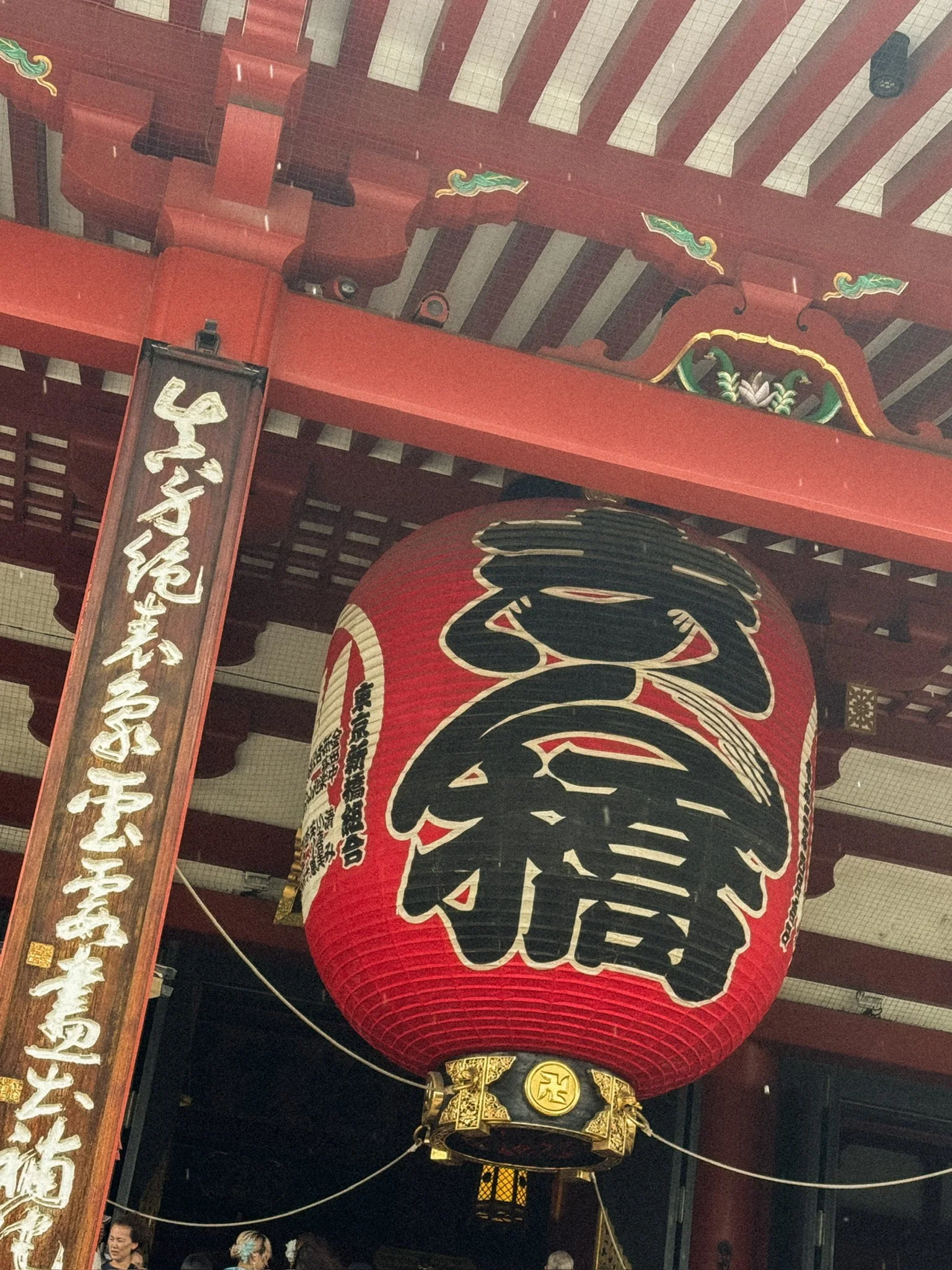
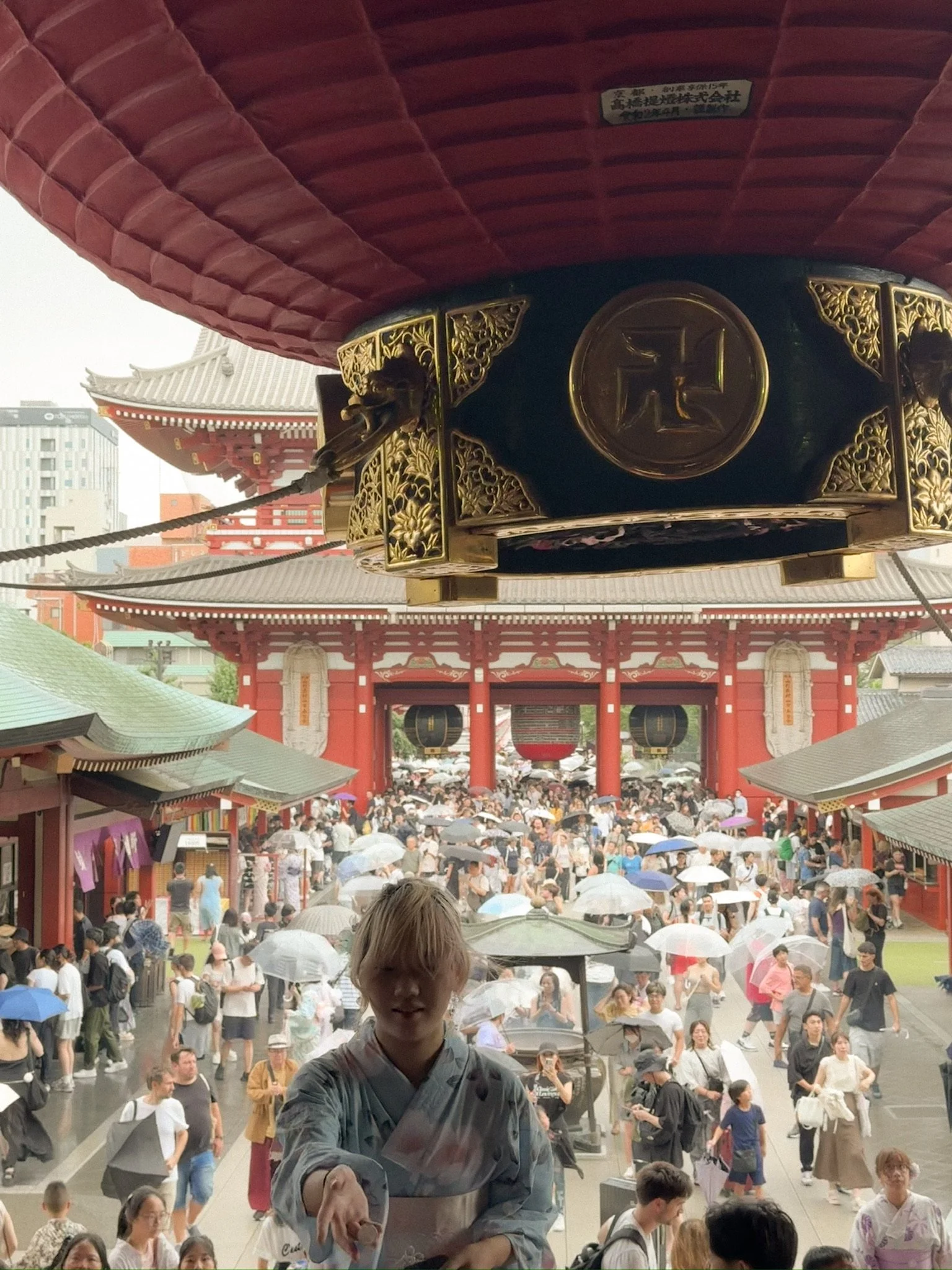
If the crowd allows, take your time to walk through the entrance. The Kaminarimon — the Thunder Gate — leads into Nakamise-dori, a shopping street that has been selling to visitors since the temple's earliest pilgrims. Today it's has been taken over by tourist-facing shops: kimonos, chopsticks, anime figures, every variety of sweet. Beyond it, the Hozōmon gate opens into the inner grounds, where a five-story pagoda rises alongside the main hall and the air is thick with burning incense.
I visited Senso-ji for the first time in 2016, and came back 9 years later. I had a faded memory of the first visit, but the second time it was raining — a light drizzle that should have thinned the crowd but didn't quite. What struck me was how the sacred atmosphere I remembered had been diluted, not by the rain but by the sheer volume of people moving through it. Among them, Japanese visitors in yukata, their colorful umbrellas open against the drizzle. The only place of respite from the crowd is at the prayer site, where tourists are not allowed to take photos.

The temple is worth seeing. But the real Asakusa begins the moment you step off Nakamise.
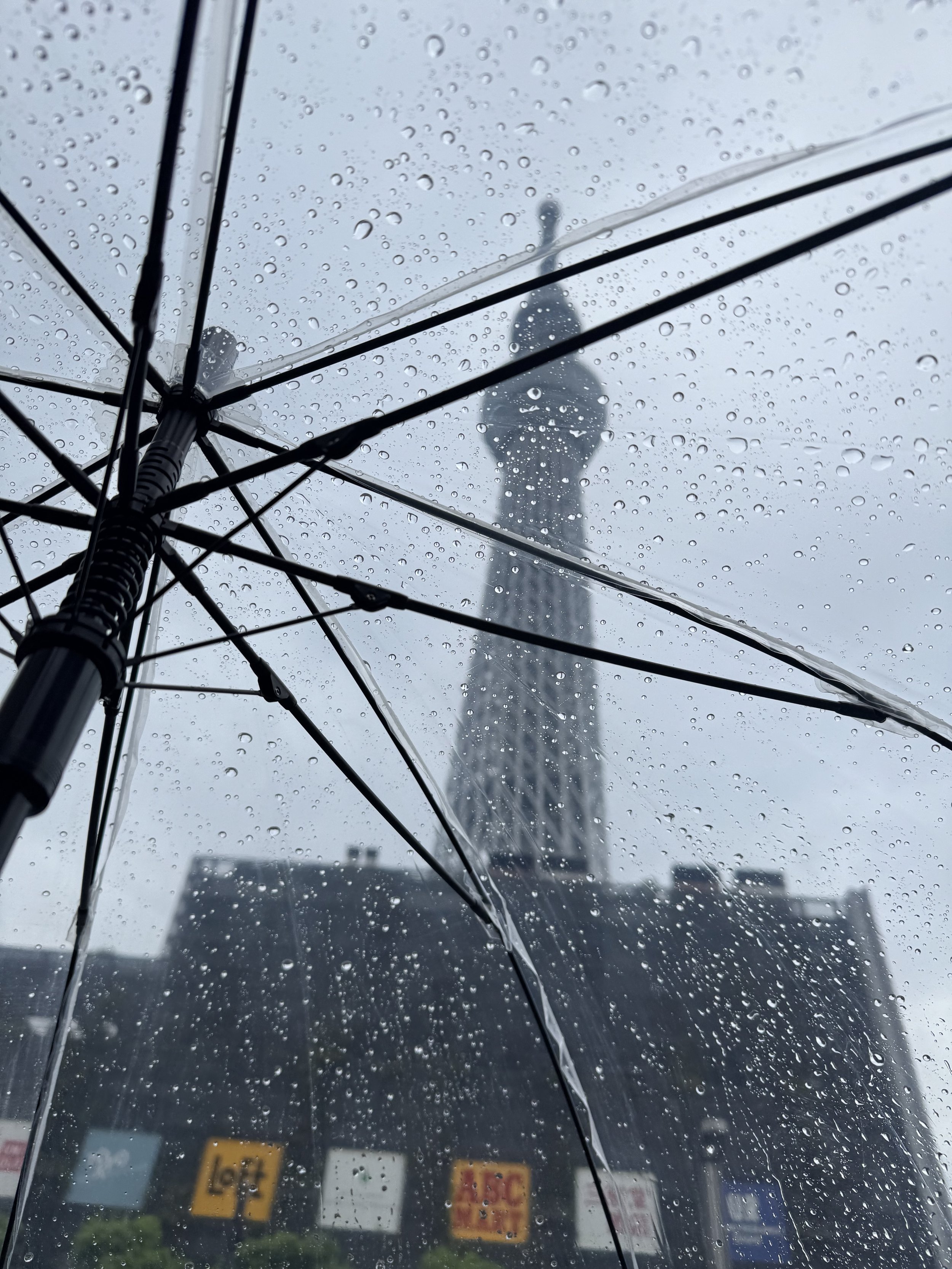
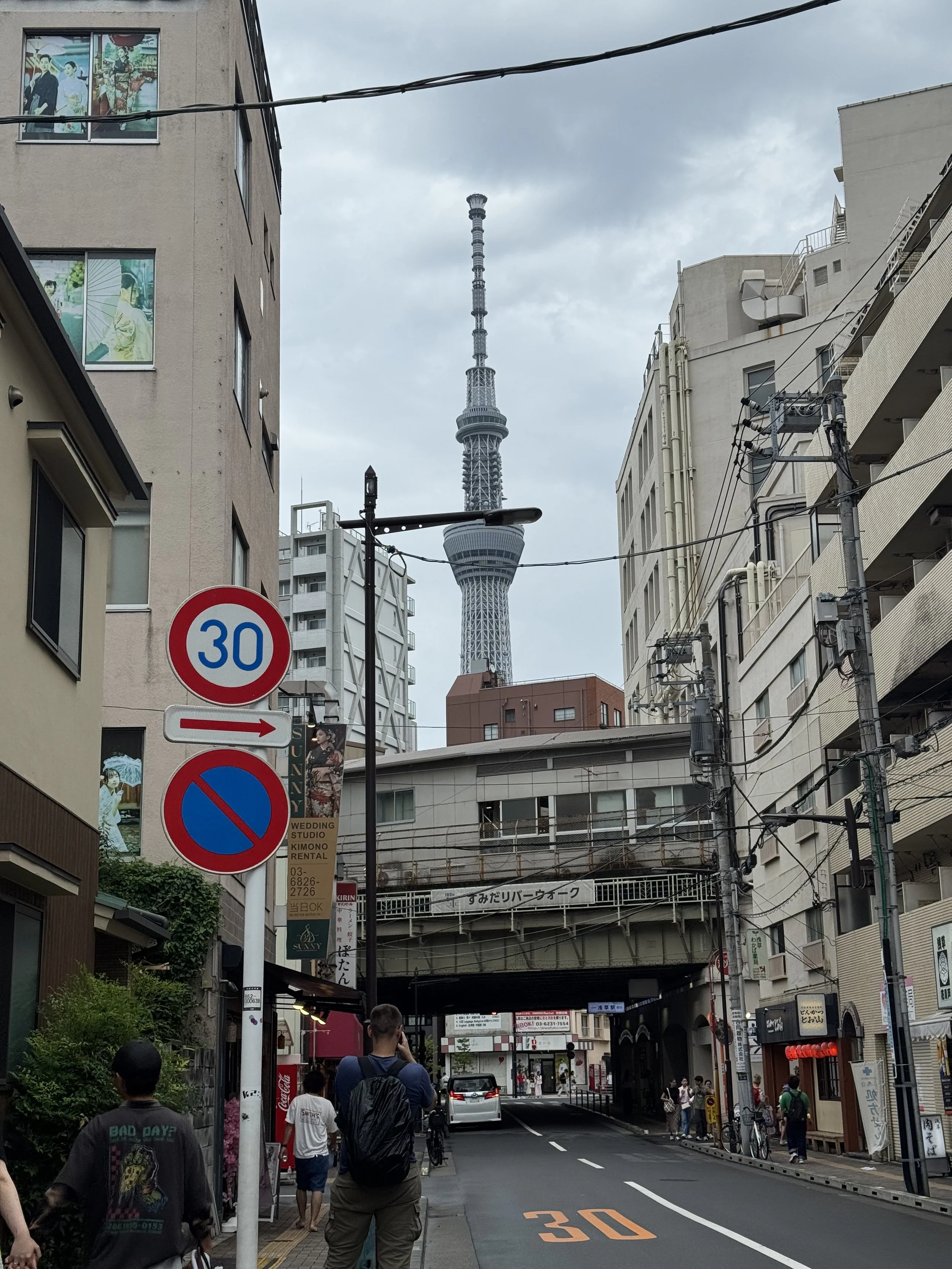
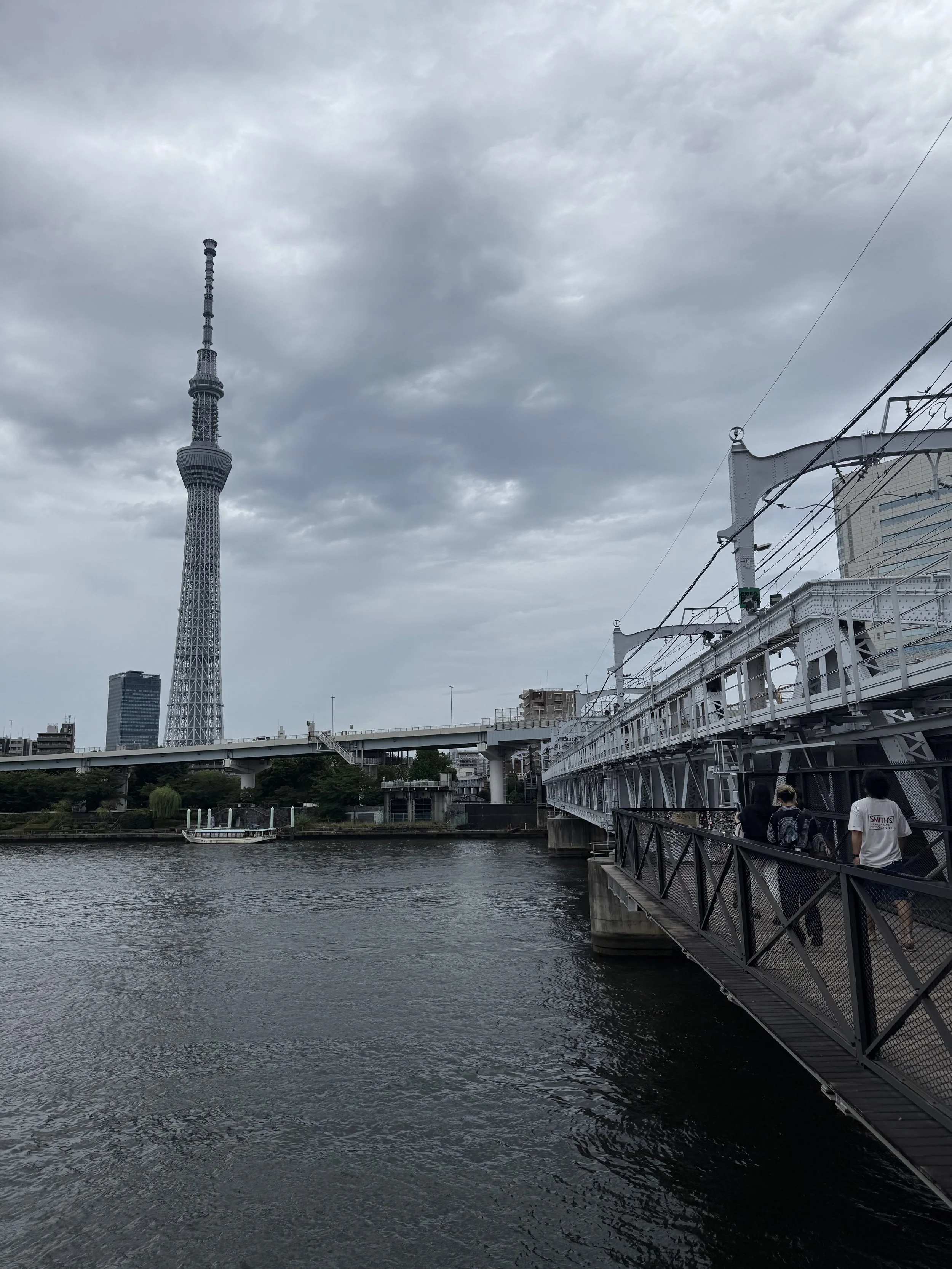
The backstreets behind Senso-ji are quiet. Locals on bicycles, small shops with local delicacies, creamy milk ice cream, a neighborhood going about its day entirely indifferent to tourism. Walking through the streets you can get to the Sumida River. As you cross the Azumabashi bridge the whole composition shifts: the temple district behind you leaves space to the distinct modernness of the Tokyo Skytree ahead, the river between them.
The Skytree stands proud and lonely, it doesn’t declare its real height — at 634 meters it's the second tallest structure in the world, and it dominates the skyline from across the river. Inside, restaurants, bars and shops occupy the lower floors – a great way to explore a lot ; the observation decks sit at 350 and 450 meters. Go at sunset or evening if you can. The view from that height, with the city spreading in every direction and the light changing over it, is incredible.

I could have stayed up there for hours. The city spread out in every direction, vast and lit, and there’s something about Tokyo at that height — the scale of it, the stillness above it all — that makes being very far from home feel like exactly the right place to be.