Tokyo Streets: Shinjuku
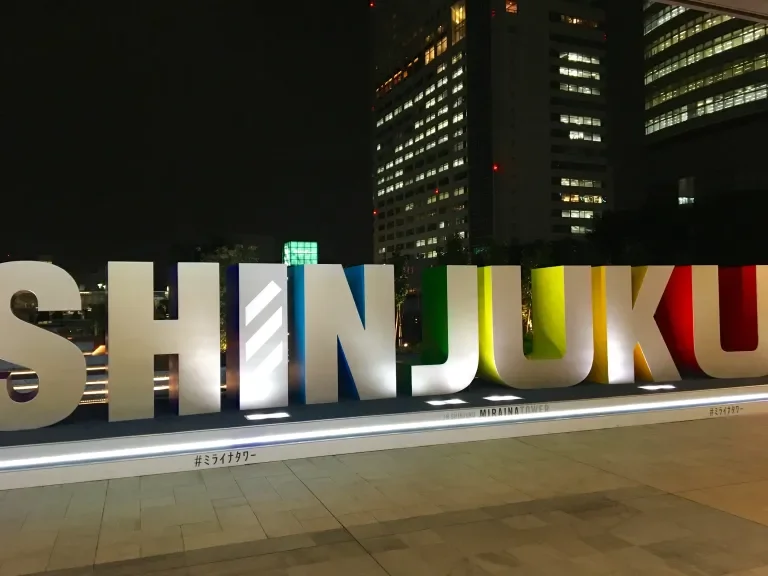
Shinjuku is a city inside the city, which sounds like a cliché until you actually spend time here and realize it’s just accurate. The station alone — the busiest in the world, by some margin — processes over three and a half million people daily. Avoid it during rush hour unless you have no choice.
The neighborhood developed as a post town outside old Edo, grew significantly after the 1923 earthquake displaced much of the population from the east, and expanded again around the 1964 Olympics when most of its skyscrapers went up. Today it contains multitudes: a red-light district, a vast public garden, some of the city’s best nightlife, and a government building with free observation decks. The range is part of the point.
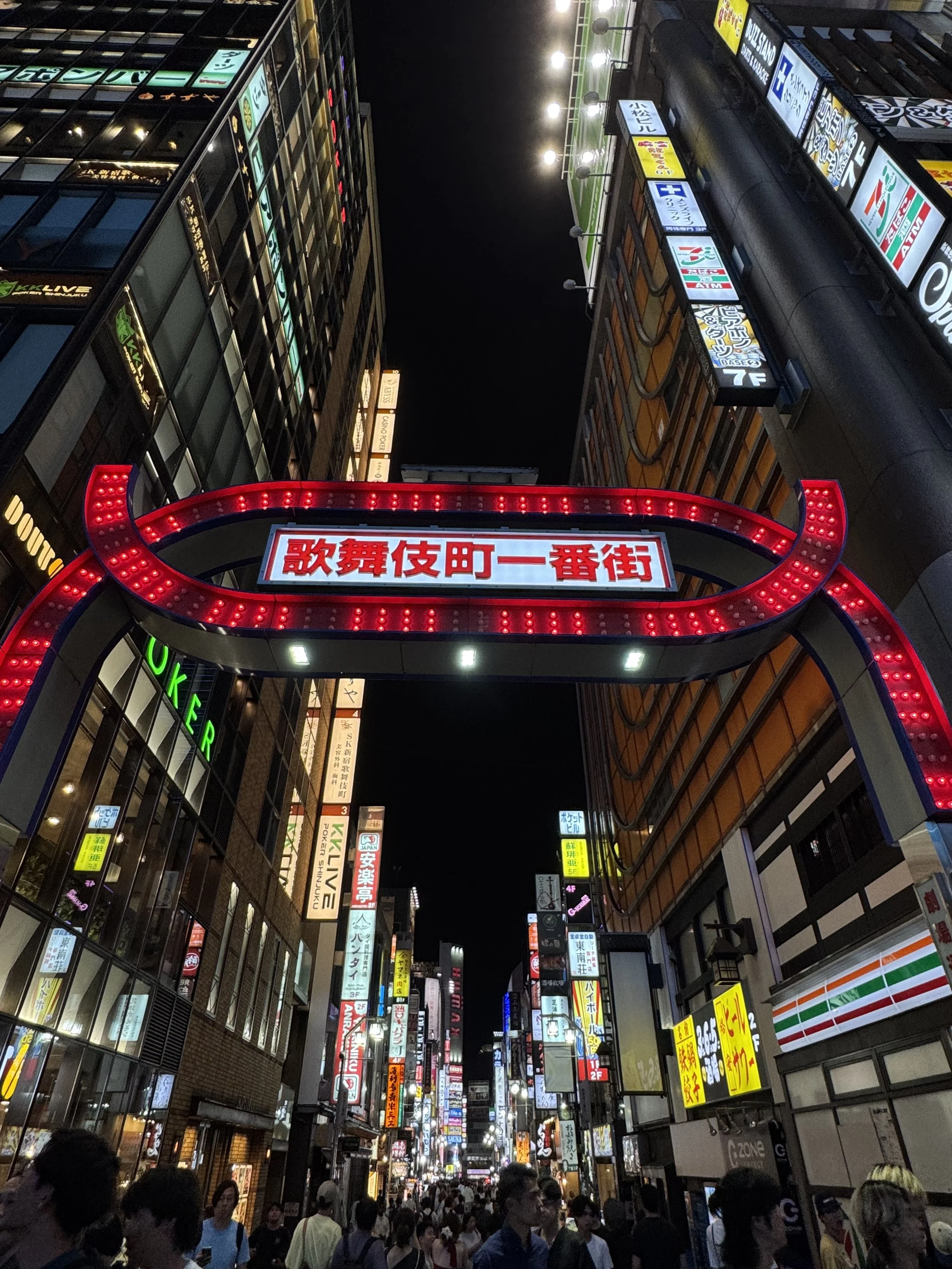
East of the station is Kabukicho — Tokyo’s most famous entertainment district, and one of those places that makes more sense once you understand that the Japanese relationship to nightlife, vice, and commerce doesn’t map cleanly onto western judgments. At night the neon takes over completely: red and white light spilling across wet pavement, crowds moving in every direction, the streets busy at hours when most cities have gone quiet. There are bars, clubs, pachinko parlors, izakayas, restaurants at every price point. Find a traditional izakaya, order sake, and let the evening unfold.
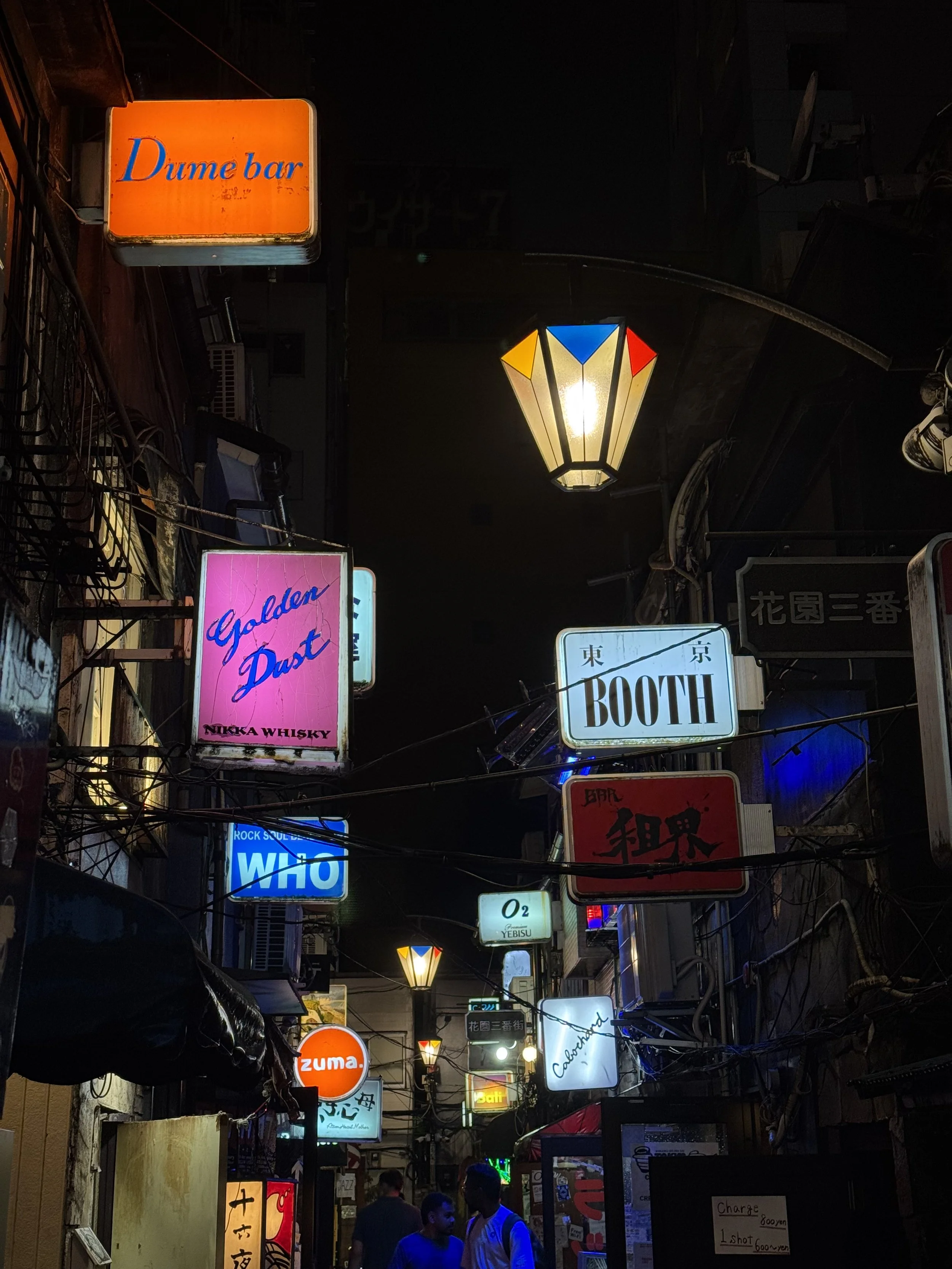
What I didn’t find on my first trip — and discovered on the second — is Golden Gai. A small cluster of narrow alleyways just off Kabukicho, it contains over two hundred tiny bars, most fitting fewer than ten people. Each one is its own world: a theme, a playlist, a particular atmosphere established by whoever decided to open a six-seat bar and make it theirs. Every little door opens into something different. It rewards wandering without a plan.
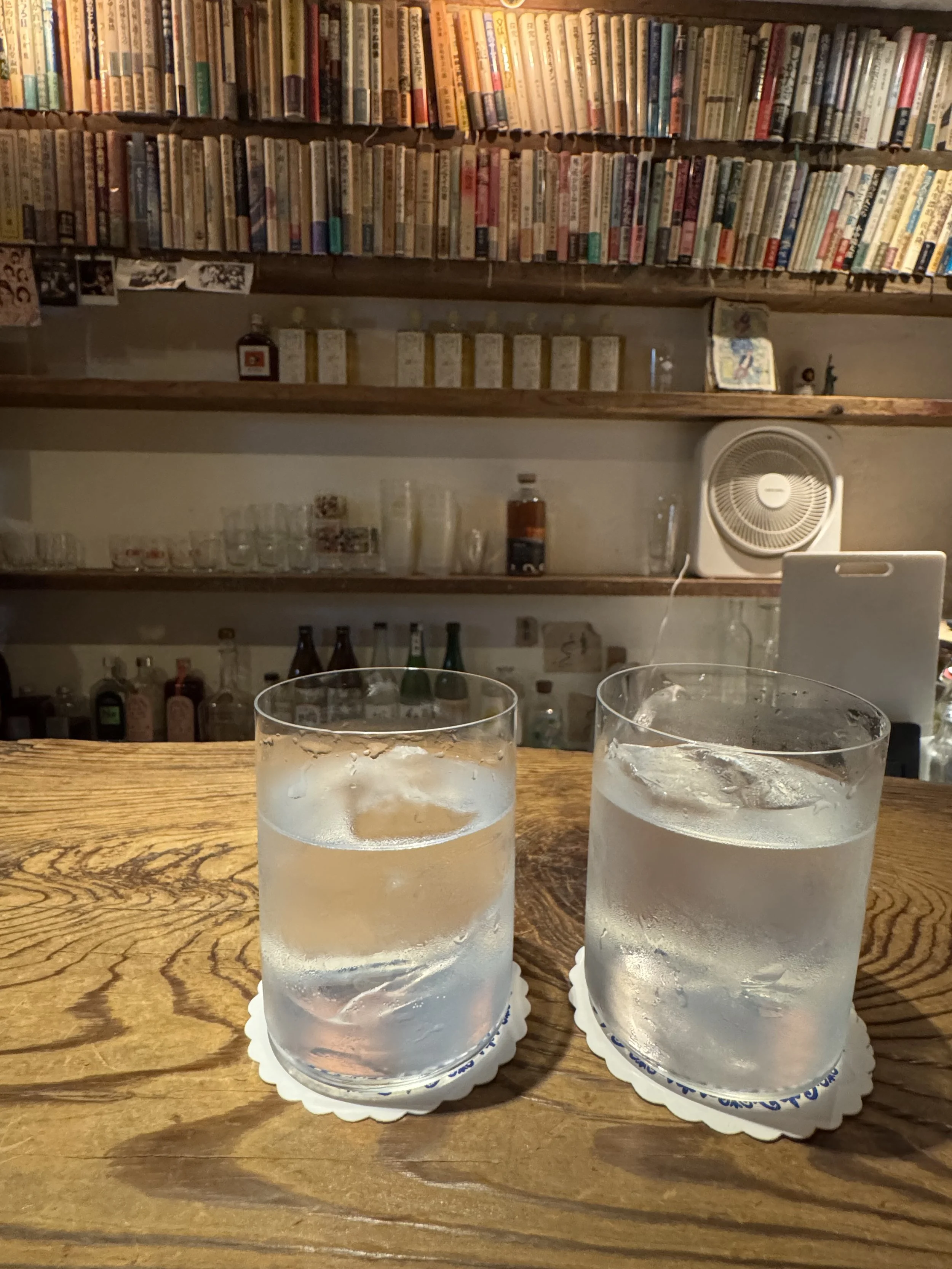
We found OPEN BOOK — a bar that keeps its menu deliberately short: gin tonic and lemon sour, primarily. The gin is produced locally and is excellent. The atmosphere is exactly what Golden Gai promises. Go without a reservation, try a few doors, and don’t leave too quickly.
West of the station the mood shifts entirely — this is the corporate Shinjuku, all glass towers and government buildings. The Tokyo Metropolitan Government Building, designed by Kenzo Tange and completed in 1991, has free observation decks at the top of its twin towers. On a clear day, Mount Fuji is visible. It’s one of the best free views in the city.
The Shinjuku Gyoen Garden sits to the southeast — a former imperial garden now open to the public, and one of the largest in the city. The garden moves through distinct sections: French formal, English landscape, traditional Japanese. It’s the kind of place that absorbs however much time you give it. Particularly worth visiting during cherry blossom season, when it becomes one of the finest spots in Tokyo to see them, but genuinely beautiful at any time of year.
For food, Sushi & Robata Sushiyama Shinjuku offers a broad selection — the robata grill is always the more interesting order, and a reliable choice for an evening in this part of the city.
Shinjuku could take days to explore properly — and still leave things undiscovered. That’s true of the neighborhood, and it’s true of Tokyo itself. No matter how long you spend here, the city holds more than you’ve managed to find. It opens slowly, street by street, visit by visit — and somehow, there’s always another door you haven’t tried yet.