Tokyo Streets: Roppongi
Roppongi has a reputation that precedes it — expat bars, nightclubs, the kind of international-facing entertainment district that exists in most major cities and tends to feel slightly removed from wherever it actually is. That reputation isn’t wrong, exactly, but it’s incomplete. Roppongi is also where three of Tokyo’s most serious art institutions sit within walking distance of each other, and where some of the city’s most considered architecture can be found.
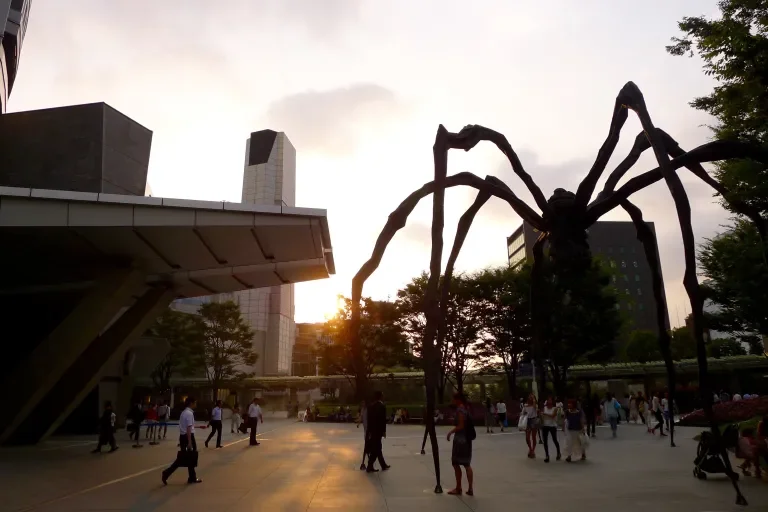
The Art Triangle — the Mori Art Museum in Mori Tower, the Suntory Museum of Art in Tokyo Midtown, and the National Art Center — anchors the neighborhood’s other identity. The Mori, on the 53rd floor, is the one I’d prioritize: the exhibitions are consistently strong, and the view from that height, over the full spread of the city, is worth the entry alone. I ended up there by accident on my first trip, drawn by a Ghibli Studios exhibition, and stayed far longer than planned. The Louise Bourgeois Maman spider sculpture at the base of the tower is one of those public artworks that earns its iconic status — enormous, precise, unexpectedly delicate.
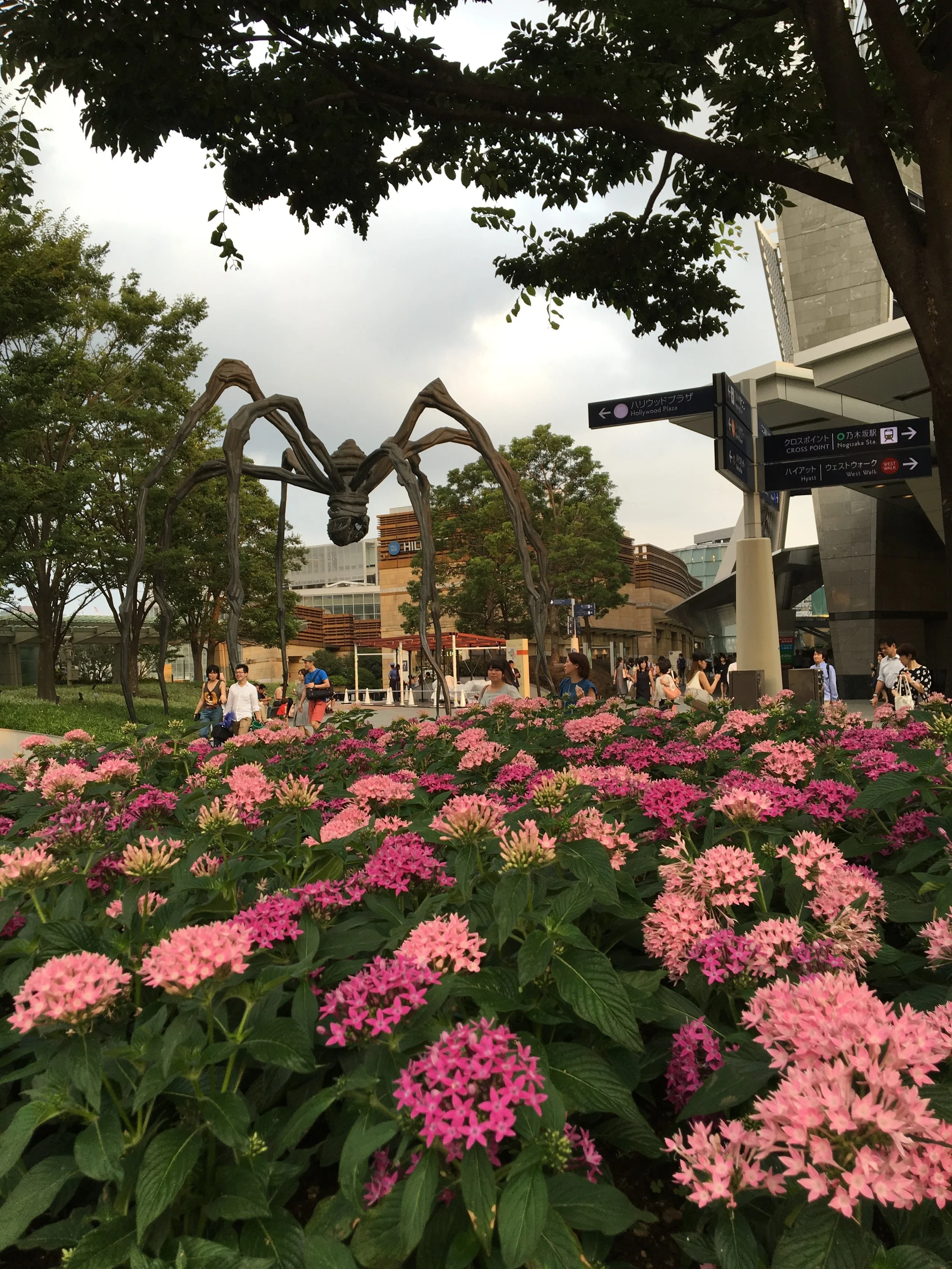
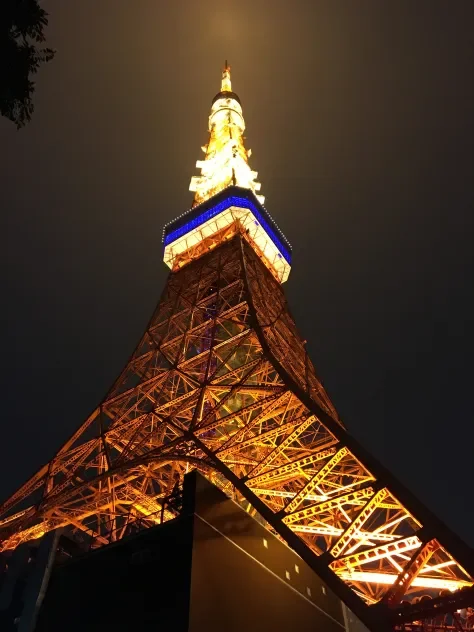
Below the tower, Roppongi Hills is worth exploring on its own terms — a complex of restaurants, shops and hotels built around a surprisingly considered garden space. Walk it at night: the garden is small but well designed, and the view up toward Tokyo Tower from here, lit against the sky, is one of those city moments that costs nothing and stays with you.
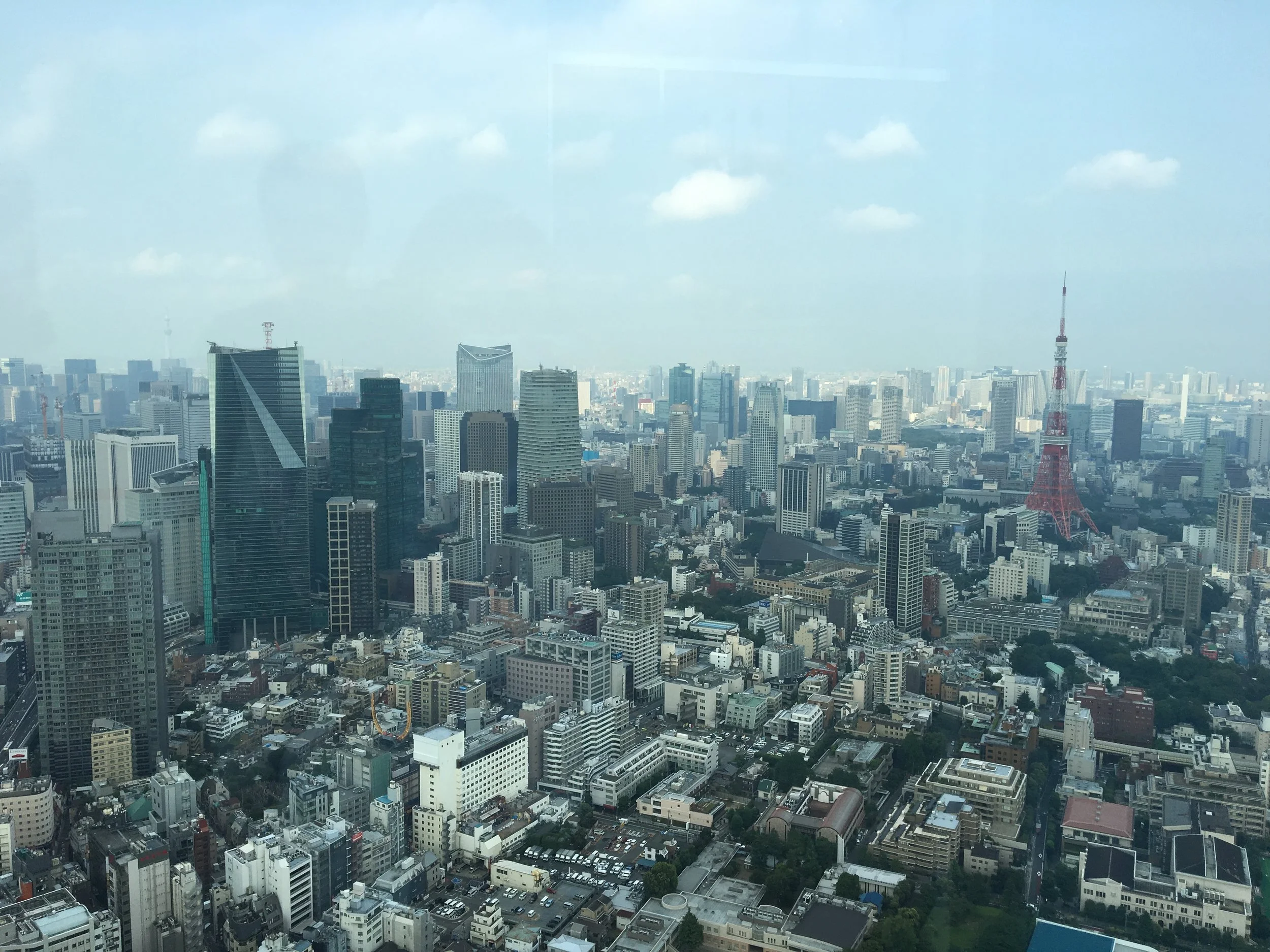
Tokyo Tower is in the adjacent Shiba Park area — opened in 1958, built to resemble the Eiffel Tower, painted in orange and white to comply with aviation regulations. It was the city’s tallest structure until the Skytree rendered it secondary. In some ways that’s made it more interesting: it no longer needs to justify itself by height alone, and the view from its observation deck, while less expansive than the Skytree, has an atmosphere the newer tower doesn’t quite match.
I visited for the first time in 2016, alone in a city I’d only just arrived in, and the observation deck caught me off guard — a blue-lit room, the city twinkling below, something about being that far from home and finding it that beautiful. It made me emotional in a way I hadn’t anticipated. Visit at dusk if you can, when the tower shifts to its evening illumination. In the same park, the Zojo-ji temple has stood through destruction and rebuilding multiple times — its Sanmon gate dates to 1605 and has outlasted everything since.
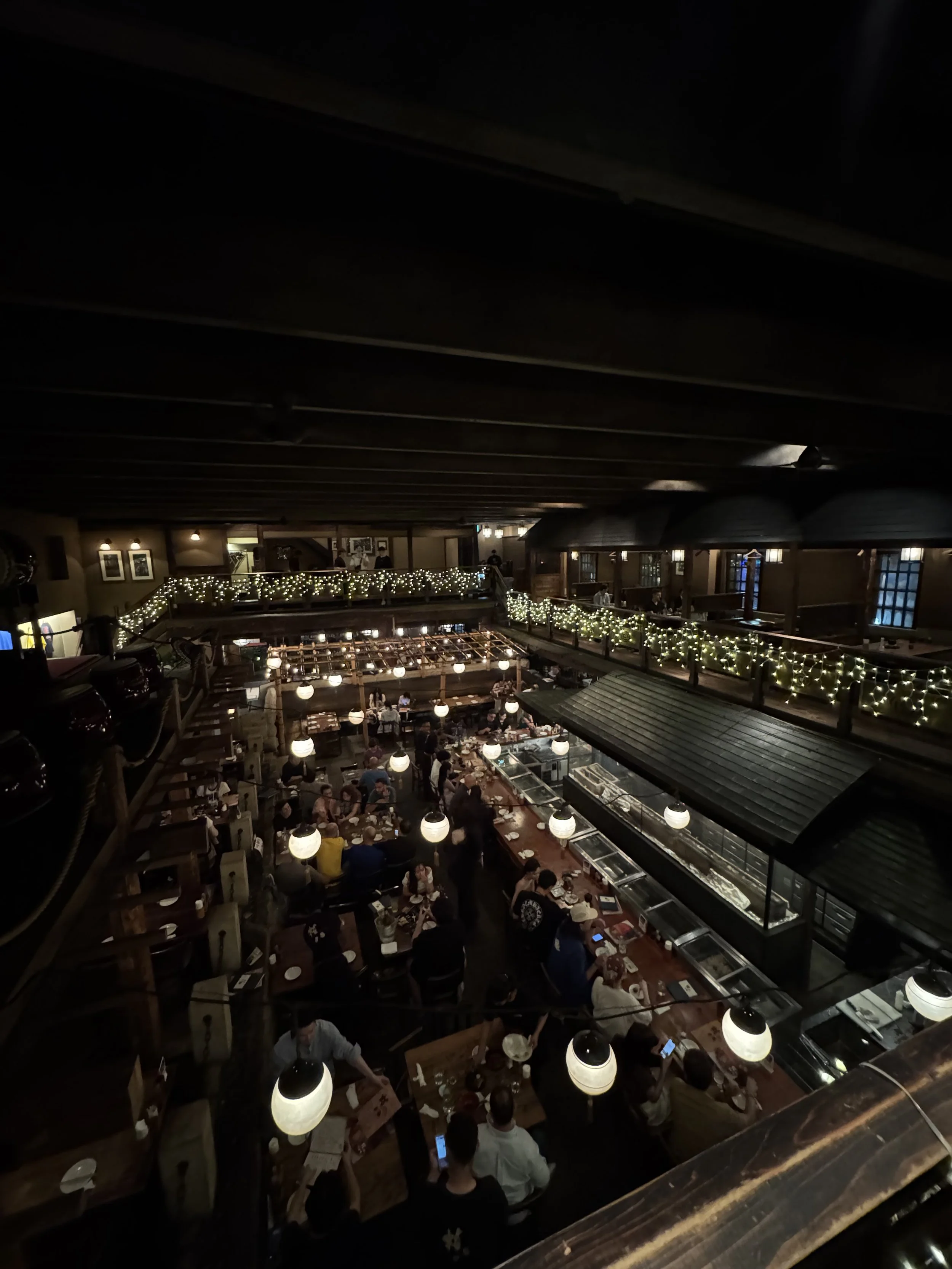
For dinner, Gonpachi Nishi-Azabu. I’ve been twice now — once on my first night in Tokyo in 2016, once on my last evening on the most recent trip in 2025 — and both times it delivered. While it might be a little touristy it’s a lot of fun - the first visit it was the novelty: the Kill Bill setting, the multi-level interior, the energy of the place. The second time I knew what I was walking into and ordered all we could eat, and the food was genuinely excellent. There’s something right about a restaurant that bookends a trip. The staff are lively, the atmosphere holds up, and the experience is unlike anywhere else.