Tokyo Streets: Ginza
Ginza is Tokyo's most overtly upscale district, and easy to misread on a first pass. The central boulevard — Chuo-dori — is all flagship stores and brand architecture, the kind of street where the buildings themselves are the statement. It invites comparison to Fifth Avenue or the Champs-Élysées, and the comparison isn't wrong. But Ginza has more texture than its surface suggests. You find it in the side streets, and in the specific stores that have been here long enough to have a point of view.
Itoya is one of those. Twelve floors of stationery, paper goods, and design objects — the kind of store that makes you slow down and handle things. It's been in Ginza since 1904 and feels entirely sure of itself, unaffected by what's happening on the street outside. If you have any feeling for notebooks, pens, or beautifully made objects, set aside more time than you think you need.
Uniqlo's Ginza flagship occupies twelve floors of a different kind — technically vast, practically overwhelming, and somewhat repetitive across levels. Worth a browse, but manage expectations.
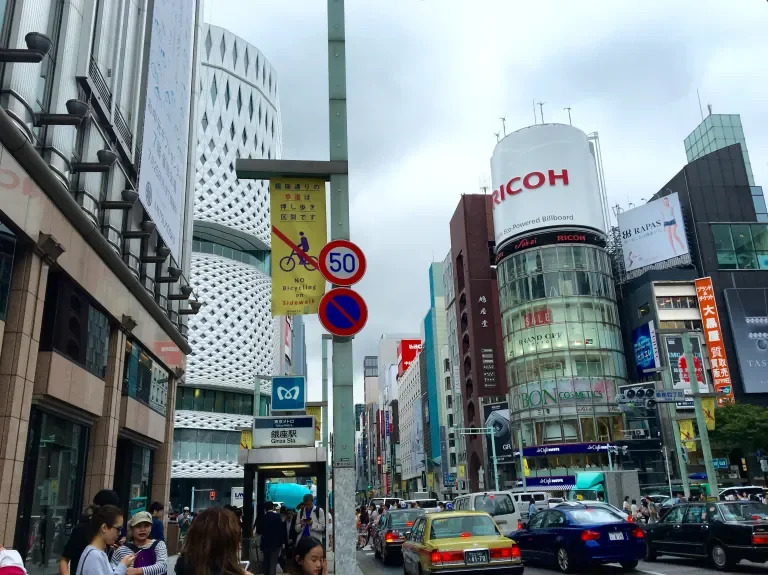
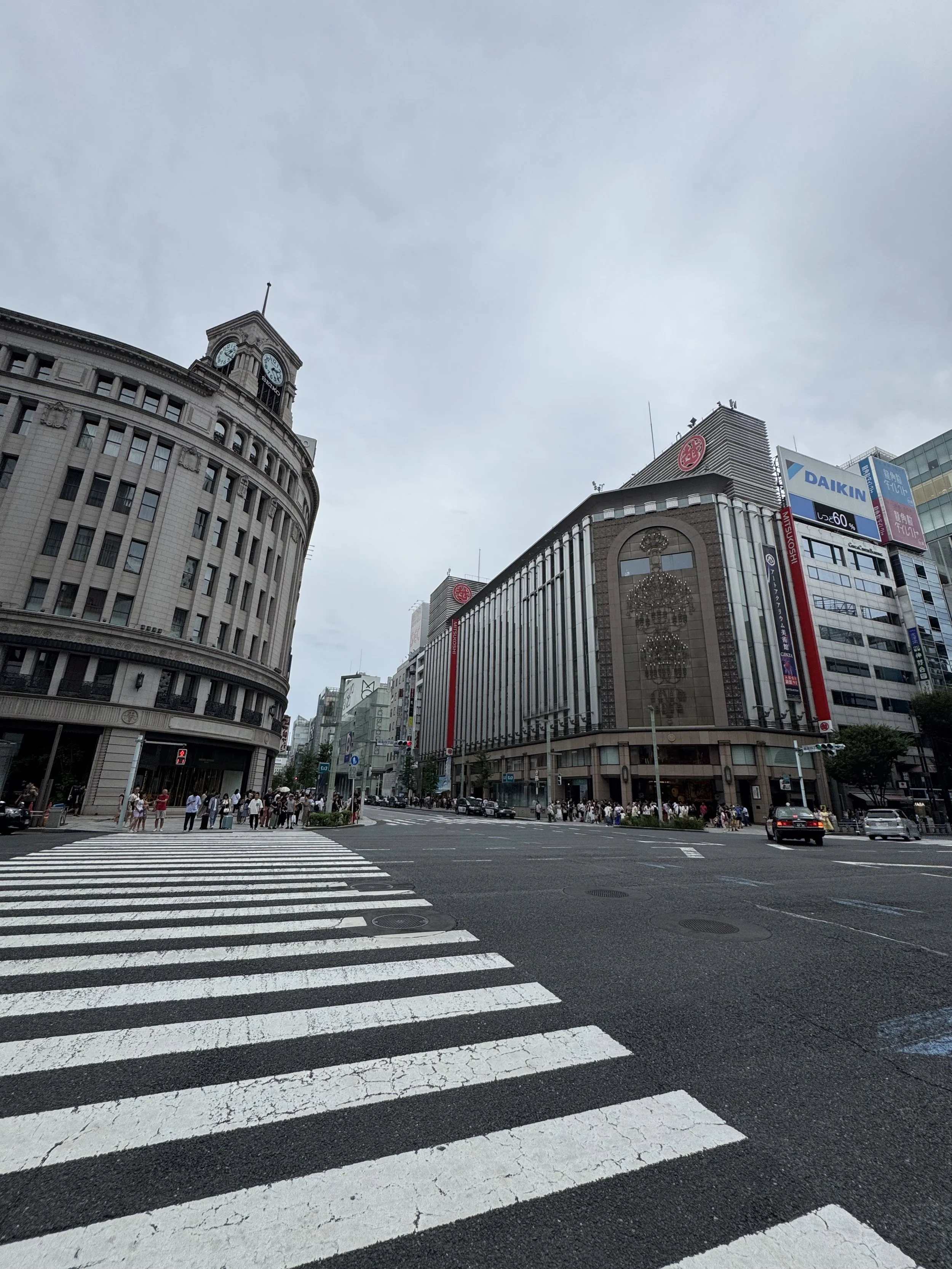
The architecture along Chuo-dori is worth paying attention to. The Mikimoto Ginza 2 building, designed by Toyo Ito, stops you mid-step — irregular windows punched into the facade at seemingly random angles, the whole structure somehow standing without internal pillars or visible seams. Further along, the Wako building’s clock tower is one of those landmarks that has quietly anchored the neighborhood for decades. On weekends, Chuo-dori closes to traffic entirely and becomes a pedestrian boulevard — the whole street changes register, slows down, becomes something you want to linger in rather than move through.
The Shiseido building deserves attention beyond its cosmetics: the ground floor Parlour sells some of the most beautiful confectionery in the city, and the building hosts exhibitions that are consistently worth checking.
Ginza also has one of the densest concentrations of small commercial art galleries in the city — many of them free, tucked into upper floors along the main street and side alleys. Most visitors walk straight past. They’re worth seeking out, even briefly.
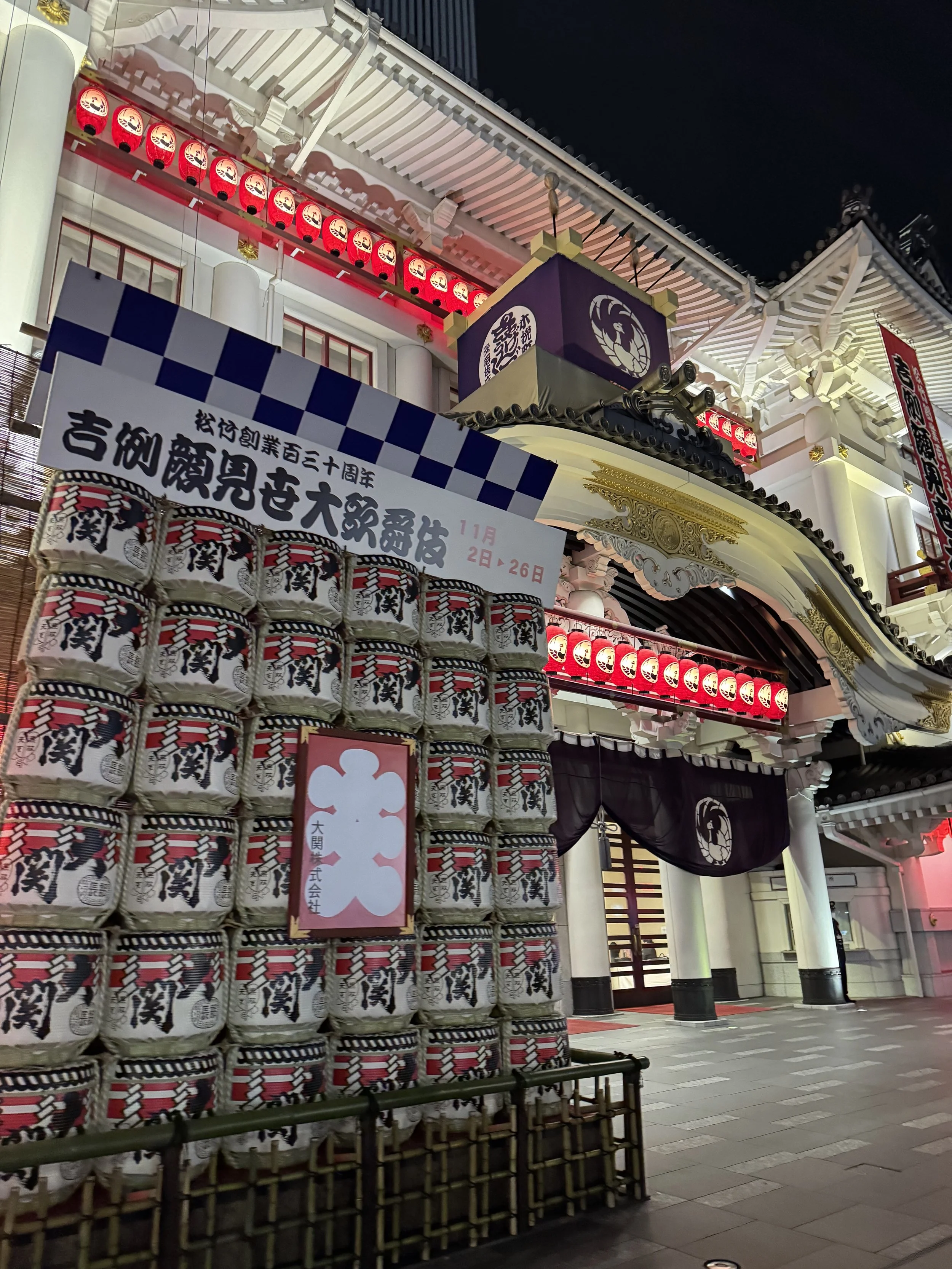
The Kabuki-za theatre, just east toward Tsukiji, stages traditional kabuki — elaborate costumes, stylized performance, a form of drama that has been practiced here since the 17th century. Single-act tickets are available if a full programme feels like too large a commitment.
For food, Ginza rewards exploration. Tonkatsu Hasegawa Higashi Ginza does what it does with complete commitment — precise, satisfying, no unnecessary complexity. For lunch, Komatsu-an Sohonke Ginza is the hidden favourite: cold noodles and ramen in a setting that feels like a genuine local secret rather than a destination restaurant. For something more unusual, Kiwagiwa Ginza offers an omakase experience that is interesting and specific — not necessarily to everyone's taste, but worth knowing about.
On my first trip in 2016 I wandered into the Sony building — now rebuilt as Ginza Place — to test whatever technology they had on show. The experience has changed since then, but the instinct to put something interactive and unexpected in the middle of a luxury shopping street remains very Tokyo.
The best time to see Ginza, though, is in the evening. When the daytime crowd thins and the shops close, the storefronts stay lit — and the light falls across the pavement in a way that makes the whole street feel curated, almost cinematic. Walk it on the way to dinner. It earns the detour.
South of Ginza toward the Sumida River is Tsukiji — the outer market still functions, even after the wholesale auction moved to Toyosu. Early morning, fresh fish, a Japanese-style breakfast eaten standing up. It remains one of the best ways to start a day in this part of the city.
