I was looking for a quick lunch spot and found a random café, the kind of place that could have passed for a beachside bistro in the Côte d’Azur. It seemed so uncharacteristic for Amsterdam, but so did the scorching sun that I hoped would move just enough to give me some shade so I could actually eat my cheese toast without squinting through it. A heatwave had rolled in from the south that week, the kind Milan gets every July, and Amsterdam, which has spent centuries engineering itself around rain, wind, and flat grey light, had nothing prepared for heat. No restaurant or store or house I went to had air conditioning. I'd been to this city many times, in every season, and this was the first time I'd seen it properly sunny.
Sitting there alone, I couldn't quite work out the dynamics of the place. People came and went with total ease, clearly regulars, clearly certain of whatever unspoken order the café ran on, and I sat there unsure whether I was meant to seat myself, order at the cashier, or wait seated, just get up and leave without a word to anyone once I was done. Nobody was unkind about it. Nobody was performing hospitality for me either; they just seemed to know how to go about their day.
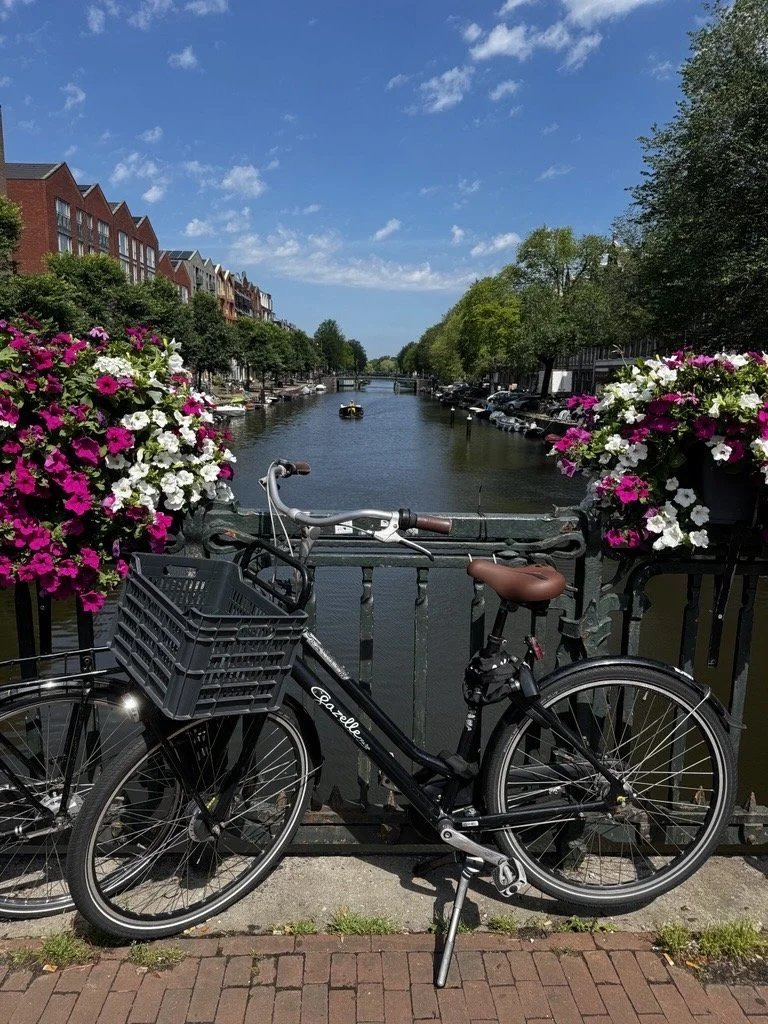
That's the thing I keep coming back to about this city. Amsterdam knows exactly what you came for, and it's very good at handing it to you: the museums, the canal-side cafés, the coffee shops and red-light district, the whole postcard of it, all built and maintained with visitors in mind. The city curates itself but doesn’t seem to perform for visitors. Locals carry on the same way with or without you, which is what makes the place pleasant but also why it never quite lets you in all the way.
Part of that is because so much of what you actually encounter here isn't especially Dutch to begin with. Starting with the food: tacos, gözleme, Japanese kaiseki, Italian gnocchi, French bistro cooking - Amsterdam absorbs all of it easily, without much fuss about whose culture it belongs to. Dutch culture, the native culture, mostly shows up in less evident ways: in the bikes, in the total indifference to rain, in a plate of bitterballen, in the coffeeshops tucked between ordinary cafés as if they were nothing unusual, in the way people rush to meet for a 5 pm beer when a few rays of sun come out.
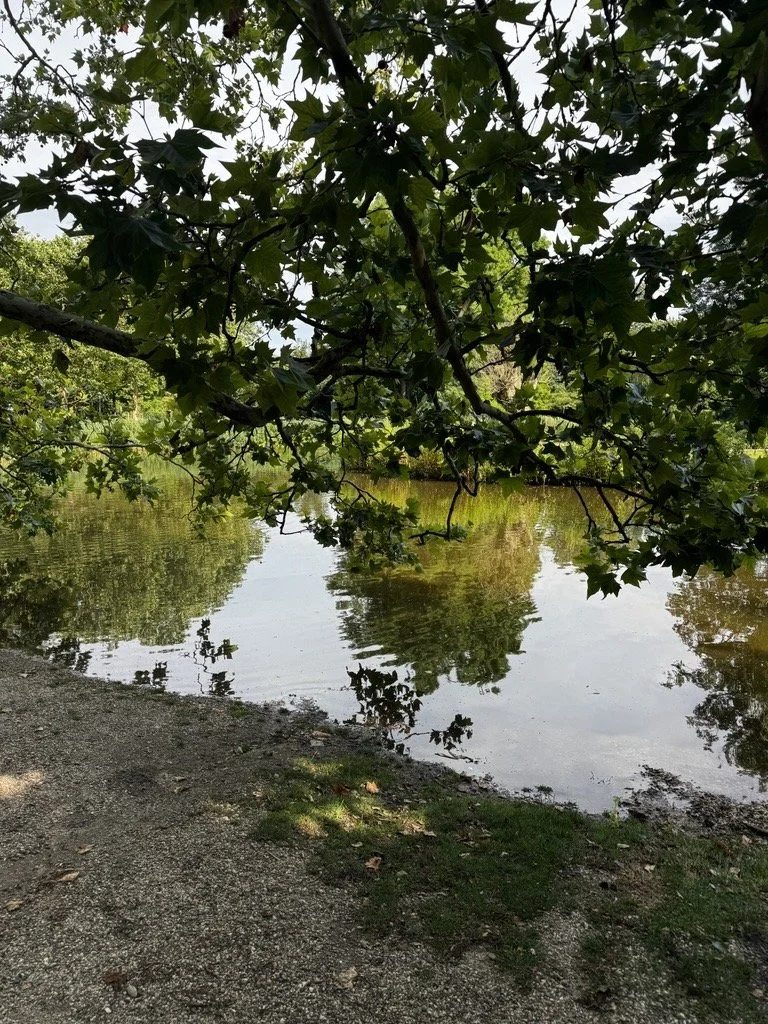
On that lucky sunny Sunday, I walked through Vondelpark the way locals do on the rare good days: no plan, just the grass and the light and everyone out at once, as if they'd all been waiting. Amsterdammers take the sun seriously precisely because they get so little of it. On a hot afternoon, people pile onto small flat boats and head out along the canals toward the lakes and beaches just outside the city, a version of the beach day that only makes sense once you've seen how rarely the weather allows for it. The rest of the year, rain is just weather, not an event. Amsterdammers walk through it, bike through it, sit outside restaurants through it, seemingly unbothered, the way you'd expect people who've made peace with something inevitable to be unbothered. Only on a particularly heavy rain evening, a storm that cut a city-center walk short, did I notice even the most weather-hardened locals ducking for cover. I was glad to note that even they have a limit. That same walk through the center, you can easily enjoy a walk past the red-light district, past coffeeshop after coffeeshop tucked in among the regular storefronts, unremarkable to everyone but the tourists photographing the signage. It's one more thing the city doesn't make a show of, but it's just there, woven into the city’s architecture.
The bikes are their own kind of unbothered. I love that you can get anywhere in this city on two wheels, that cycling here is simply how people move, and I understand why visitors romanticize it. What the romanticizing tends to leave out is that Amsterdam cyclists do not, generally, stop for you. Pedestrian crossings are treated as suggestions. I've had more near-misses here than in cities with far worse reputations for traffic, and it's worth knowing before you step off a curb without looking twice, bike lane included. The freedom that makes the city so easy to move through is the same freedom that makes it, occasionally, a little unsafe to be a pedestrian in.
The houses have their own quiet toll, too. Dutch canal houses were taxed historically on frontage width, which is why they're so narrow and so tall, and why the staircases inside them are correspondingly steep and absurdly shallow, barely wide enough for half a foot. Living here, even for a weekend, means climbing what feels like twenty flights a day just to get from the kitchen to the bedroom. It's charming in a way, but genuinely punishing if you’re having to experience it every day - but it's just how the houses are.
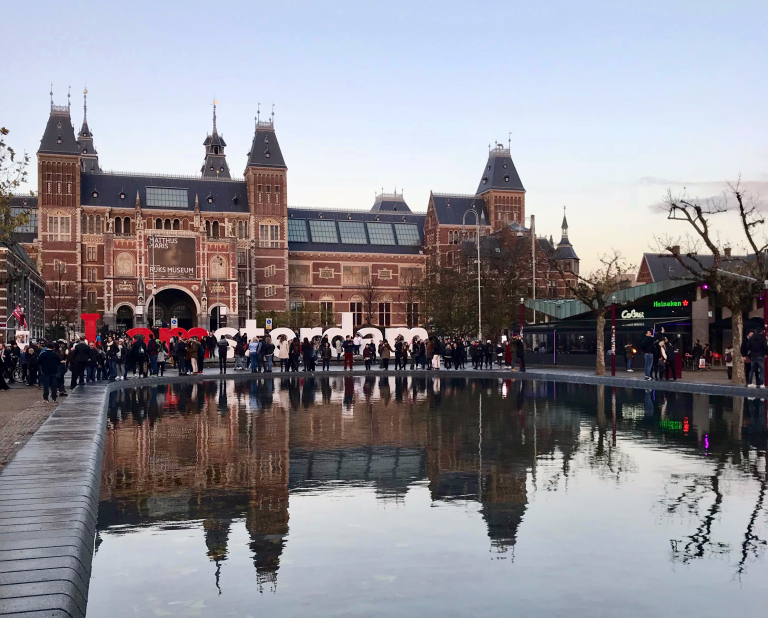
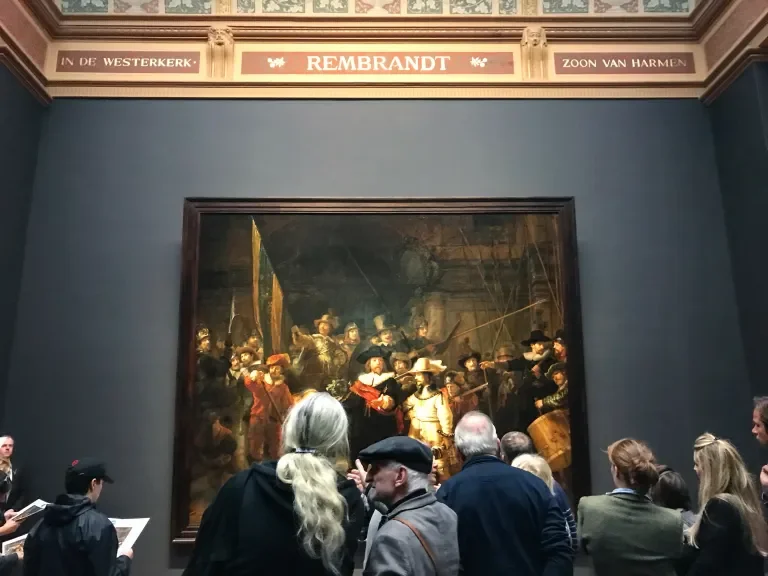
As you move through key areas of Amsterdam, there is a square you’ll have to visit. I've now stood in the Museumkwartier on three separate trips, years apart, and each visit has meant something different. The first time, I stood and stared for a good 10 minutes at Rembrandt's The Night Watch at the Rijksmuseum. I just couldn't stop finding new things in it: a dog at the bottom right, half in shadow, easy to miss entirely; the way the light seems to come from nowhere and everywhere at once; flashes of bright red in the cloaks of an otherwise dark composition, every item placed with obvious intention.
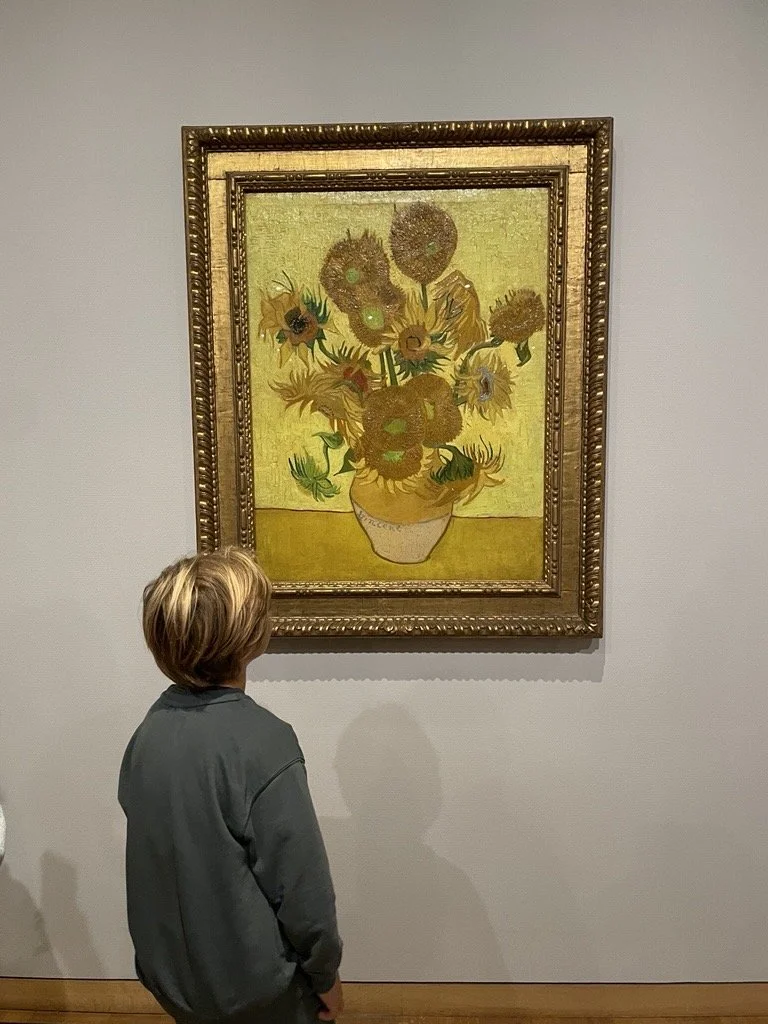
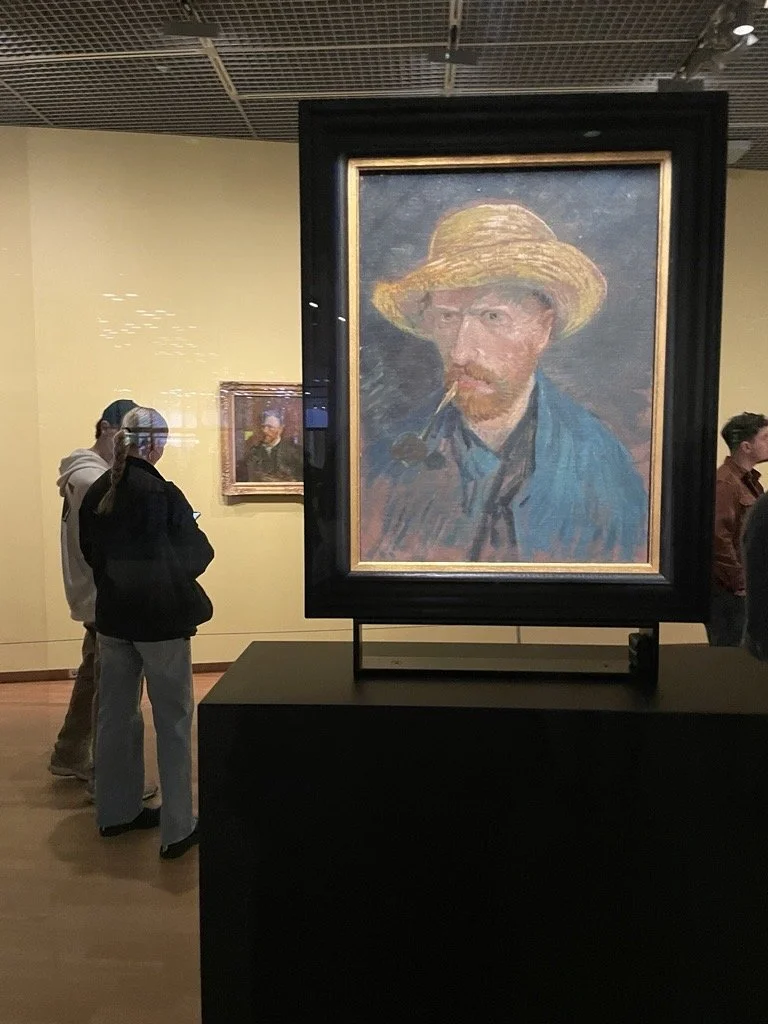
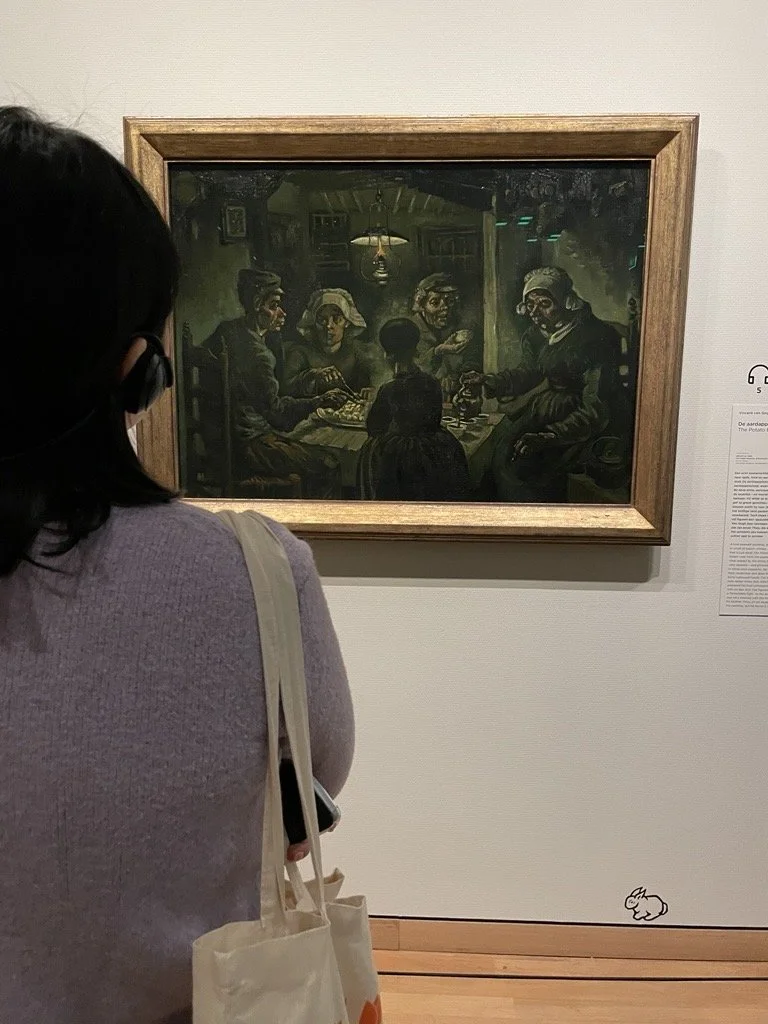
The Van Gogh Museum was a bucket list visit for me, as I’d learned a lot about the artist and his life - through my father’s study of his letters to his brother, through my personal study for my middle school thesis. I first felt connected to his works standing in front of Starry Night at MoMA in New York. The thick, deliberate brushwork, colors laid on with what feels like real emotional intent rather than technique for its own sake. What I find harder to reconcile is how commercial the museum experience itself has become. On one visit there was a Pokémon exhibition running alongside the permanent collection, which I'll admit I enjoyed on its own terms (I'm not above Pokémon), but which sat strangely next to Van Gogh's actual, considerable pain, as if the museum weren't quite sure whether it wanted to be a shrine or a gift shop with extra steps.
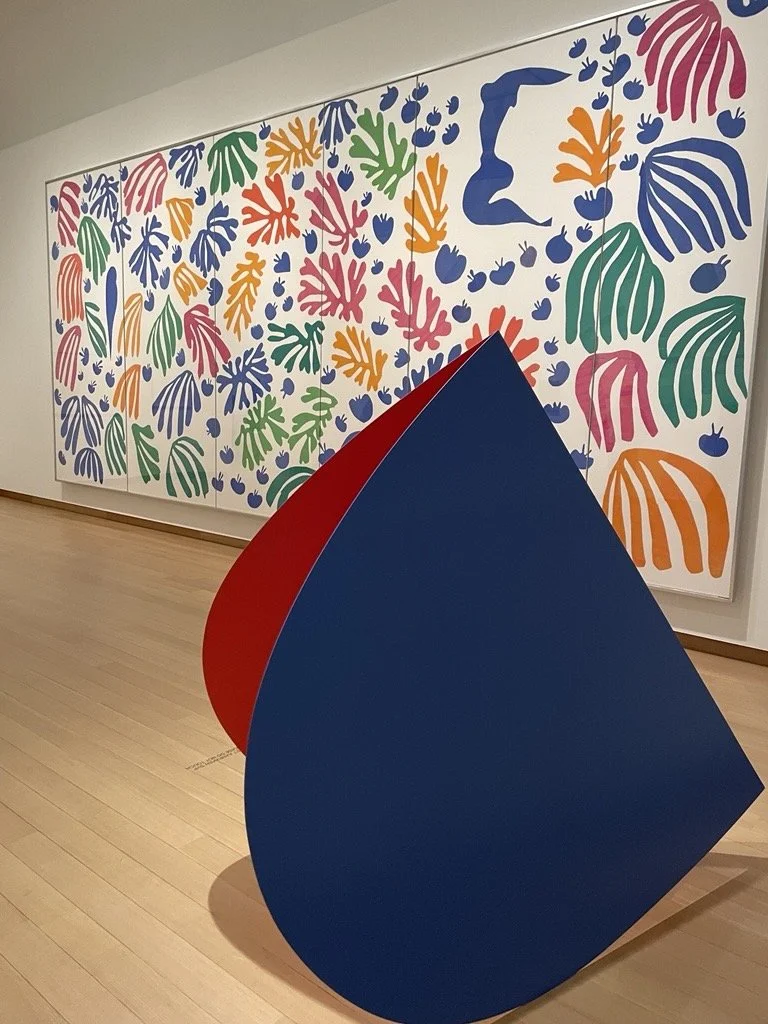
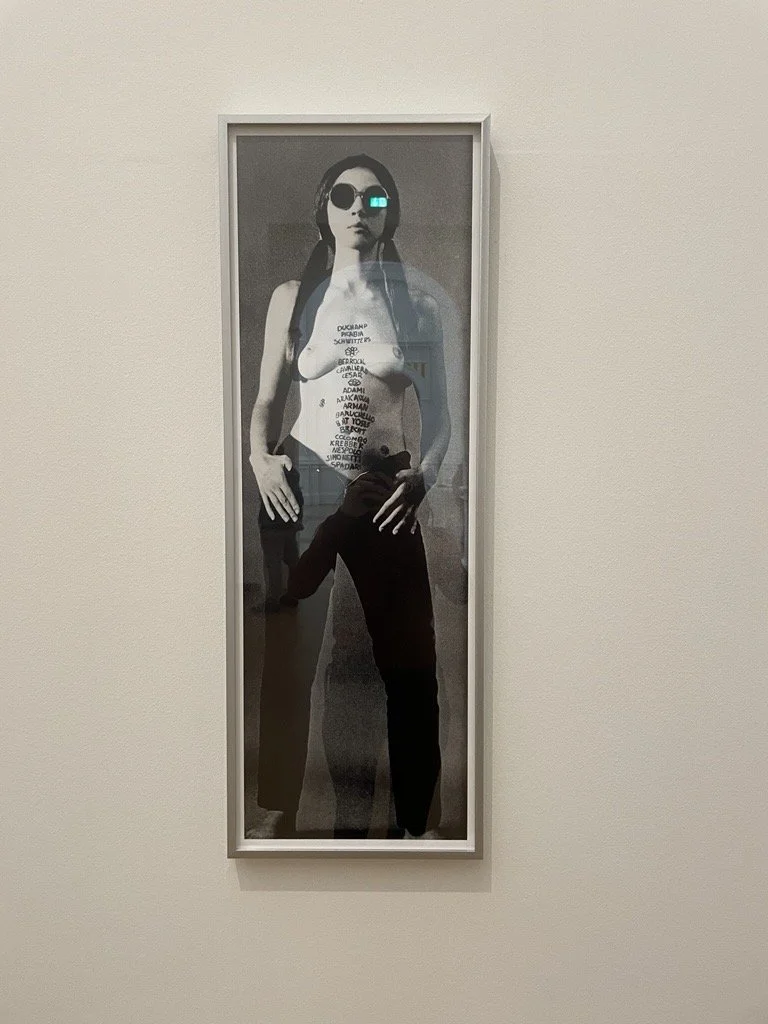
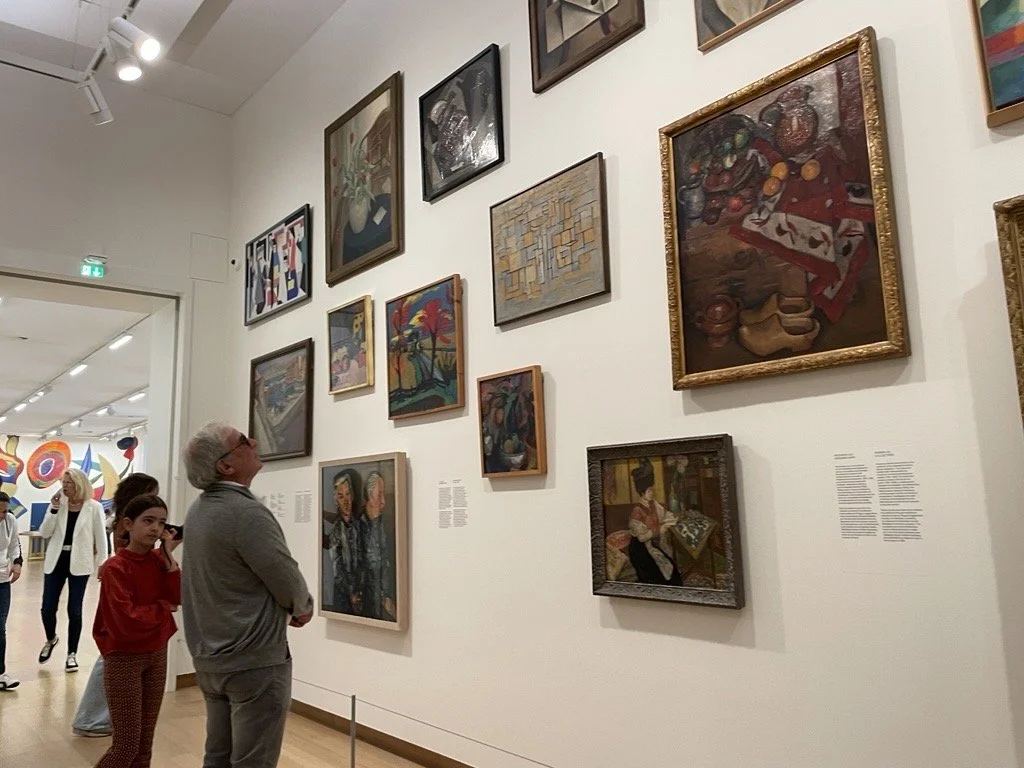
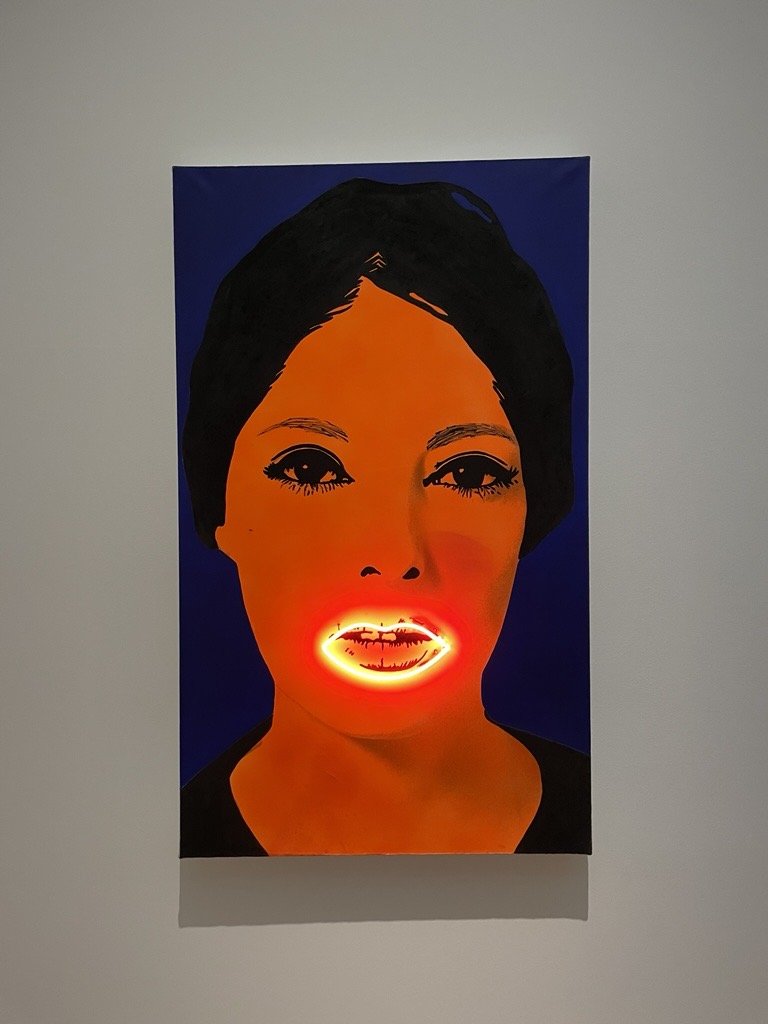
The Stedelijk is the one I went back for on purpose, for a reason that had nothing to do with tourism. There's a photograph in the collection by Cosima von Bonin that borrows its title from a Milan exhibition held at Galleria Schwarz in the late 1960s, one of my father's first shows. Standing in front of someone else's work carrying a small, unlikely thread back to my own family history is not something I expected from a modern art museum in Amsterdam, and it's stayed with me longer than almost anything else in the city. The rest of the collection earns its place on its own merits regardless: Matisse, Kirchner, De Stijl, Bauhaus, Malevich, movements and artists I'd happily spend an entire afternoon with even without a personal thread to follow.
Food in the Netherlands is where the city's more unpolished side shows up most clearly. Bitterballen are less a snack than a small act of faith: crisp, almost molten balls of thick stew that come out of the fryer closer to the temperature of lava. No use waiting; they are just meant to burn your mouth. Van Stapele's cookies are best eaten the moment you step outside the shop, still warm, the white chocolate center just barely holding its shape before it gives way entirely against the bitterness of the dark chocolate shell. For something less composed, Foodhallen remains one of the better food halls in Europe, and, even better, a short walk away are the stalls of Ten Kate Markt: definitely go for the taco stand and the Turkish gözleme, the stuffed flatbread, with a warm, cheesy and veggie filling. The streets around this west side of the city are beautiful in the way the whole city is beautiful, but they're lived in too: not spotless, not staged, closer to a place people actually inhabit than a set dressed for visitors.
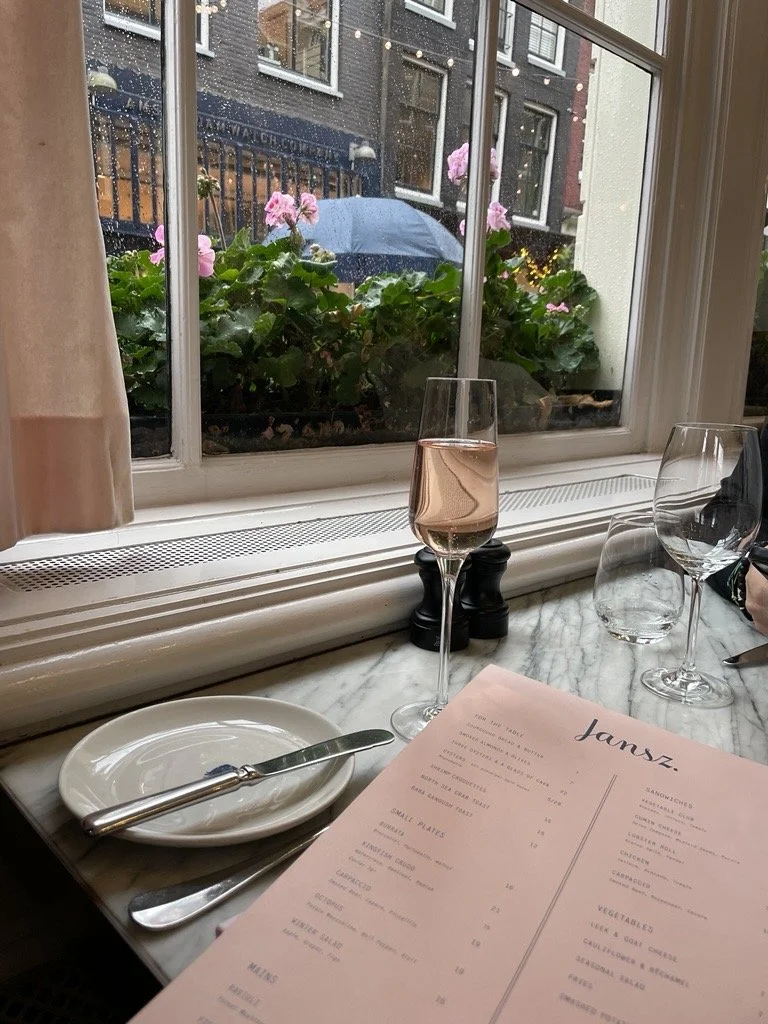

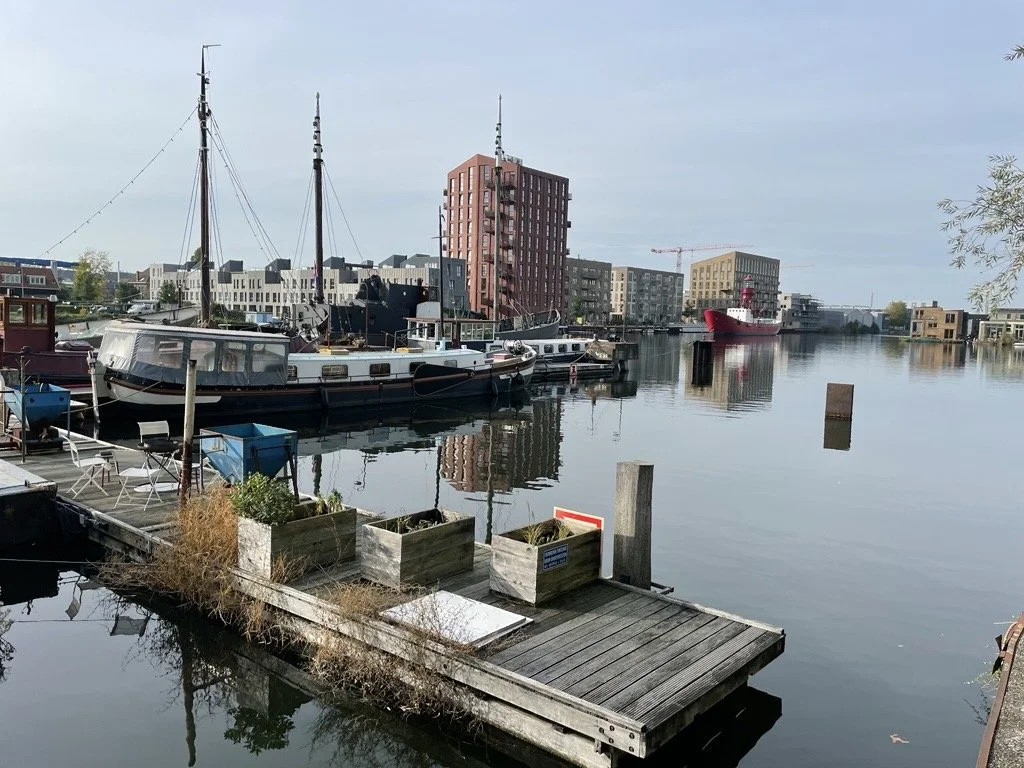
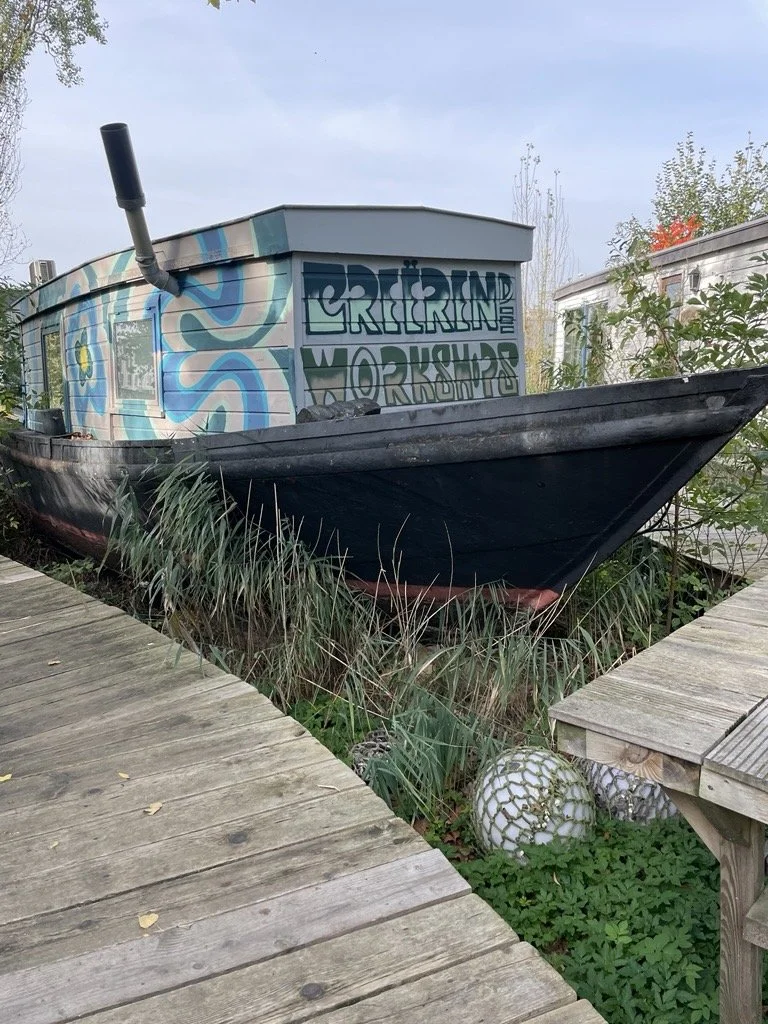
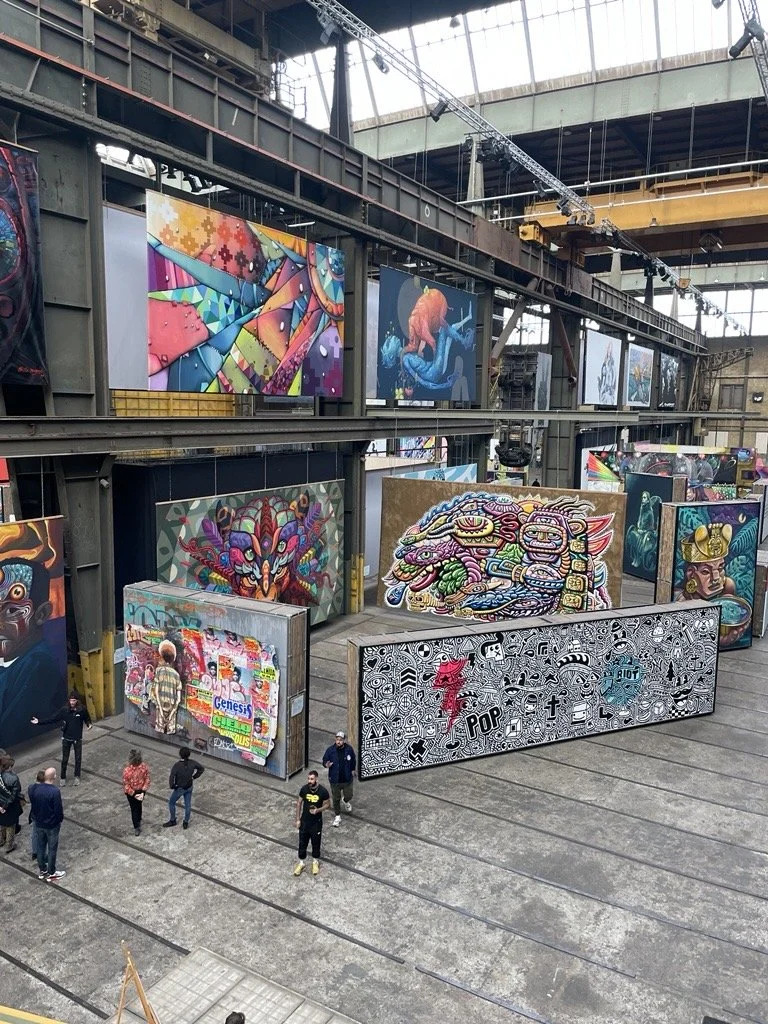
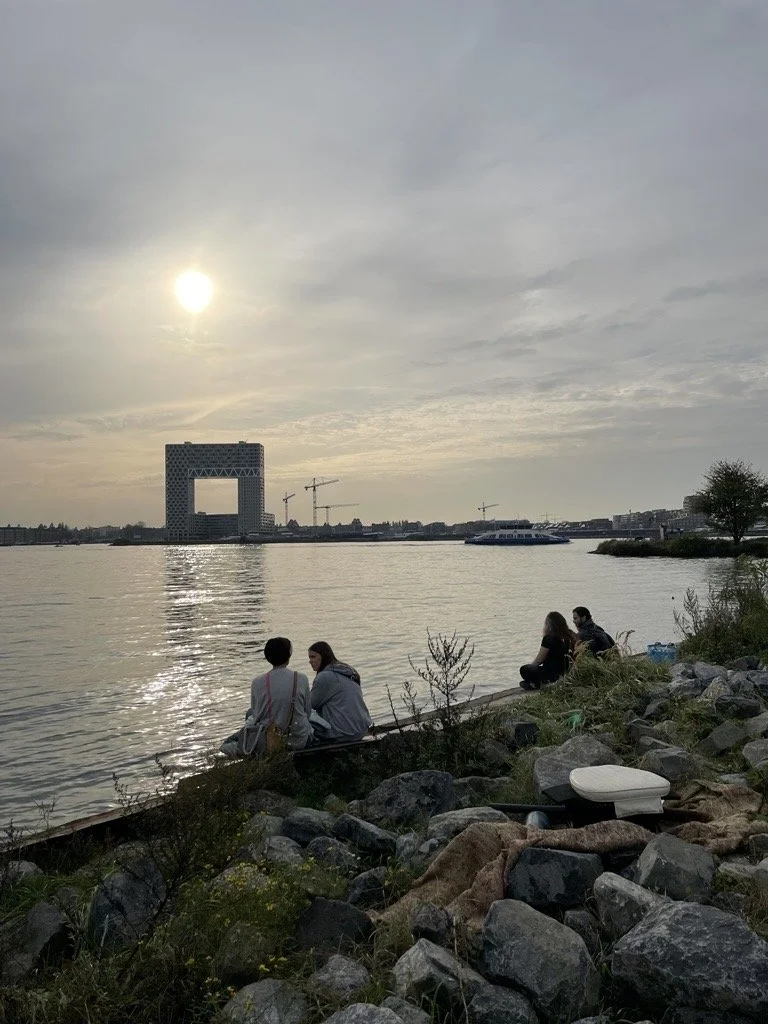
Amsterdam Noord is where the rare good weather is best spent, less urban and built compared to the city on the other side of the IJ. Noorderpark is worth the ride out on its own, a proper local park with none of the performance of the Museumplein lawns. A bike ride also gets you to Pllek, a bar and restaurant built on a reclaimed stretch of the waterfront, all repurposed shipping materials and a real sand beach looking back at the city skyline. STRAAT Museum, dedicated entirely to street art and graffiti, occupies a massive former shipyard warehouse nearby and does not feel like an institution trying to be edgy; it feels like the real thing housed properly. And a little further along, De Ceuvel is the strangest, most unexpected corner of the city: a small floating community built on a former industrial dock, houseboats turned studios, gardens growing where you wouldn't expect anything to grow, half art project and half genuine neighborhood. For dinner nearby, Cafe-Restaurant de Baanderij is a low-key, unfussy way to end a day out here.
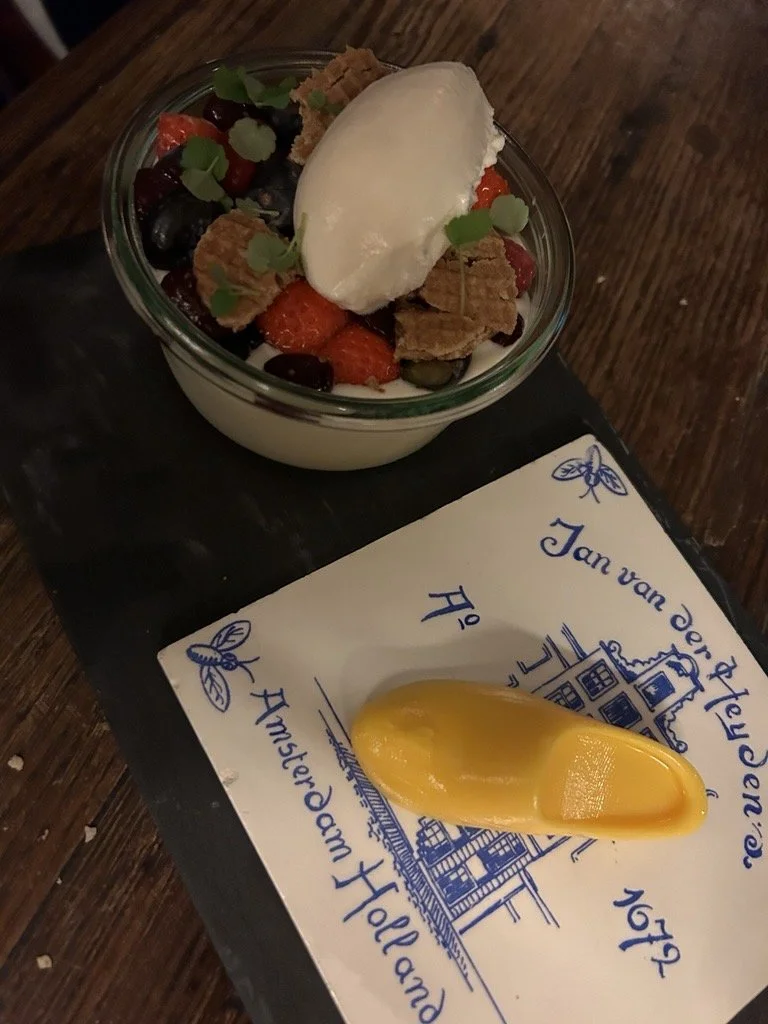
Dinner here can go in a few directions depending on the mood, and true to form, most of the best ones aren't especially Dutch, but if you look hard you could find some. Café Loetje is a laid-back local bistro which famously does a reliable, unfussy steak swimming in a rich, buttery sauce that's really the whole reason to order it. Mr Porter, at the W Hotel, is a dependable, more international steakhouse option, and Yamazato, inside the Hotel Okura, remains one of the more genuinely excellent Japanese restaurants I've had outside Japan, precise in a way that feels earned rather than imported for effect. Tannay is worth seeking out for something quieter and more considered. If you actually want a true local experience, d'Vijff Vlieghen offers traditional Dutch cooking served inside a set of five connected 17th-century canal houses, wood beams intact, one of the only dinners on this list that couldn't have happened anywhere else.
I like Amsterdam. I'd happily move here for a short time, like a month or so. Even though I don’t know if I’d be able to adapt to biking everywhere, climbing the impossible stairs, and eating my way through local markets on repeat. But I've never quite felt like the city let me past a certain point, and after several trips across several years, I don't think that's a failure of any single visit. The colors are lovely, the culture is generous with its museums and stingy with almost nothing except, maybe, warmth. It stays composed even when it's not performing for anyone, sun or rain, tourists or none. Unbothered is the right word for it, and I mean that as both the compliment and the small disappointment it is.
