Lisbon Weekend - Day 2
If Lisbon reveals itself slowly, your second day will confirm that altitude matters! The city is read vertically: effort is rewarded with pauses, views, and moments of quiet that will feel earned as you hike your way to each spot.
The morning begins, fittingly, on Rua Augusta. At Pastelaria Casa Brasileira, coffee comes with a pastel de nata topped with almonds — crisp, warm, indulgent. The counter offers more than enough alternatives to tempt you and test your decision-making skills: brioche, cream-filled pastries, travesseiros de Sintra, and many savory options.

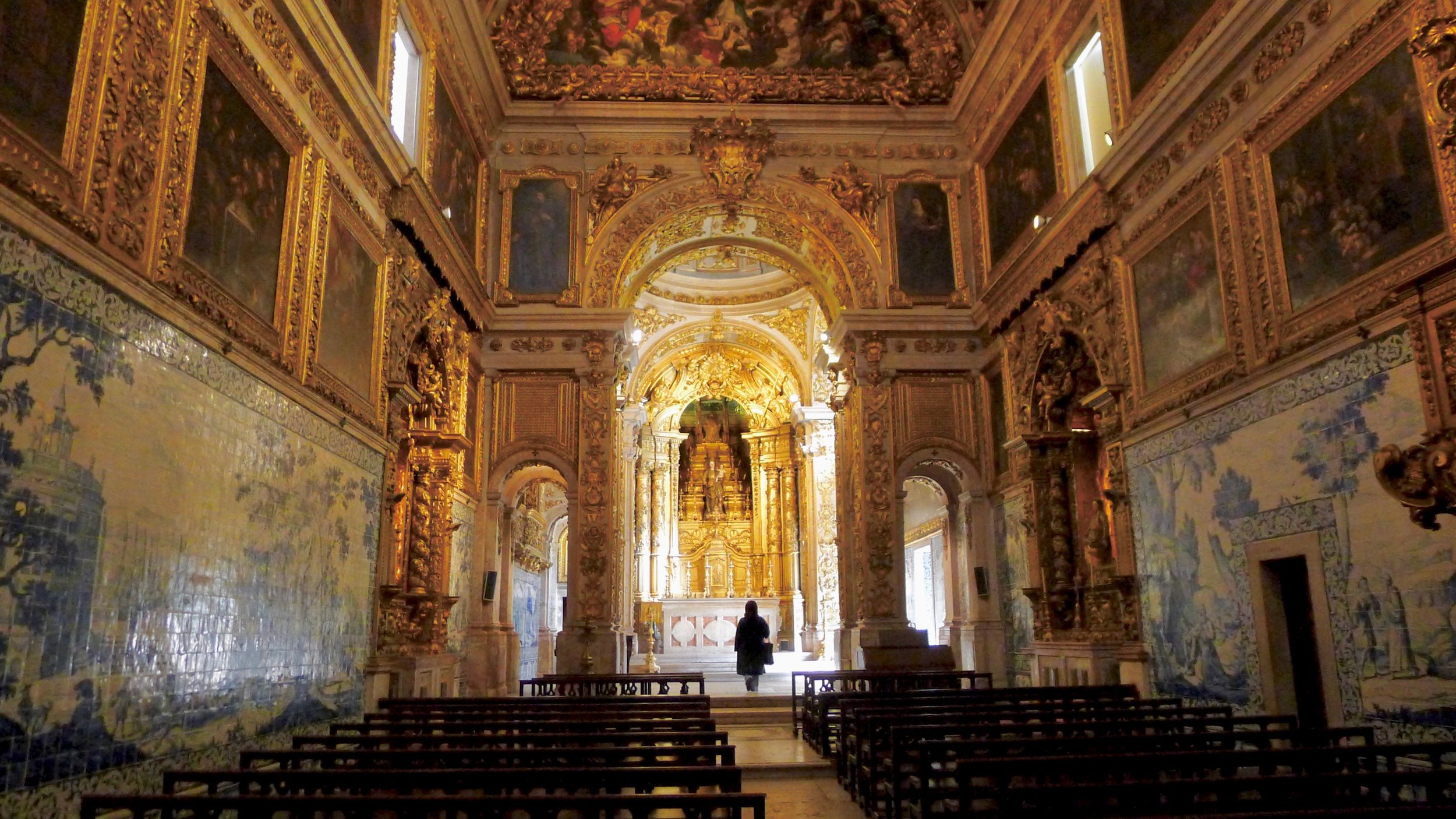
The first destination pulls you slightly off the usual flow. The Museu Nacional do Azulejo offers the opportunity to better understand a key part of Lisbon’s architecture. Walking through the city, you’ll have noticed azulejos lining façades, stairwells, and courtyards. These tin-glazed ceramic tiles — often blue on white — once had a practical function, helping regulate temperature in homes without heating. Over time, utility gave way to ornament, and ornament to identity.

Housed inside the former Convento da Madre de Deus, the museum amplifies that sense of layering. Azulejos cover cloisters and church walls, continue into the sacristy, and frame gilded Baroque decorations. Panels narrate religious stories — including scenes from the life of Saint Anthony — but what stays with you is the accumulation: pattern over pattern, history settling gently onto architecture.
Back near Praça do Comércio, a short pause feels justified. Nicolau Lisboa and Fàbrica Coffee Roasters offer a reliable mid-morning stop before the inevitable climb resumes. Recharged, the route leads uphill toward the Sé de Lisboa, the city’s cathedral. Built in 1147 and dedicated to Saint Mary Major, it is Lisbon’s oldest church — and one of its most resilient. Its Romanesque façade, marked by a symmetrical rose window, contrasts with the Gothic cloisters and ambulatory behind the altar, where royal tombs rest quietly.

The cathedral’s position is striking. Perched high and heavy on uneven ground, it feels almost improbable — and yet it has survived earthquakes, reconstructions, and centuries of change. That persistence mirrors the city itself.
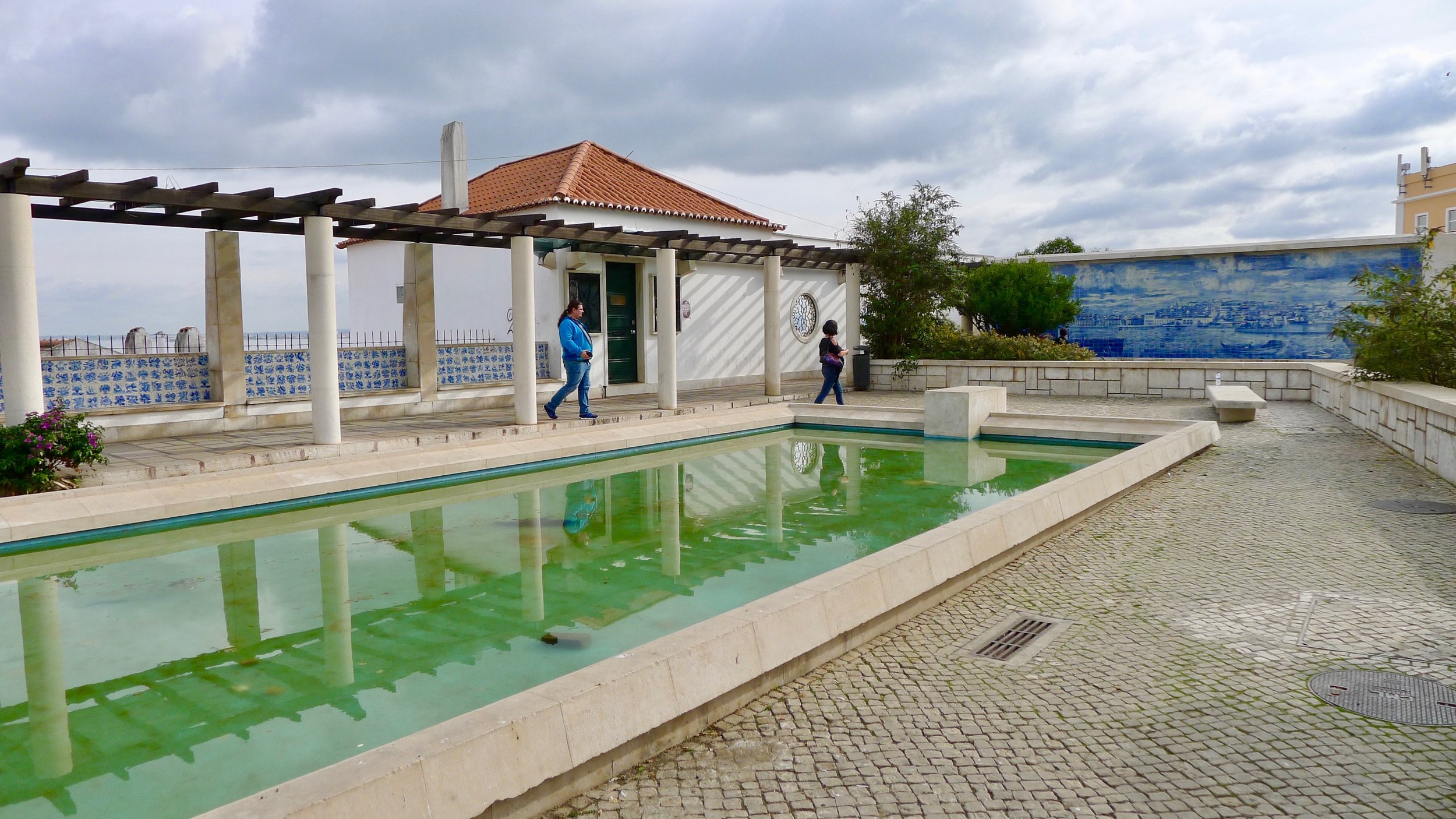
From here, the path folds into Alfama, Lisbon’s oldest district. Streets tighten, footsteps slow. On the way up, Miradouro de Santa Luzia offers a moment of suspension: a pergola draped in bougainvillea, azulejo panels, and a wide view over rooftops and the river. It’s a place that invites stillness rather than spectacle.
Alfama reveals another layer as you climb: street art woven into daily life. Murals, small interventions, unexpected figures appear on walls and corners — sometimes playful, sometimes unsettling — echoing the city’s slightly offbeat, almost grotesque charm without overwhelming it.

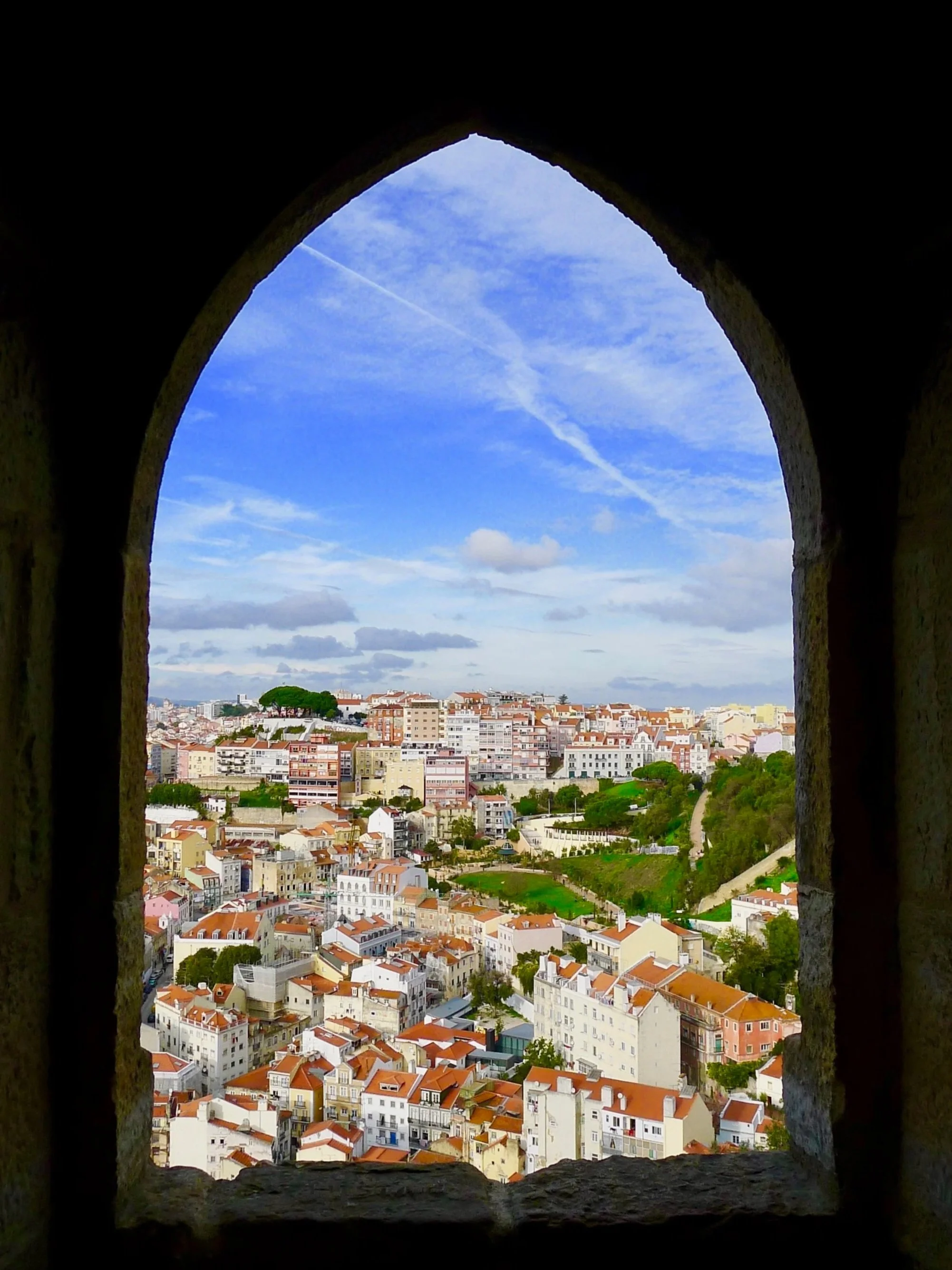
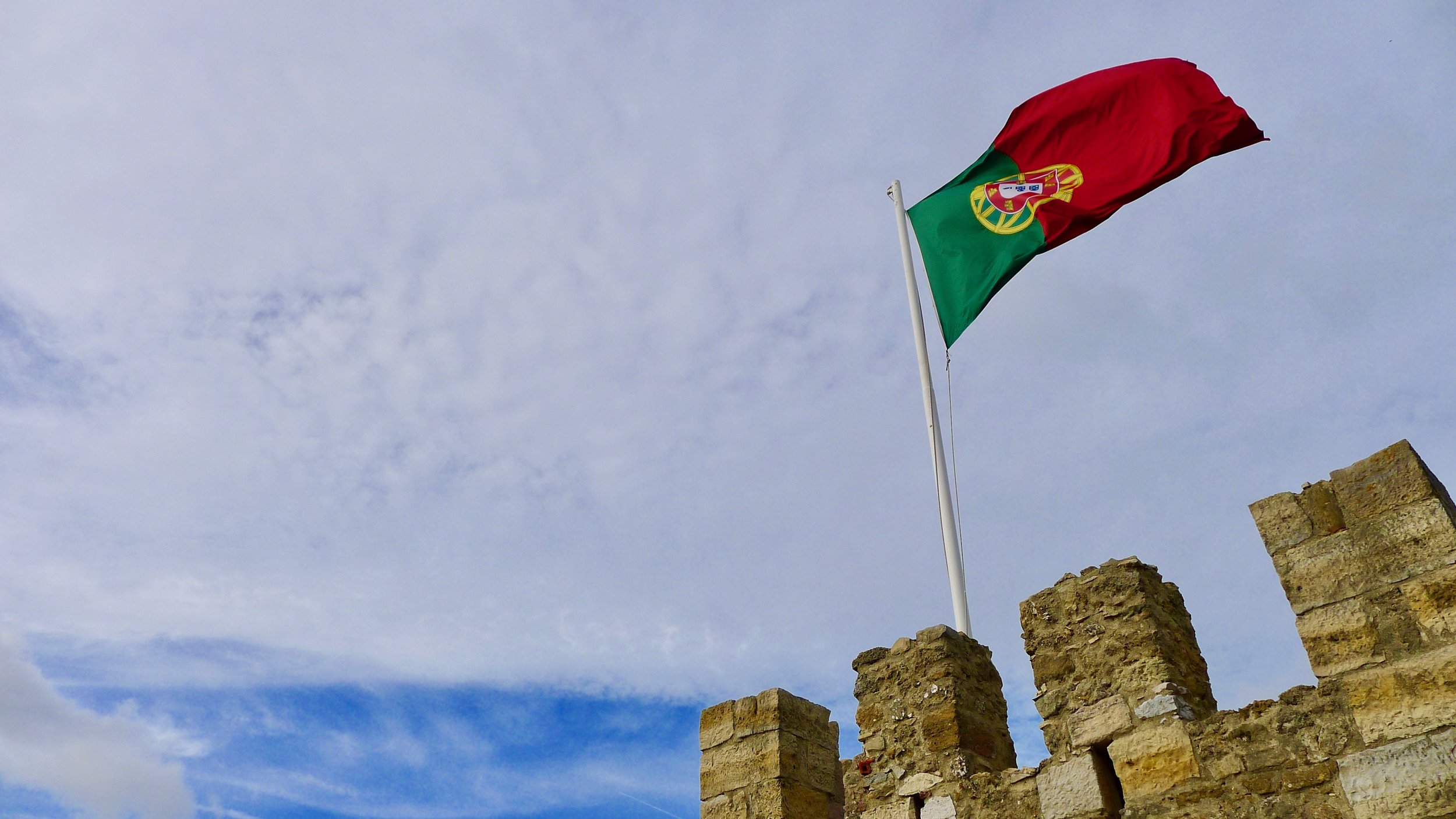
Higher still stands Castelo de São Jorge. The hill has been fortified since at least Roman times, passing through Phoenician, Carthaginian, and Moorish hands before becoming a royal residence under Afonso III. Its strategic importance faded once the Ribeira Palace rose by the river, and earthquakes took their toll, but the structure remains.
Today, the experience is physical. You walk the walls, climb uneven stairs and towers, and look out over Lisbon’s historic center. The view is expansive, but never abstract — rooftops, streets, and the river remain legible, close.
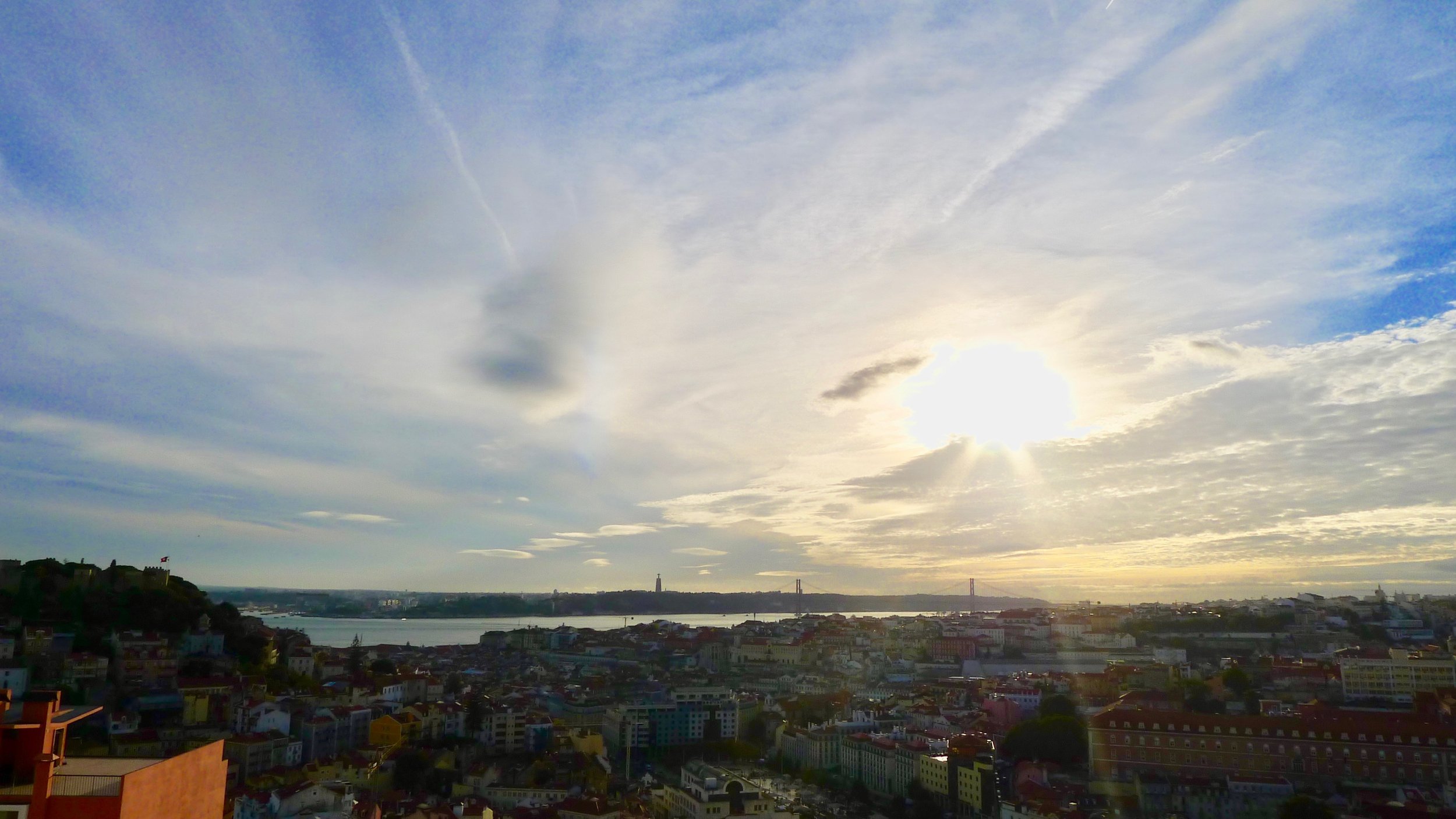
If there’s energy left, Lisbon offers one more ascent. Miradouro da Senhora do Monte is the highest of the city’s viewpoints — and the most generous. Choose your route carefully: the wrong turn leads up one of the steepest, winding streets imaginable. The reward, however, justifies the effort. From here, the city stretches out in full, bathed in late light. Sit, rest, sip a beer, and let the day loosen its grip.
The evening belongs to the table. Dinner at Ramiro is lively and unapologetically focused on seafood: shellfish piled high, simple preparations, fast service. Later, Casa Independente shifts the mood. Drinks, music, and conversations unfold in rooms that feel borrowed rather than built for nightlife.
Day 2 ends as it began: slightly tired, a little higher than expected, and aware that Lisbon isn’t meant to be consumed quickly. It asks for movement, patience, and pauses — and gives back views, textures, and a quiet sense of continuity in return.
This article was first written in November 2016 - re-edited in January 2026.