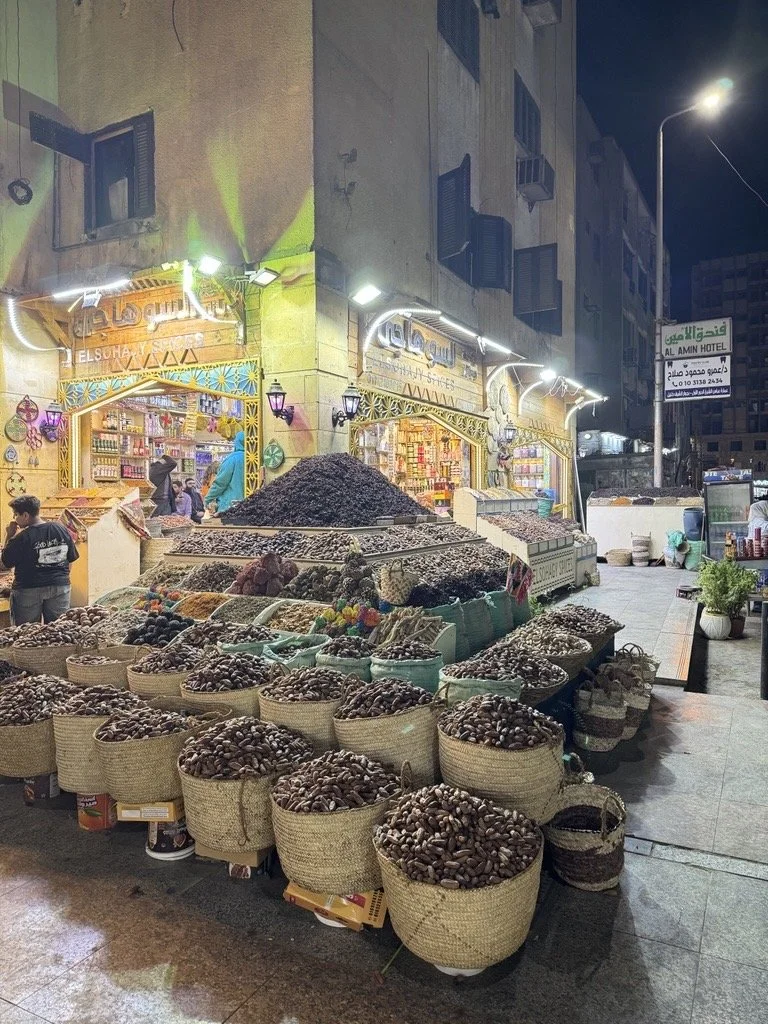
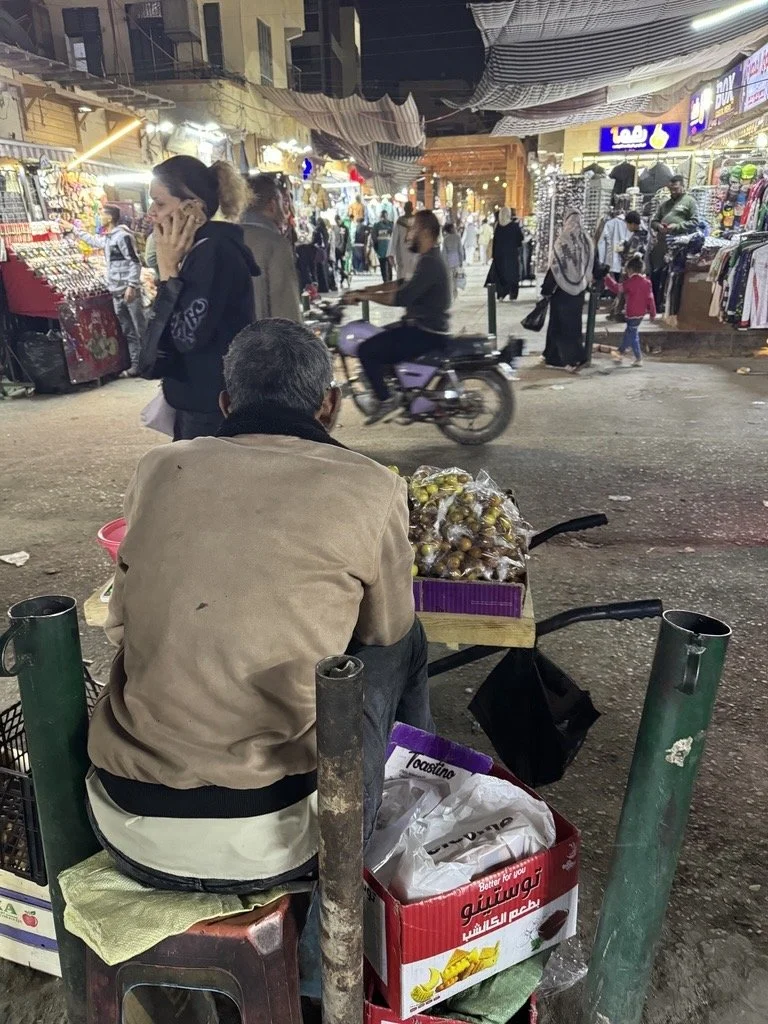
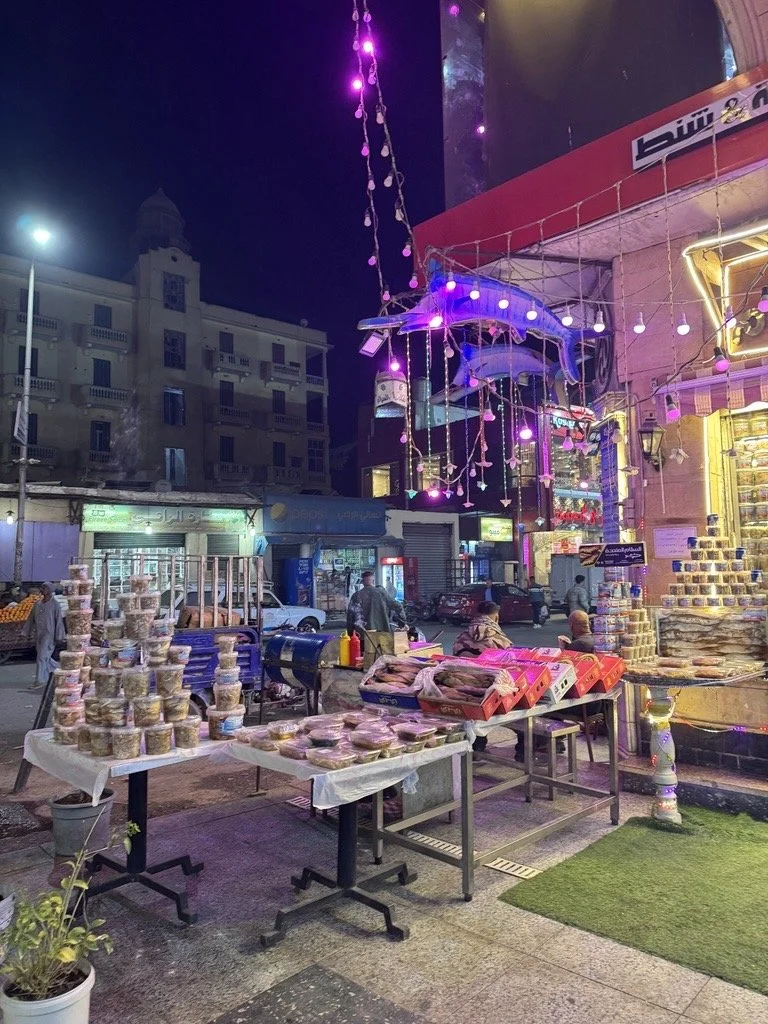
As the sun sets on the Nile, the lights of Aswan start turning on, the last stop of the dahabiya’s tour. After days on the river, docking near town and walking straight into the souk, the city registers as a change of frequency rather than simply a change of place.
The souk here operates without the theatrical insistence of the northern cities. Vendors approach, but with something closer to curiosity than performance. Negotiations feel less combative. The light is different, warmer and slower, and the city itself feels less like a tourist destination and more like a real place where people live.
Part of this is due to geography. Aswan is a border city in the most literal sense: the southernmost major city in Egypt, where the country's Arab-Islamic identity begins to give way to Nubian influence and, beyond that, to sub-Saharan Africa. Roughly twenty percent of the population is Coptic Christian. Greek and Roman traces layer over the Pharaonic. The Nubian aesthetic — brighter colors, different patterns, a different relationship to the river and to public space — is visible in the architecture, the textiles, the faces. It is the most genuinely cosmopolitan city on the journey south, and the one that most resists the single-story version of Egypt that tourism tends to produce. For the first time on the trip, it feels possible to wander without a guide. People are friendlier, and the city is more open.
The last night on the dahabiya is short, dinner is served early, and the crew performs a 10-minute-long goodbye song as they eagerly wait to receive their tips. Tipping is a fundamental part of any experience here — tour guides will recommend how much to give others, as well as how much to give themselves. At 3 am, you find yourself on the deck, disembarking with your luggage on the dirt road of the dock to get onto another van.
Driving at 4 am through the desert feels like moving through a haze. Aswan disappears behind the bus within minutes, replaced by sand and a single-lane highway stretching south toward Sudan. Only the moon and the pale car headlights illuminate the road. Somewhere along the way, the bus stops at a checkpoint; a second driver climbs aboard, rides a few metres, and gets off. A security measure, someone explains — or a way around one. In the desert before dawn, it is hard to tell the difference.
Around 6 am, the convoy pulls into a roadside stop, a sort of “oasis” for drivers. Hot coffee and tea are served at the bar as tourists pick a sandwich or banana from their pre-packed breakfasts, and everyone pressing inside the makeshift bar to escape from the sharp cold of the desert morning.
Abu Simbel
The dramatic wake-up is apparently the only way to visit Abu Simbel, one of the most sought-after stops of everyone’s trip on the Nile - so is it really worth it? The answer arrives about an hour later.
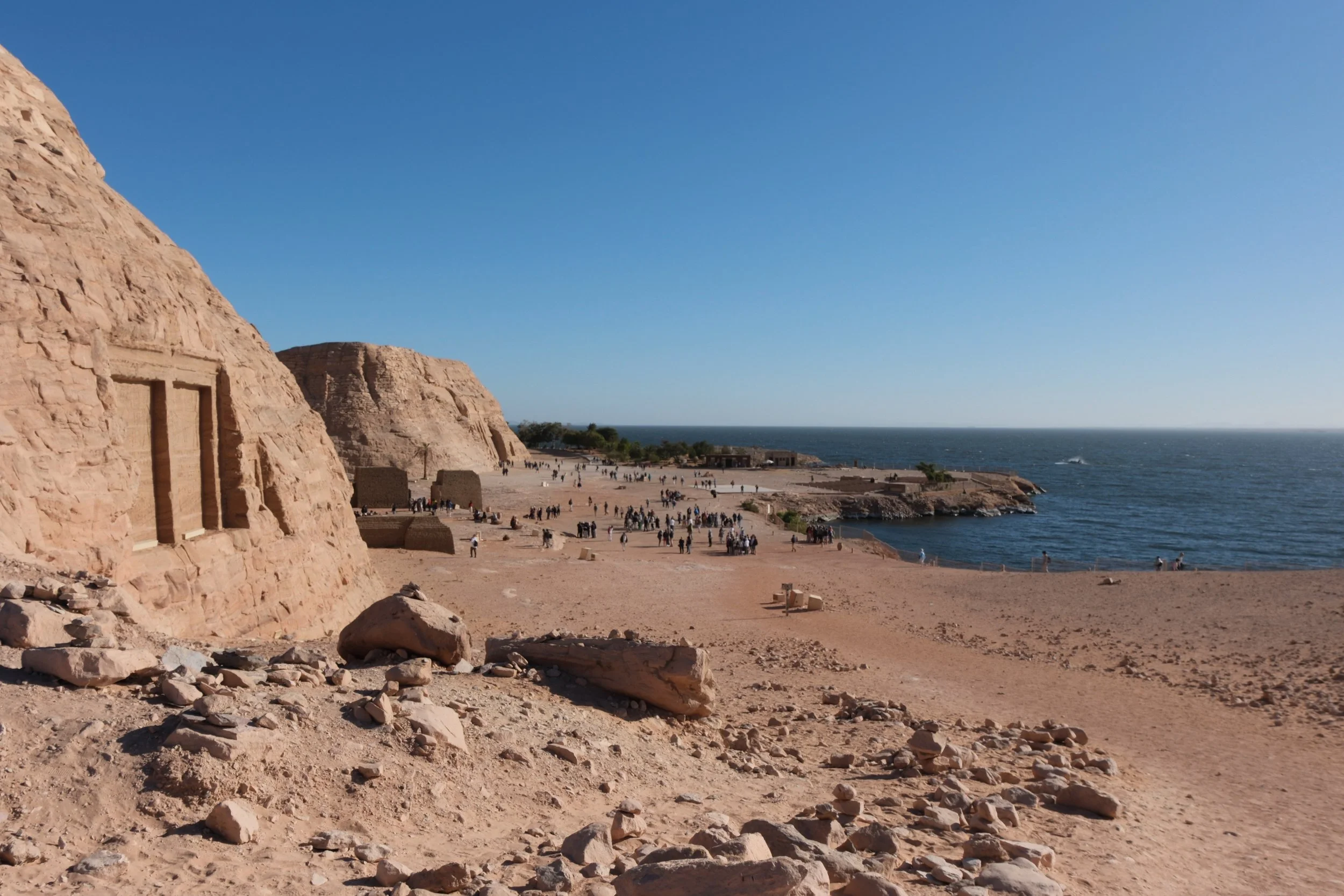
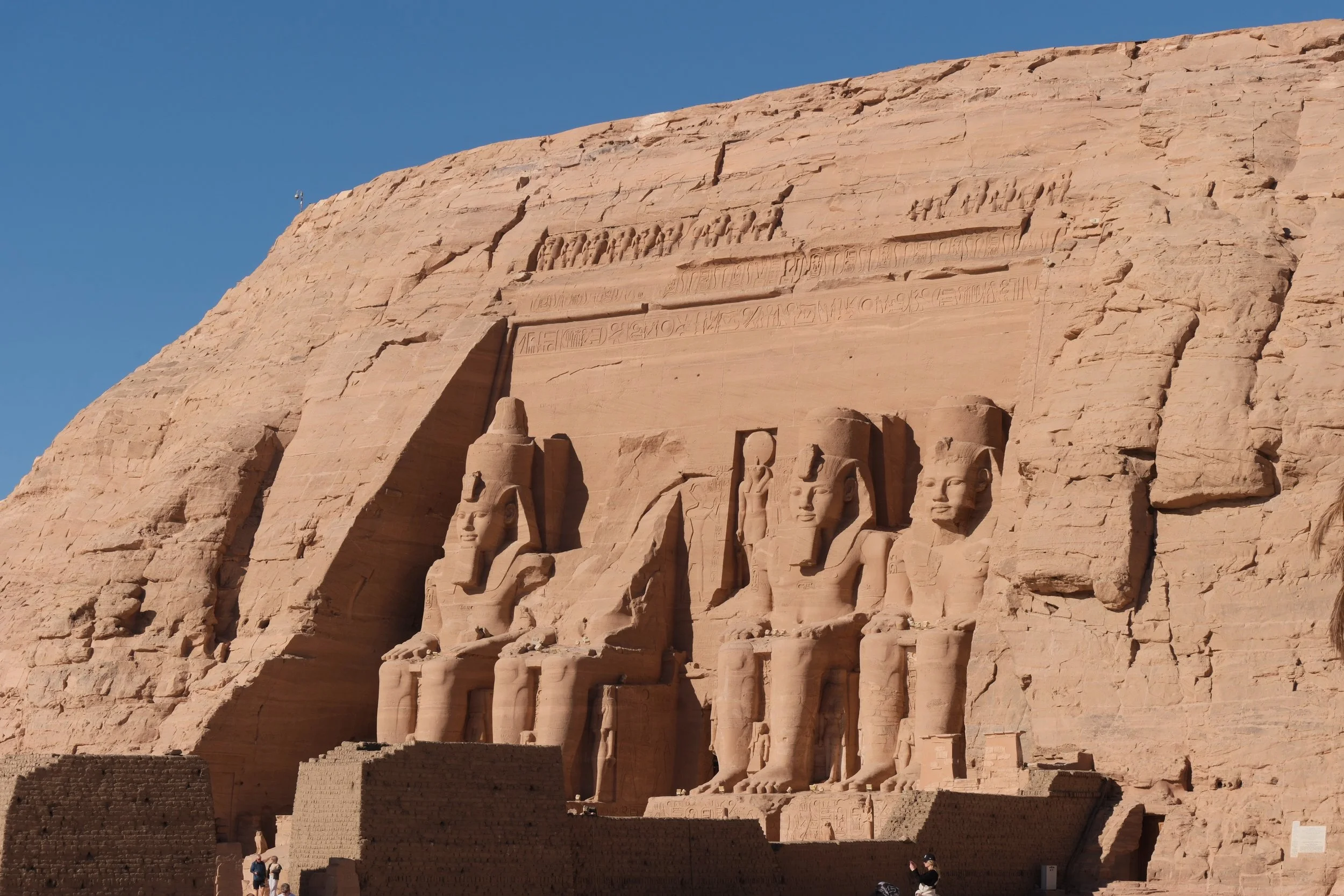
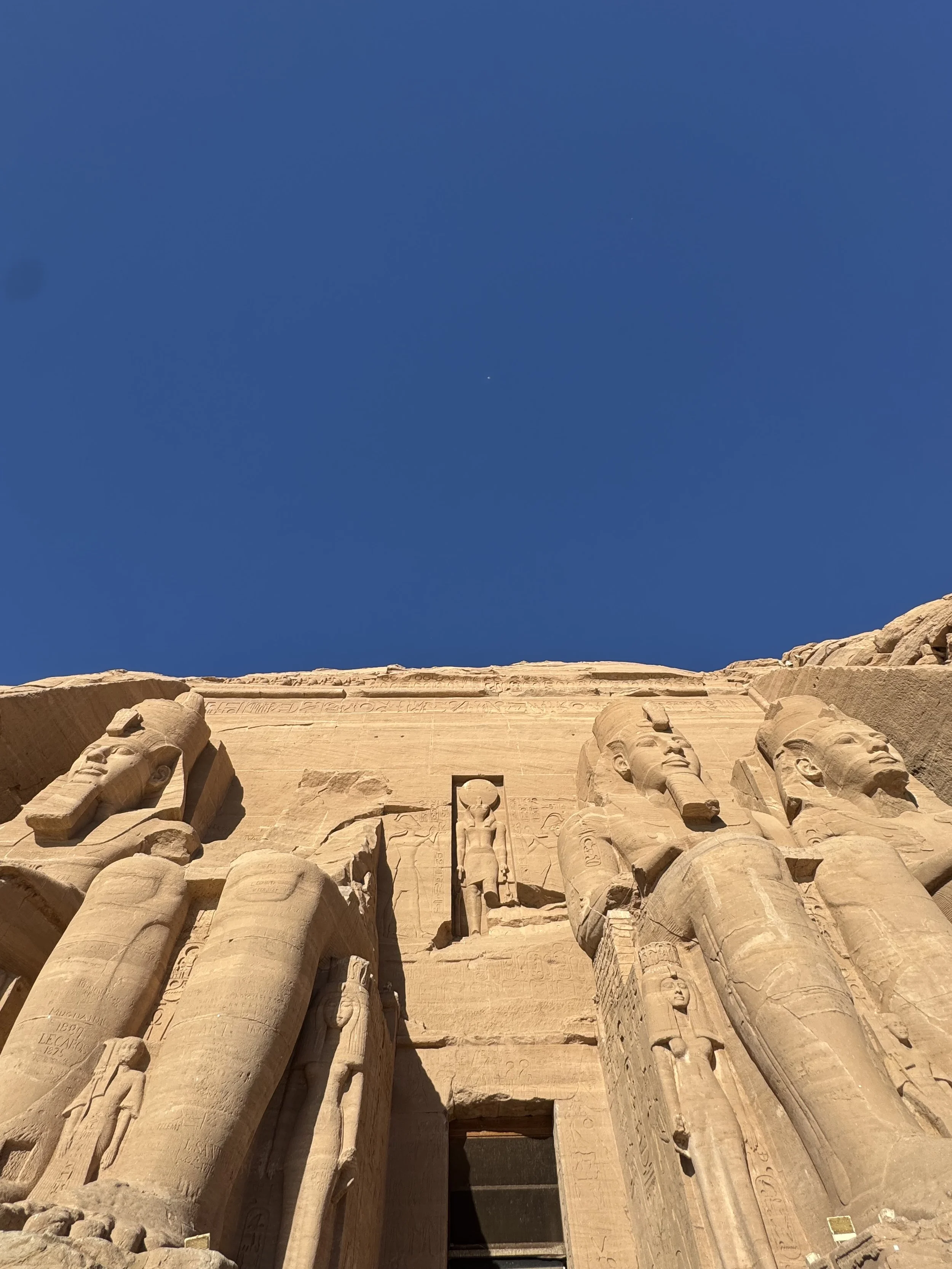
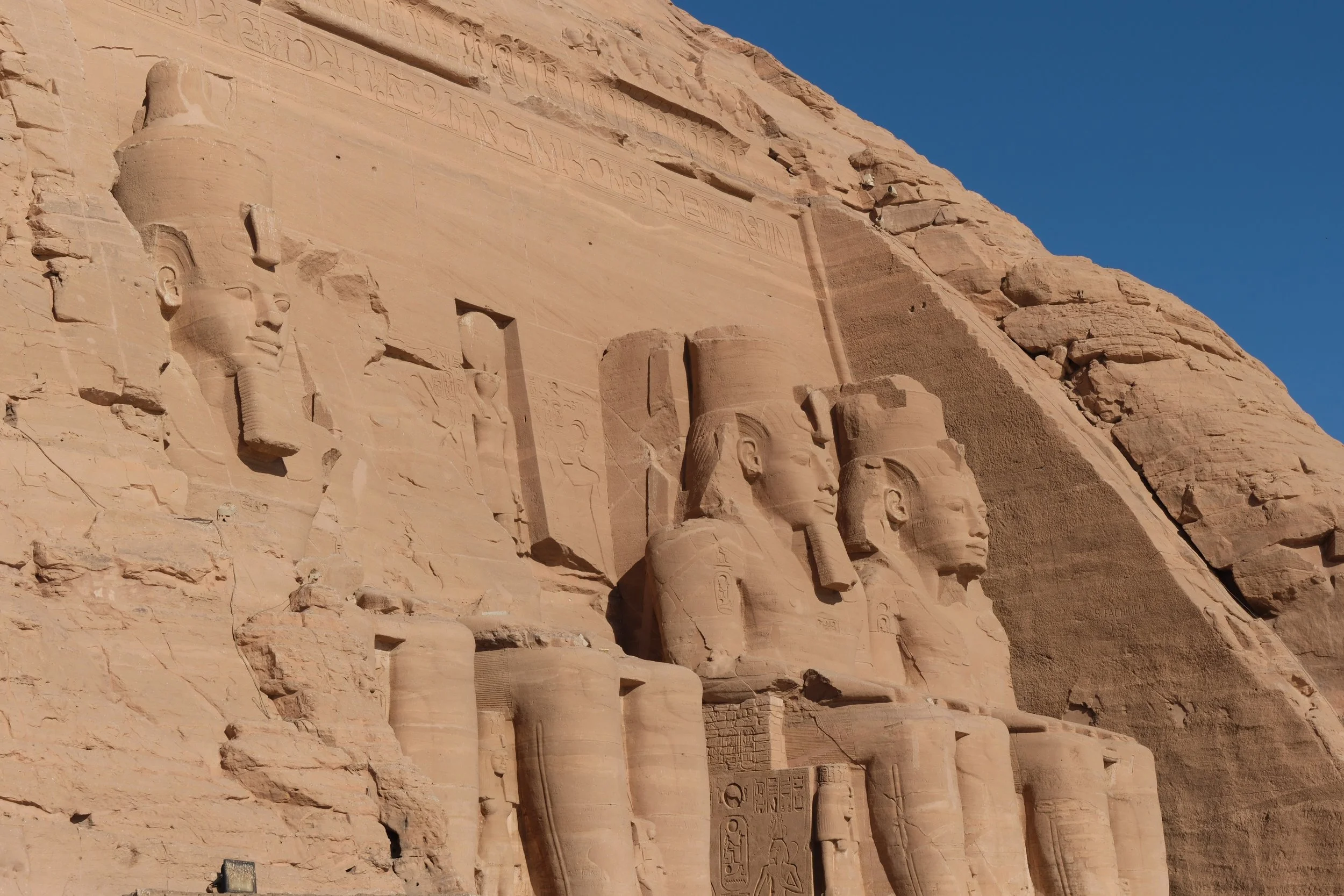
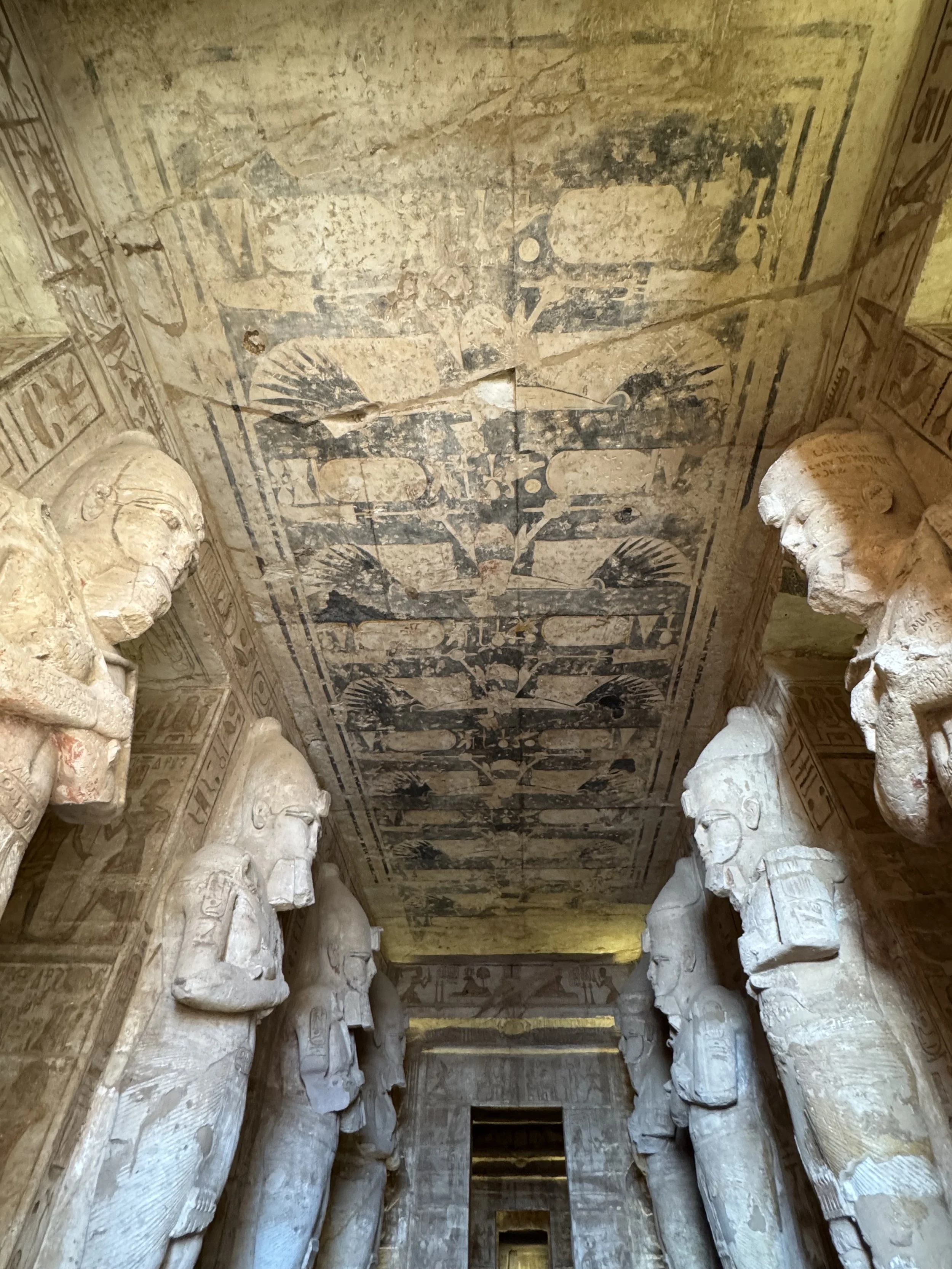
You arrive at the temple on foot, from behind, descending a hill toward Lake Nasser before the facade reveals itself. That approach matters. There is no gradual preparation, no long avenue of sphinxes. You make your way on a dirt road, overlooking the lake, and make your way down a rocky path until you find yourself standing in front of the four colossal statues of Ramses II. They stare you down from the cliff’s face, each one twenty meters tall, emerging from stone, cut directly from the rock in the thirteenth century BC.
Years of imagining this place — partly through Agatha Christie's novel, partly through the particular way certain monuments occupy your mind before you've ever seen them — and it delivers. There is something about stone carved into life; the way Abu Simbel has that same raw power as the ruins of Petra in Jordan: man's hand meeting nature and producing something that feels inevitable rather than constructed. Totally worth the early wake-up.
This temple was not built to welcome visitors. It was built to scare aggressors; a declaration of the power and breadth of the Ancient Egyptians' reign.
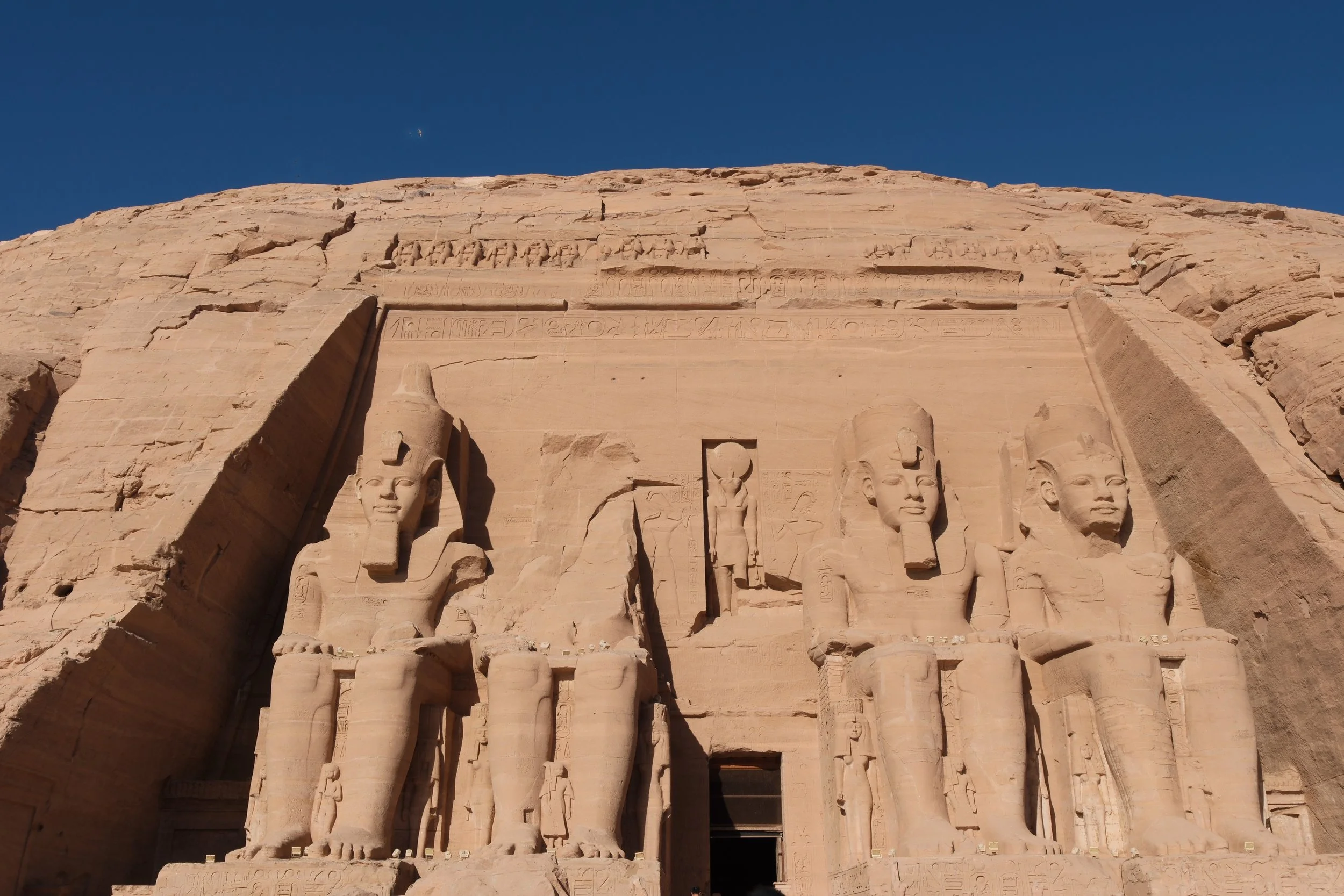
Abu Simbel sits at what was the southern edge of the Egyptian empire — remote, isolated, facing south toward Nubia (modern-day Sudan) and the enemies beyond it. Ramses II chose this location deliberately. The temple was a political manifesto carved into geography itself: a message to anyone who considered crossing the border that the power waiting for them was not merely military but cosmic. The four statues are there as a warning.
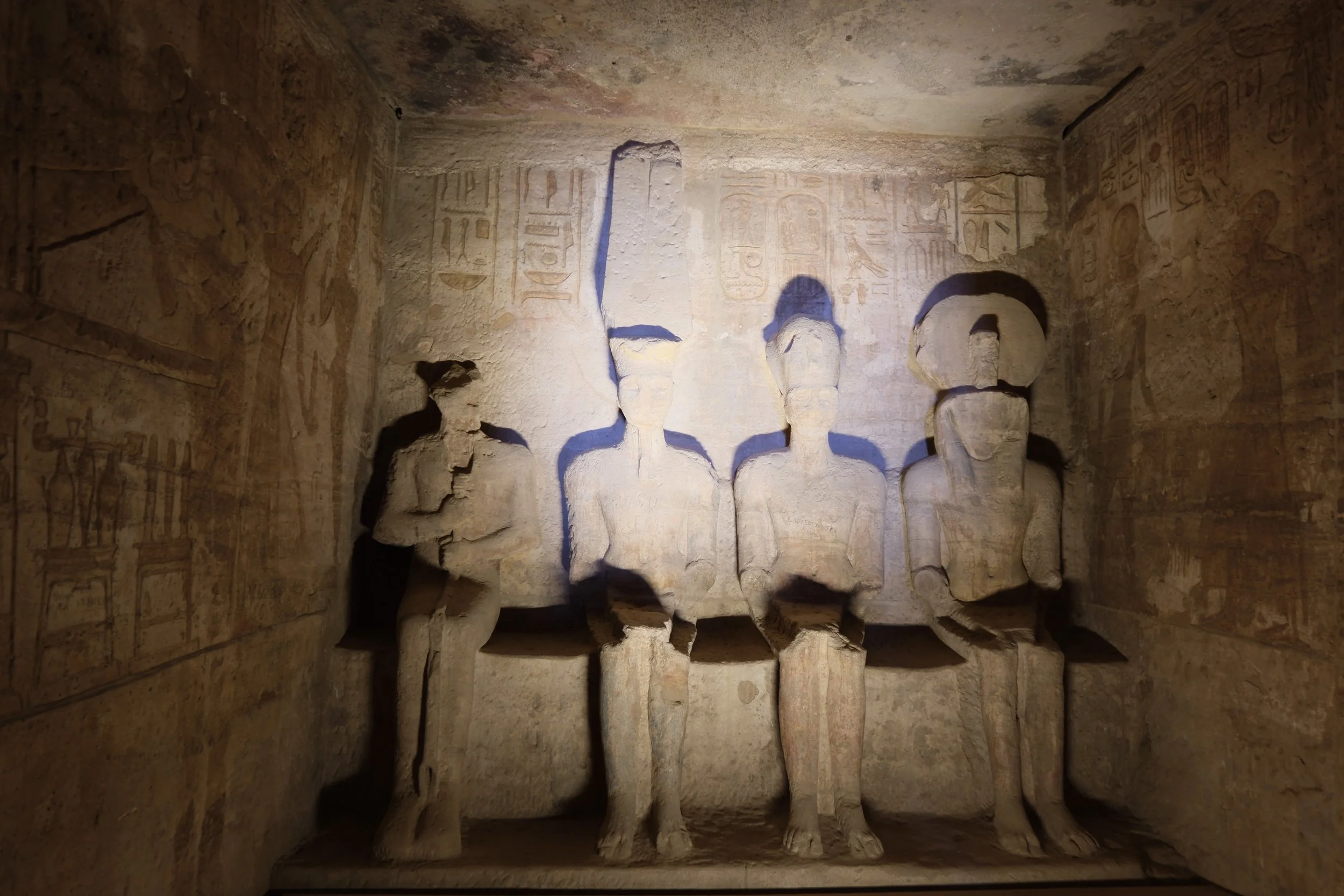
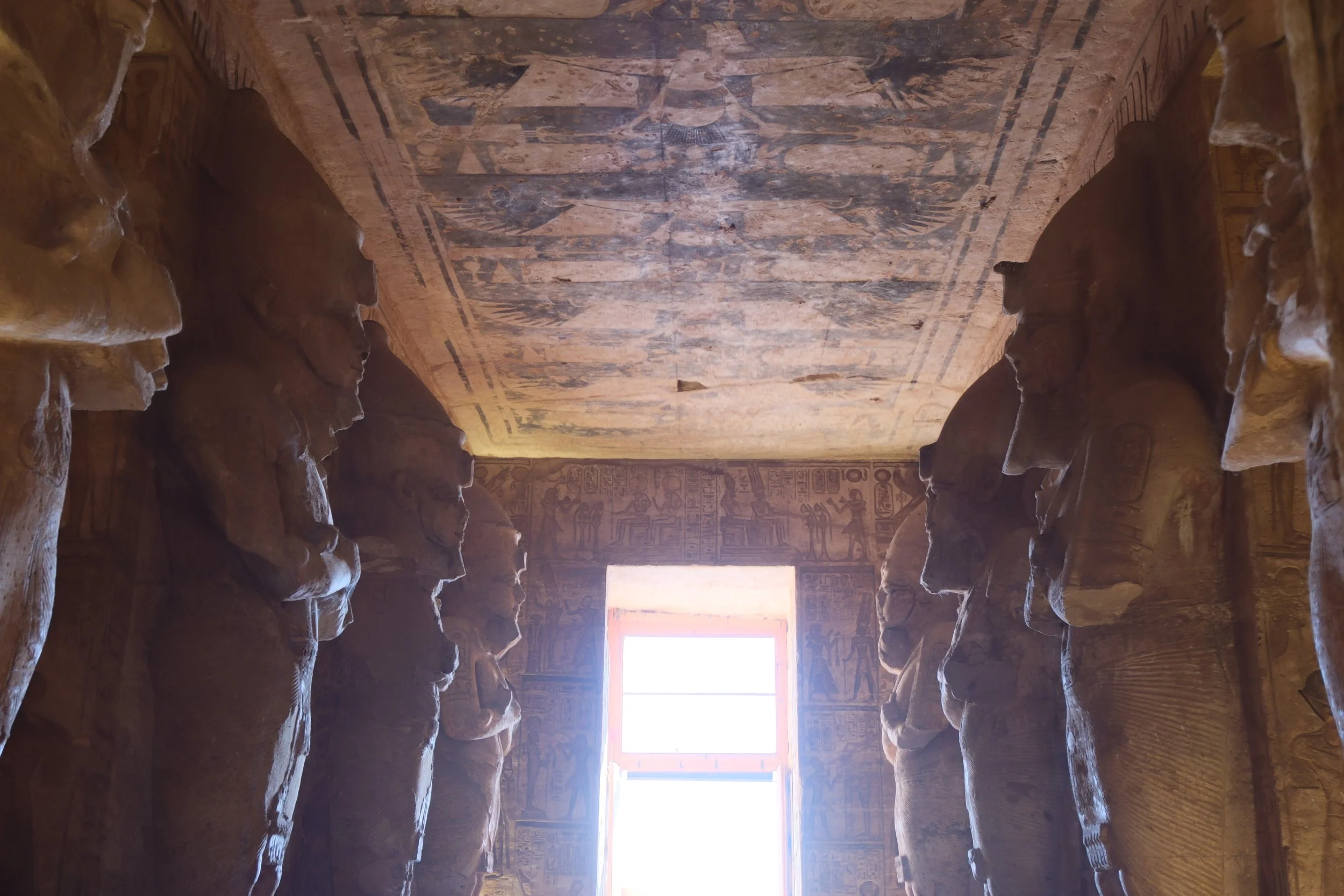
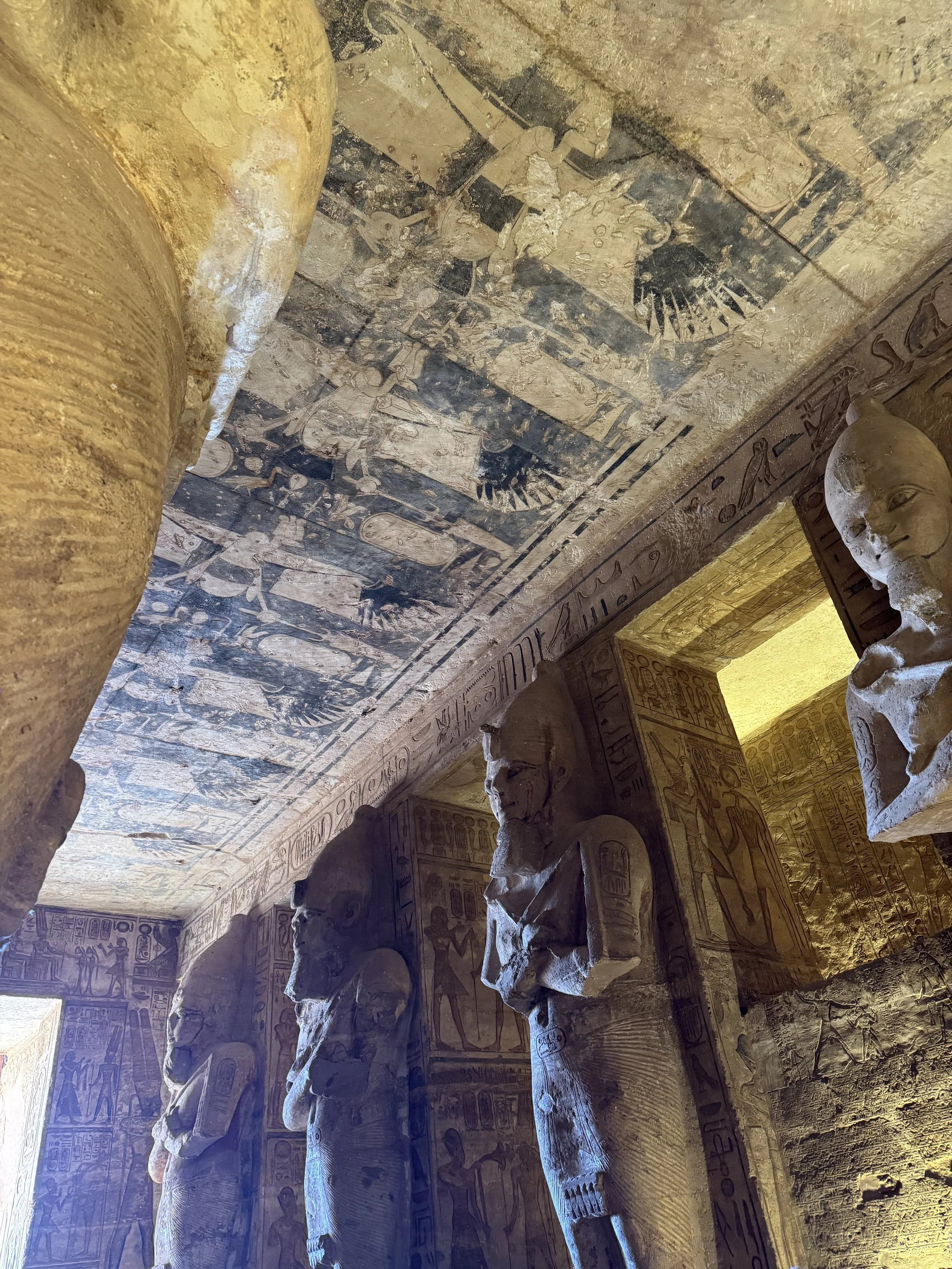
Inside, the temple is oriented with astronomical precision. Twice a year — on February 22nd and October 22nd — sunlight penetrates from the front entrance across the full length of the inner sanctuary and illuminates three of the four gods seated in the sancta sanctorum room at the far wall: Ramses II himself, Amon, and Ra-Horakhty. The fourth, Ptah — god of darkness — remains in shadow. This was not accidental. The ancient Egyptians understood astronomy and used it as an instrument of legitimacy. The sun itself, twice a year, confirmed the pharaoh's divine authority.
The temple was built to last forever. What is perhaps more remarkable is that it has, though not without human intervention. When the Aswan High Dam was constructed in the 1960s, Abu Simbel faced the very real risk of being permanently submerged beneath Lake Nasser. UNESCO launched one of its earliest and most ambitious rescue operations in history: the temple was dismantled block by block — some weighing up to thirty tons — and reconstructed on higher ground, with the original orientation, light angles, and proportions carefully preserved. Today, the solar alignment still works. Built to endure for eternity, it has lasted because three thousand years later, someone decided that eternity was worth a collective effort.
Nearby, the temple for Ramses II’s most beloved wife, Nefertari, is quite meek and unassuming in comparison. While a gentle touch on the pharaoh’s part to think of her, it is still a reminder of the disparate roles men and women played in society at that time - and possibly still today in certain cultures.
Philae
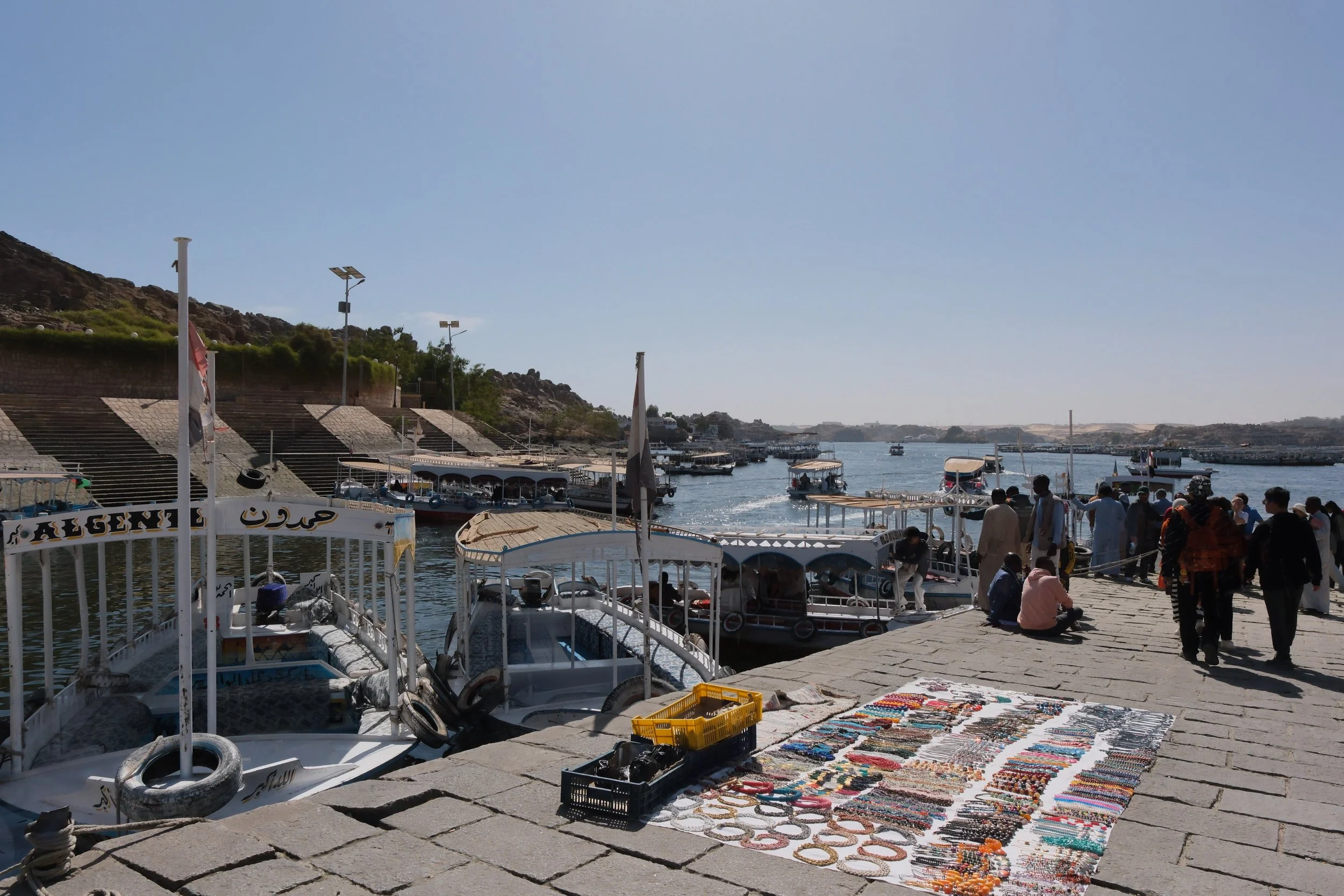
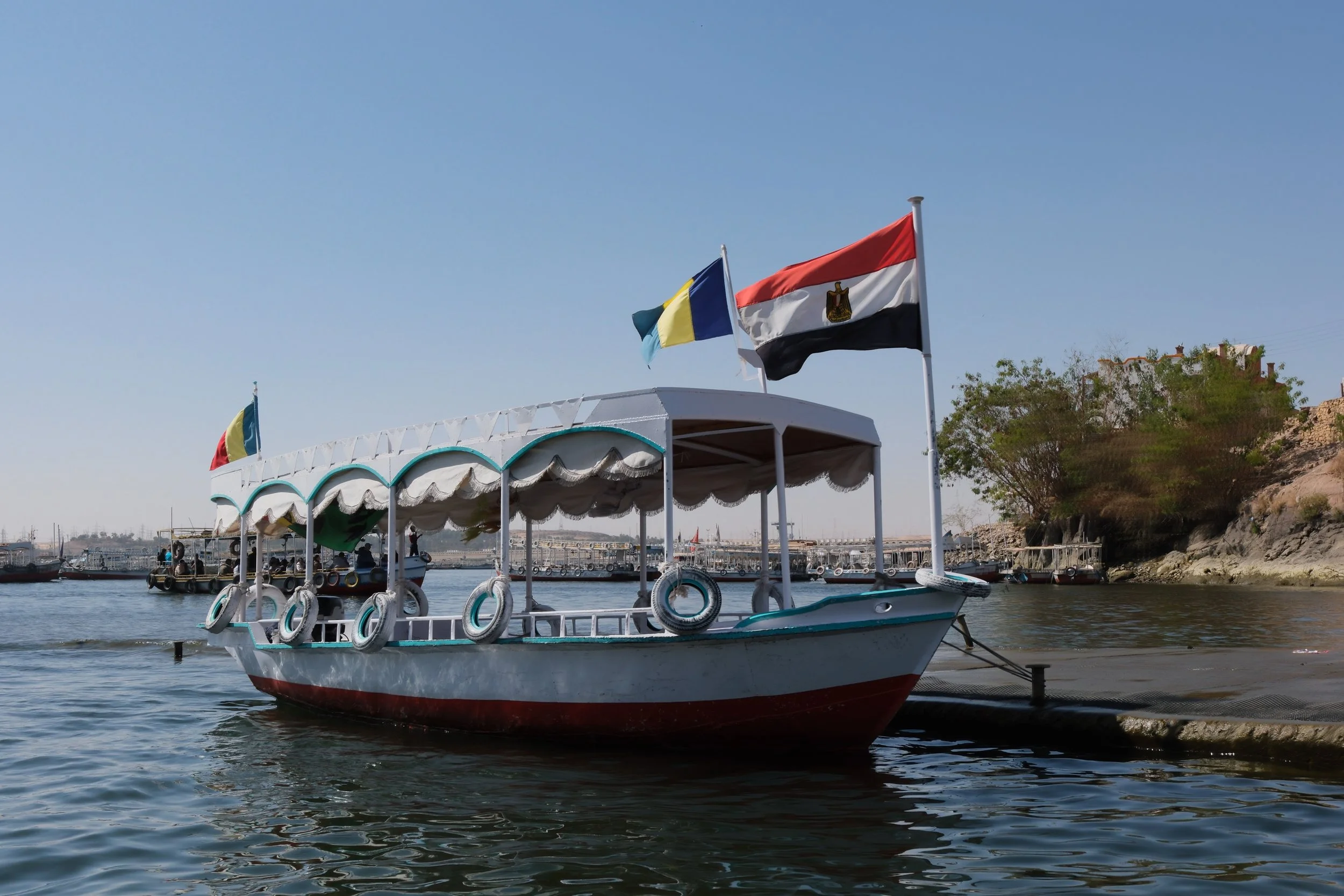
Abu Simbel isn’t the only stop of the day. Back at Aswan, another magnificent temple, rising from the water, awaits. Getting to Philae is part of the experience. The temple sits on an island, accessible only by precarious small wooden motorboats that ferry tourists back and forth across water that the Nile, releasing its silt here, has turned dark and slick. The landing stones are extremely slippery — a detail the guides mention after the fact, and possibly after you have fallen face down on the dock.
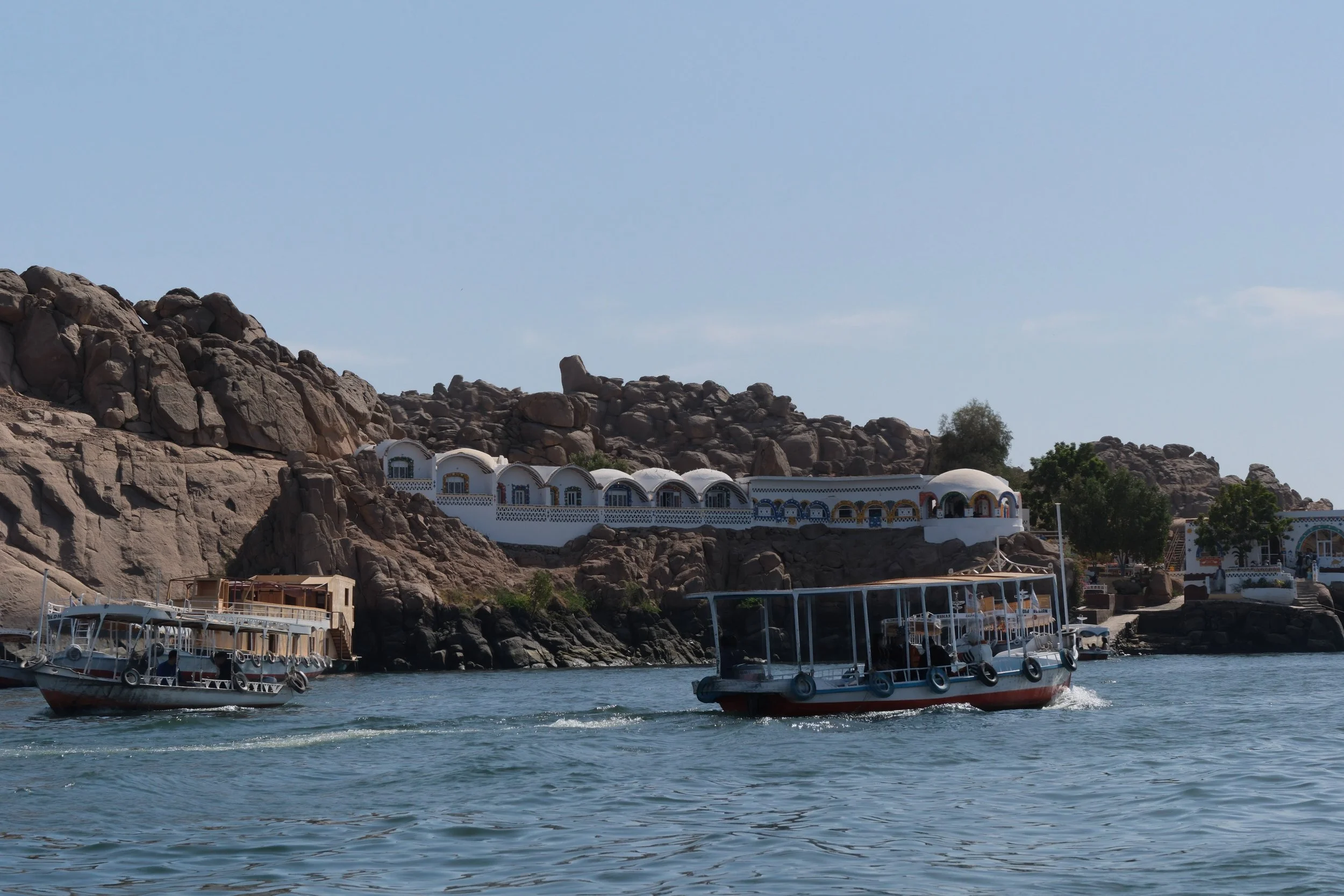
On the surrounding islets, clusters of small Nubian villages cling to the rocks, recognizable from a distance by their vivid colors. They give the place a human quality that the monuments alone cannot, and welcome you to a corner of Egypt that is very distinct from anything else on the journey. It invites you to stop and enjoy your time there, to explore the villages. This is a culture fundamental to southern Egypt, and one rarely given space in the standard narrative.
Philae is one of the last active temples of ancient Egypt — the cult of Isis continued here until the sixth century AD, roughly a thousand years after most of pharaonic religion had faded. That persistence is the point. Where Abu Simbel represents power that shouts, Philae represents power that adapts.
Isis is worth understanding here because she explains why the cult lasted. She is not a deity of conquest or spectacle. She is the goddess who reassembles — who, when her husband Osiris is murdered and dismembered by Seth, collects the pieces, reconstructs him, and restores enough life to conceive Horus. Death is defeated not through force but through care. She is a mother, healer, mage; invoked against illness and danger; protector of travelers, sailors, children, the sick. She promises that reconstruction is possible even after total loss. As a divine proposition, it travels well. Even today, it is a message many would like to cling to.
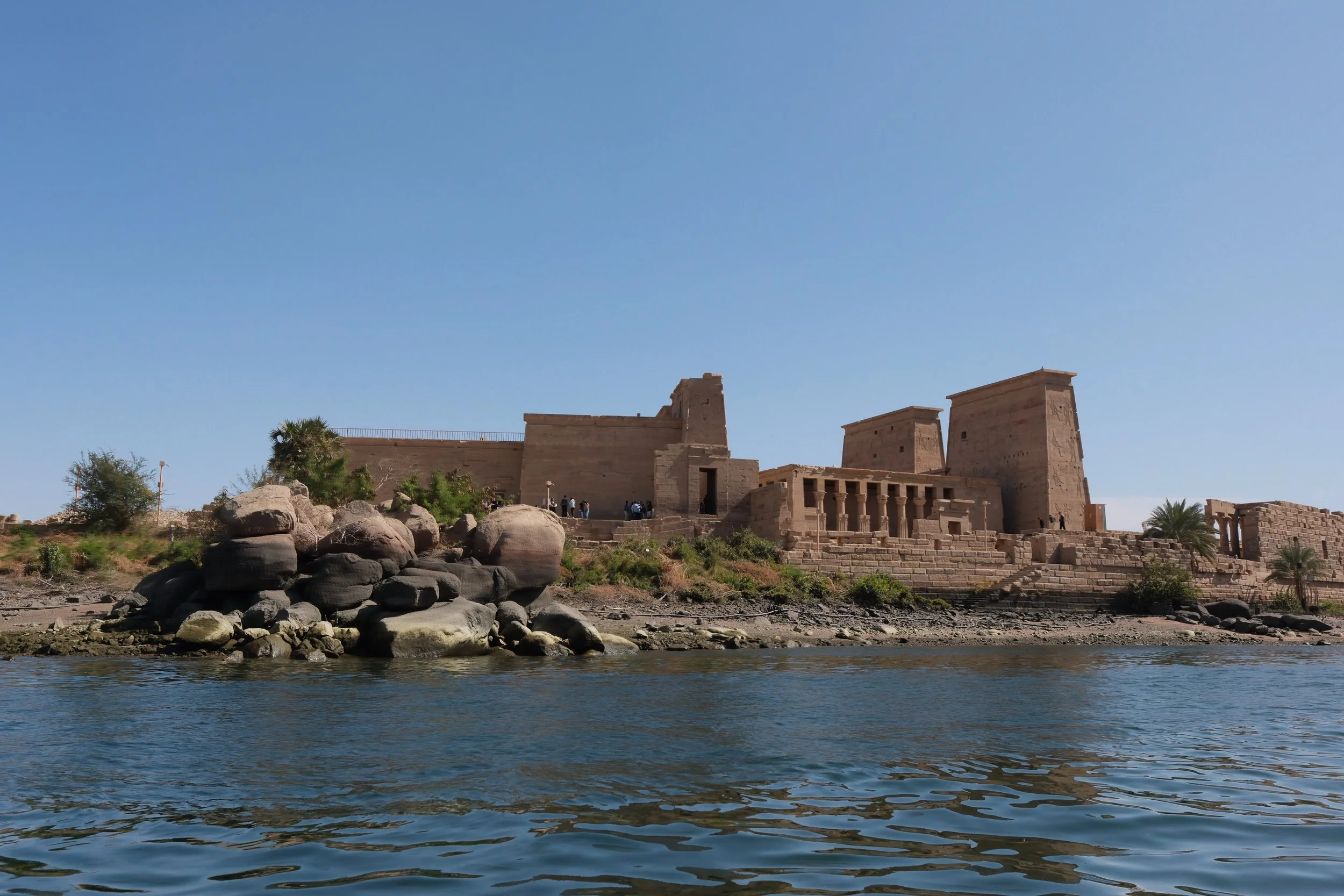
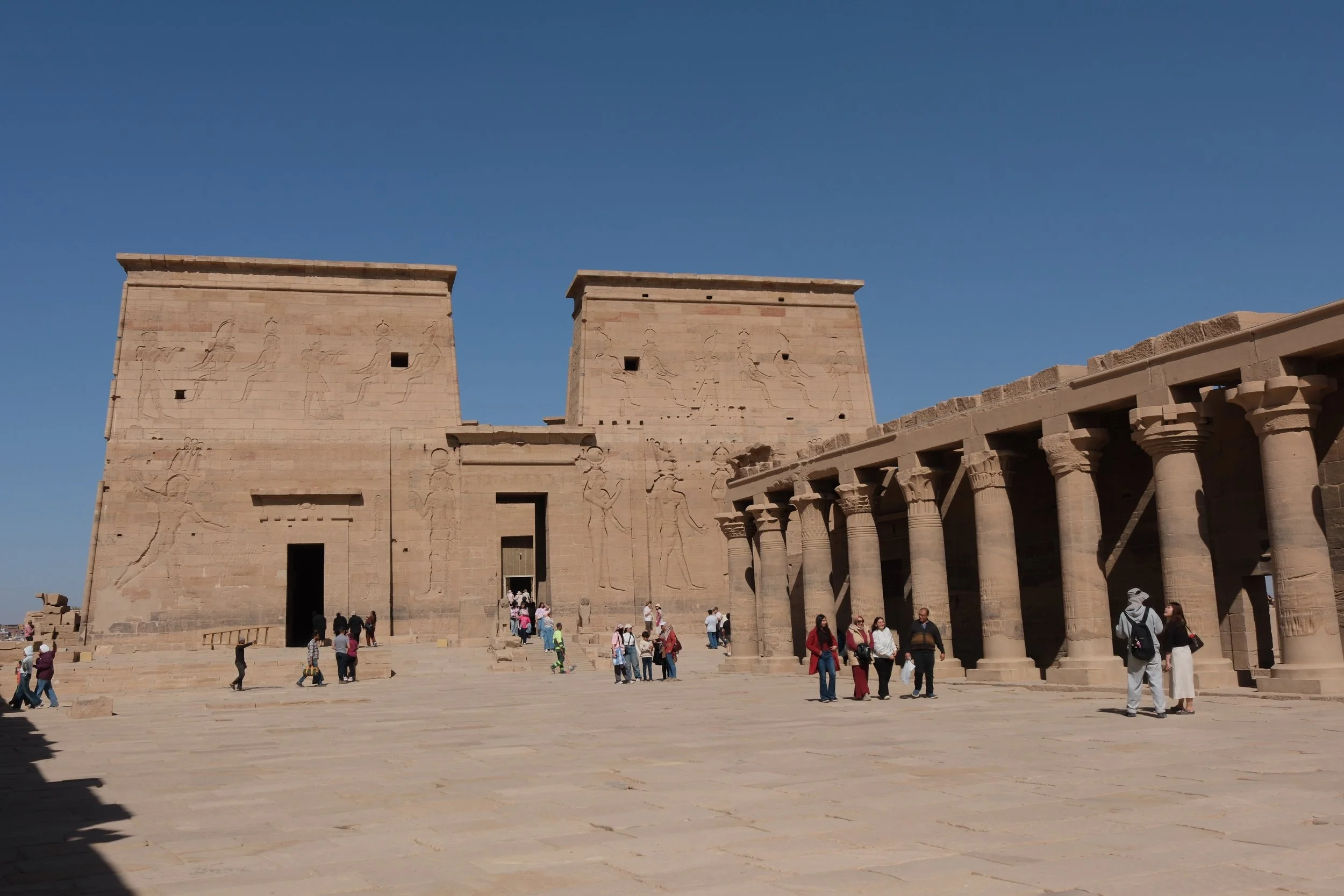
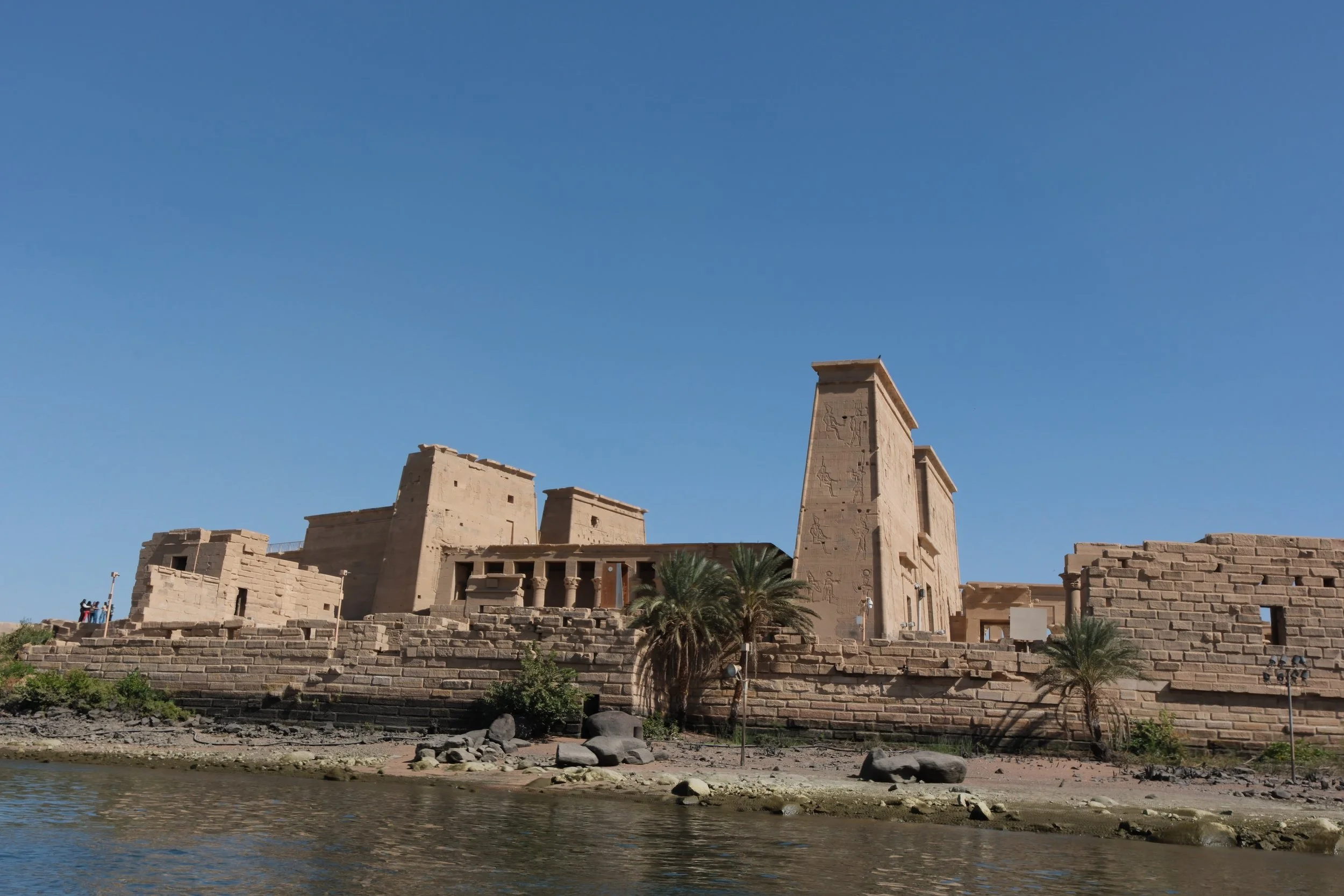
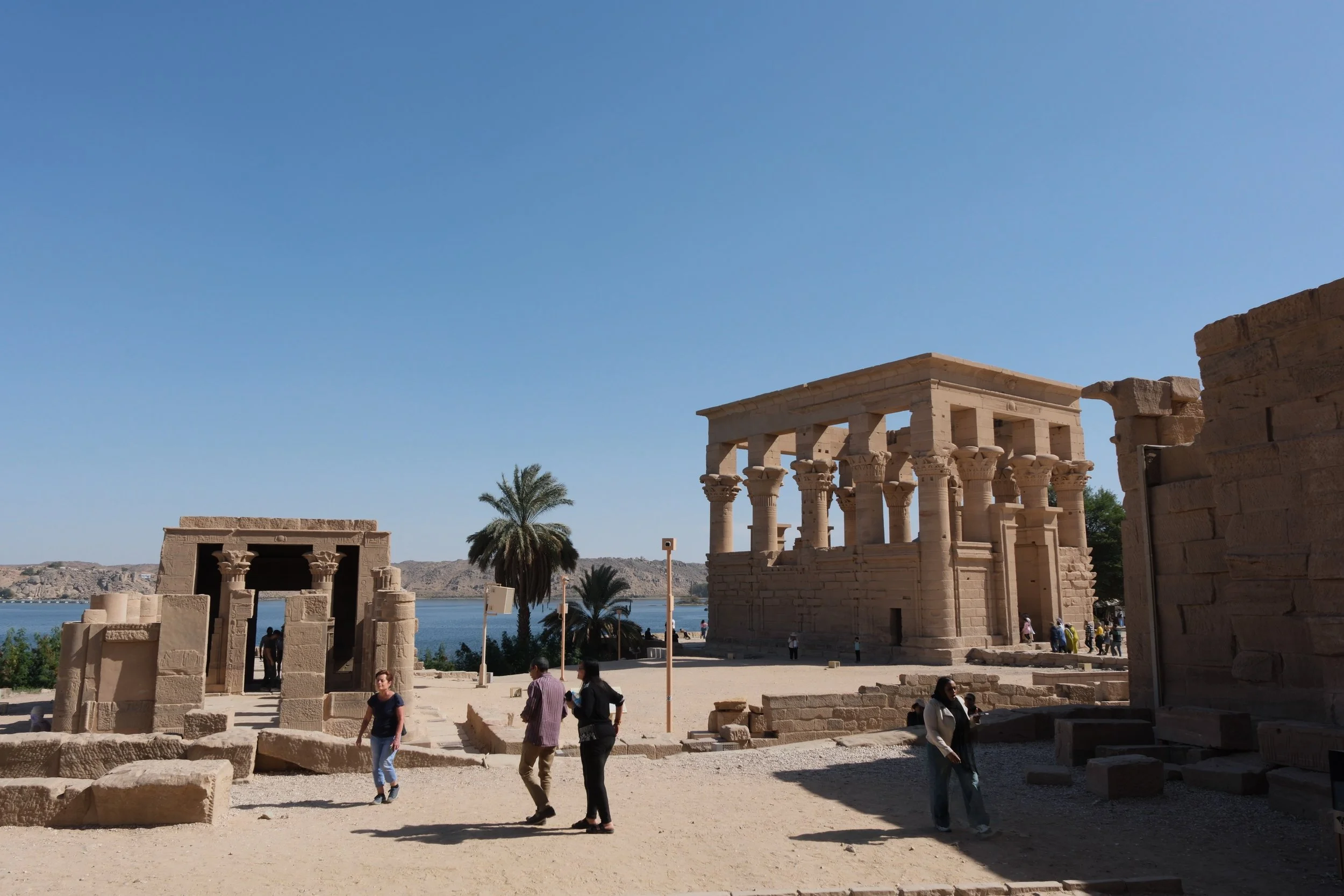
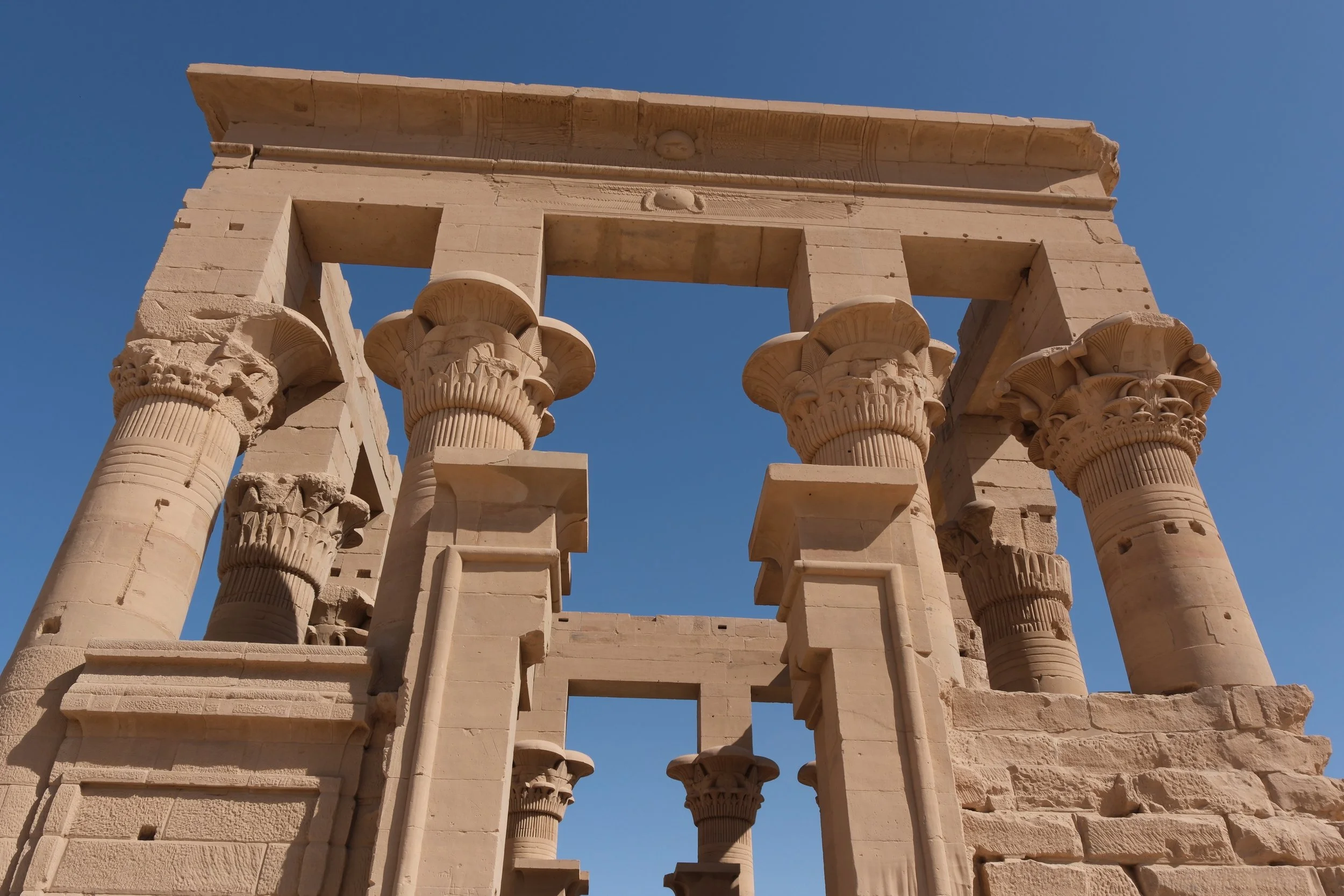
When Rome conquered Egypt, the emperors did not suppress the cult of Isis; rather decided to join it. Trajan's Kiosk — an open Roman pavilion standing at the edge of the Philae complex, probably used for sacred processions arriving from the Nile — is the most visible evidence of this. A Roman emperor, ruling Egypt in the first century AD, built a structure in the service of an Egyptian goddess whose worship had already outlasted multiple empires.
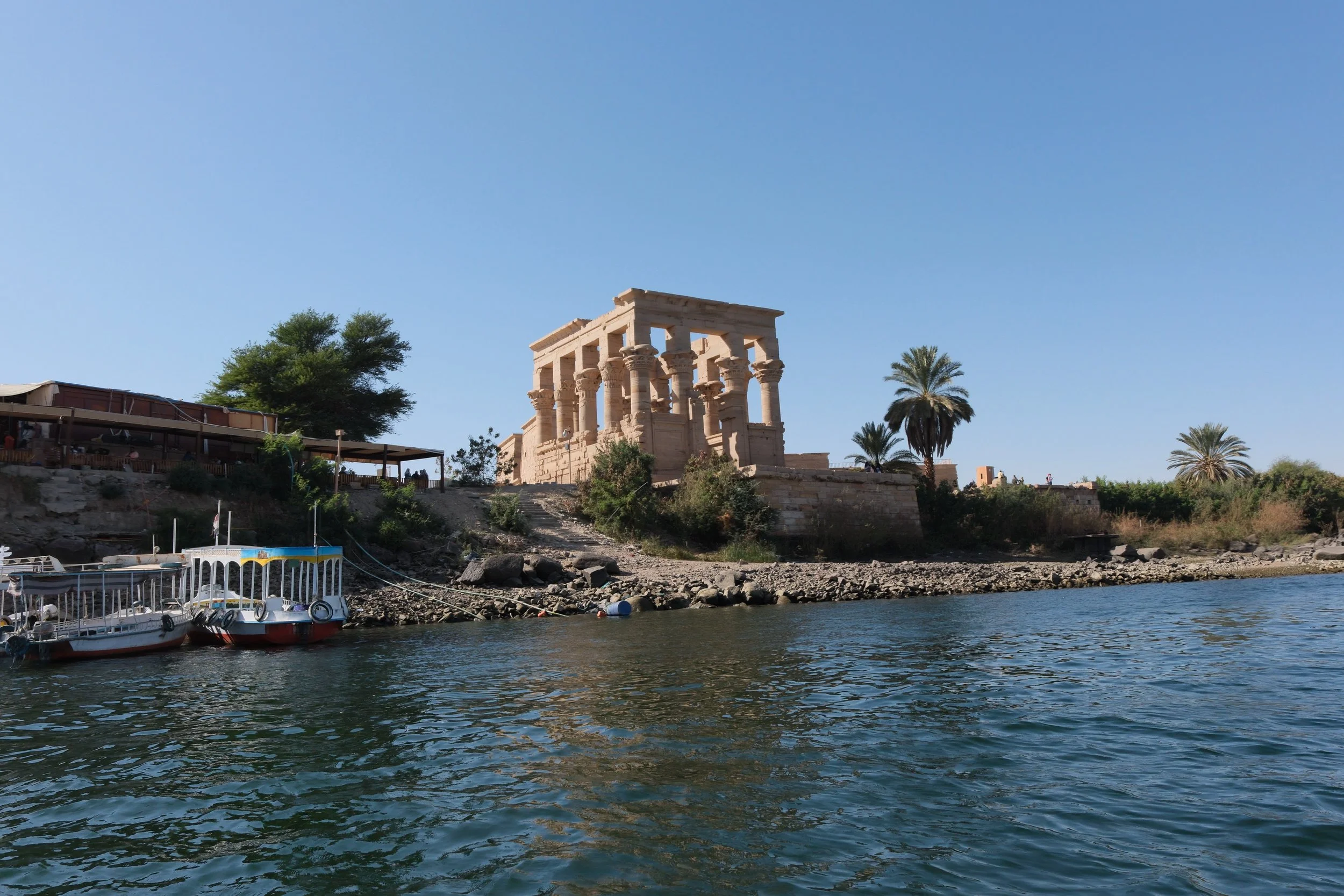
The kiosk is elegant and slightly incongruous, its Roman columns rising from a Ptolemaic temple complex on a Nile island. It is also, in its way, the clearest illustration of what Philae represents: not a monument to a single power, but a record of continuity — of a place where the idea proved more durable than any of the empires that passed through it.
Abu Simbel is loud and powerful. Philae endures softly.
Across this journey — from Cairo's pyramids to the temples of Luxor, down the Nile to the edge of the empire — what Egypt keeps demonstrating is that the things built for permanence have survived not because they were invincible, but because the values they stood for and the beauty of the human craft in them remained worth preserving. The pharaohs are gone. The empires that followed them are gone. The stones remain, moved when necessary, reassembled, reoriented. Still catching the light on the right mornings.
