The Nile - What the River Remembers
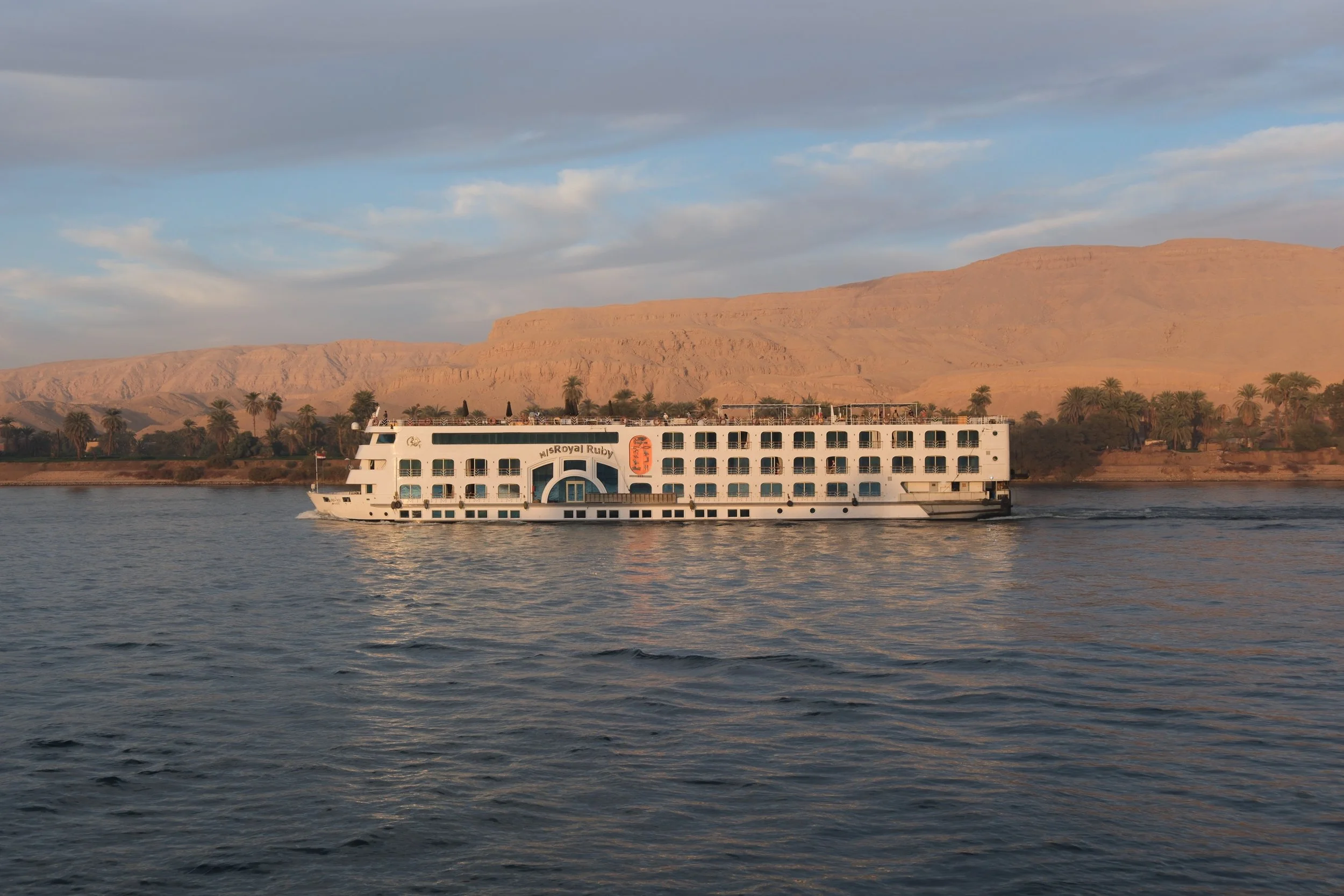
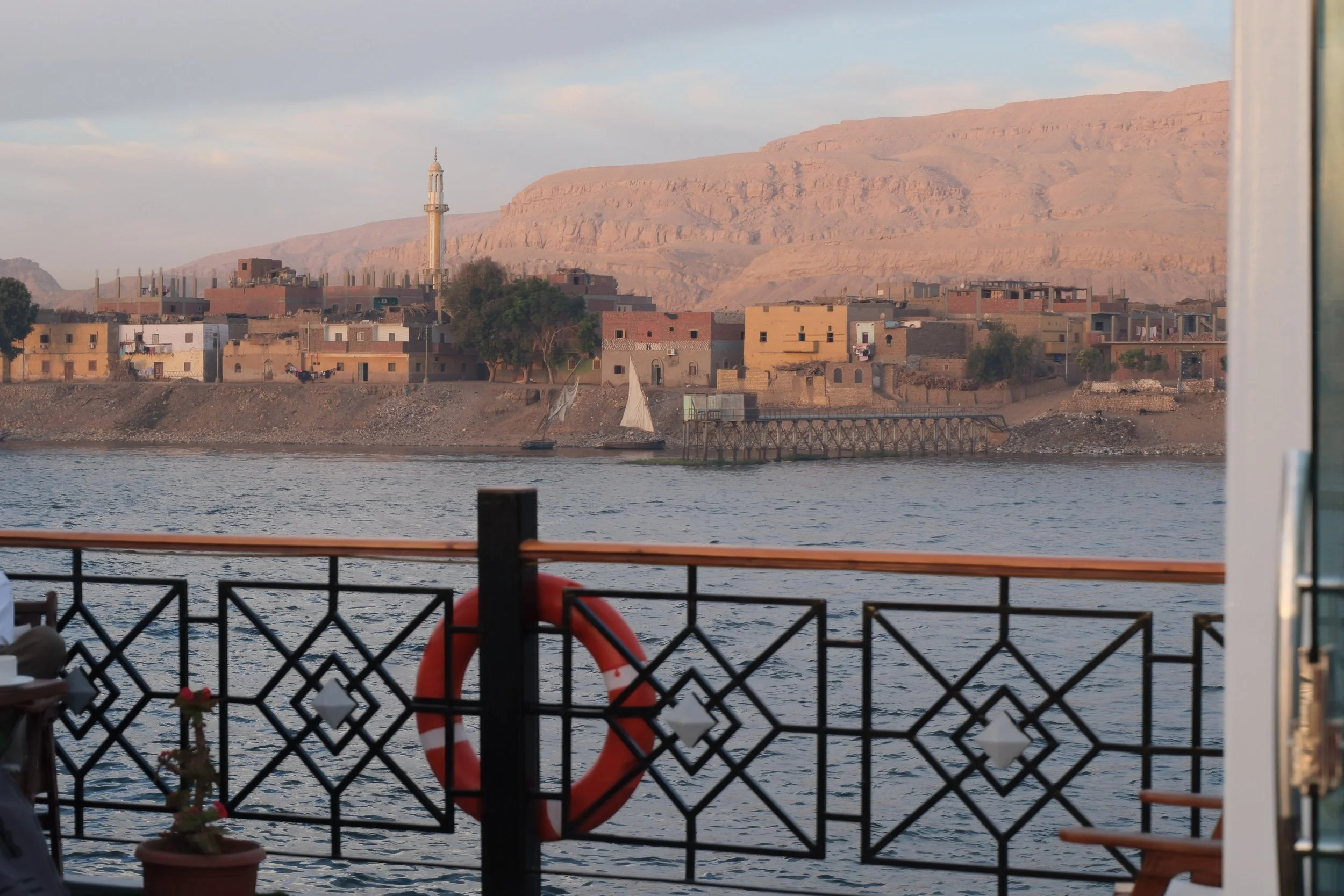
On the way from Luxor to Aswan, the river takes over. The Nile doesn’t announce itself dramatically, but it silently makes its way as the protagonist of the scenery. The feluccas slow, the banks grow greener, the air clears.
For Egyptians, the Nile’s infinite continuity and reliability were key to their wealth. The river flooded, retreated, flooded, and so on in a reliable cycle that defined their lives. Everything else was built around it. As you slowly float upstream, you can feel you are retracing the route that many have navigated for millennia before you - a continuation across centuries.
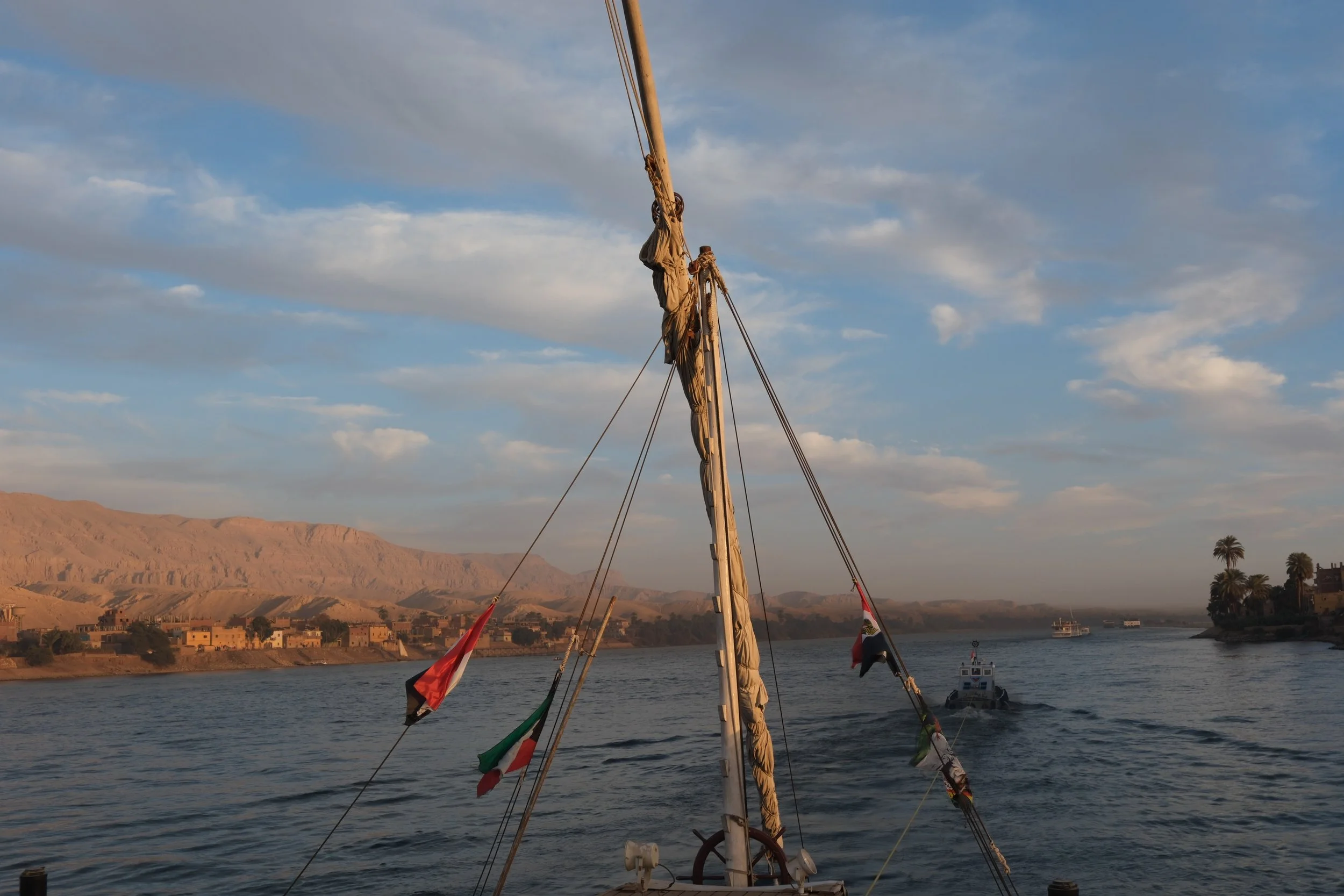
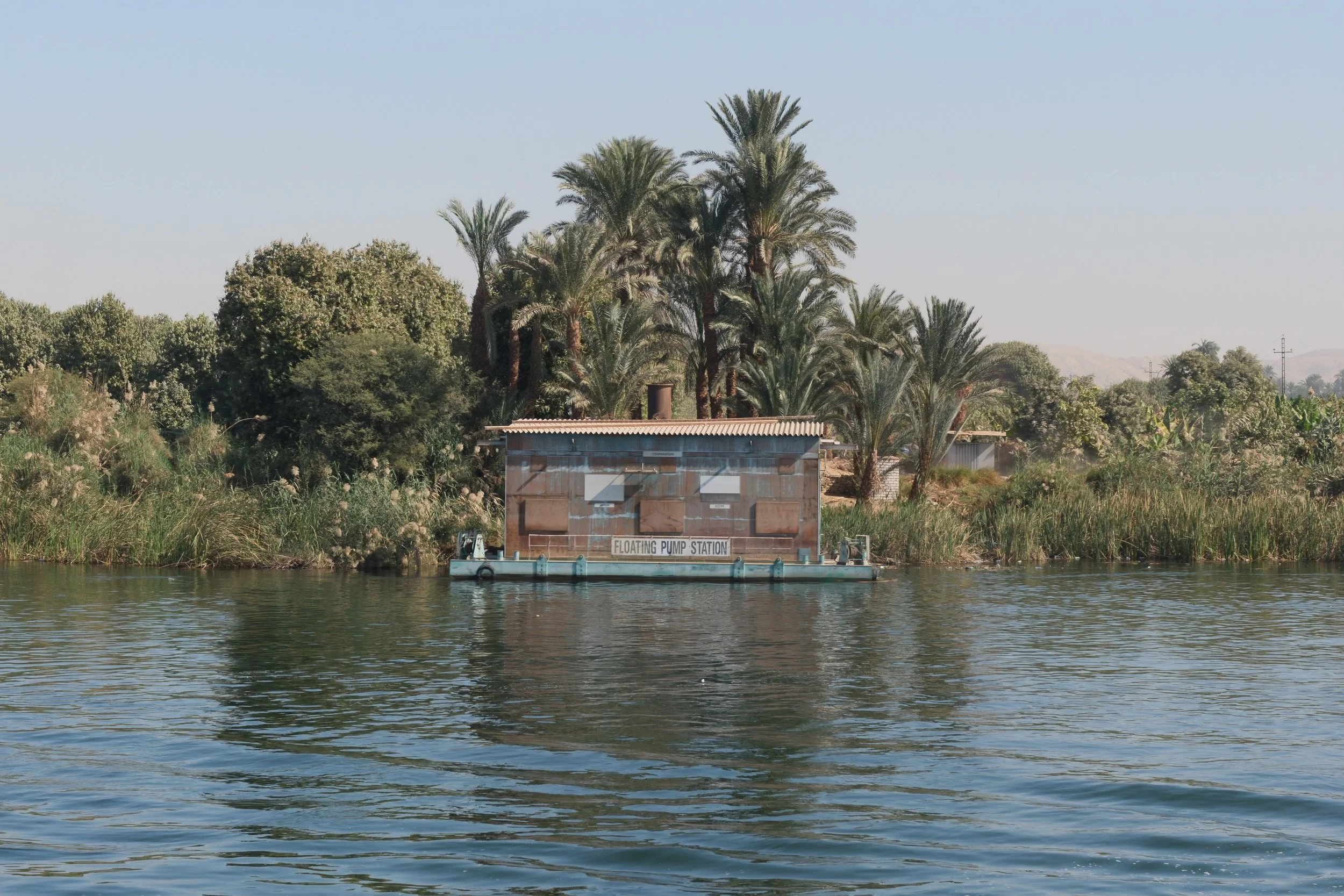
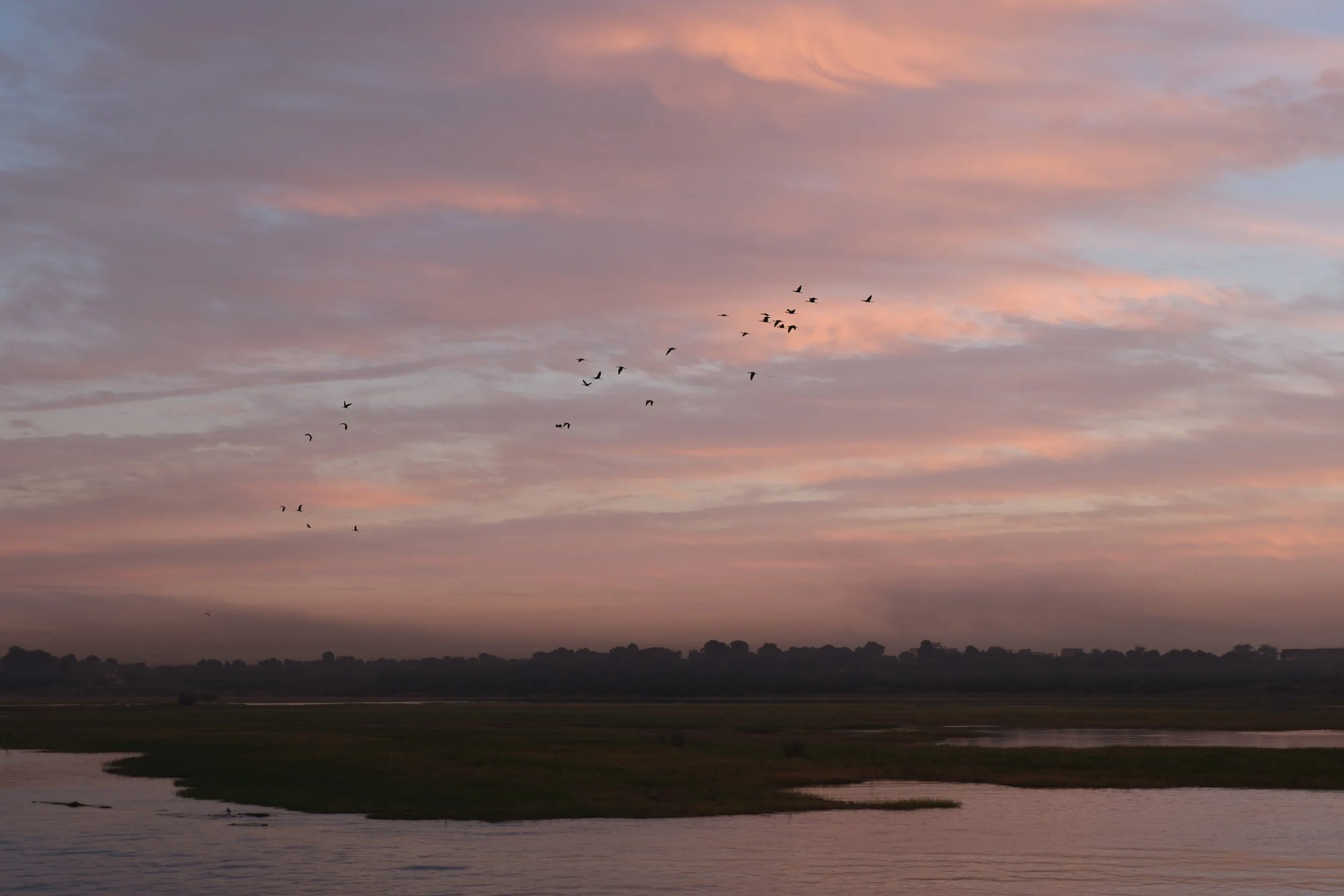
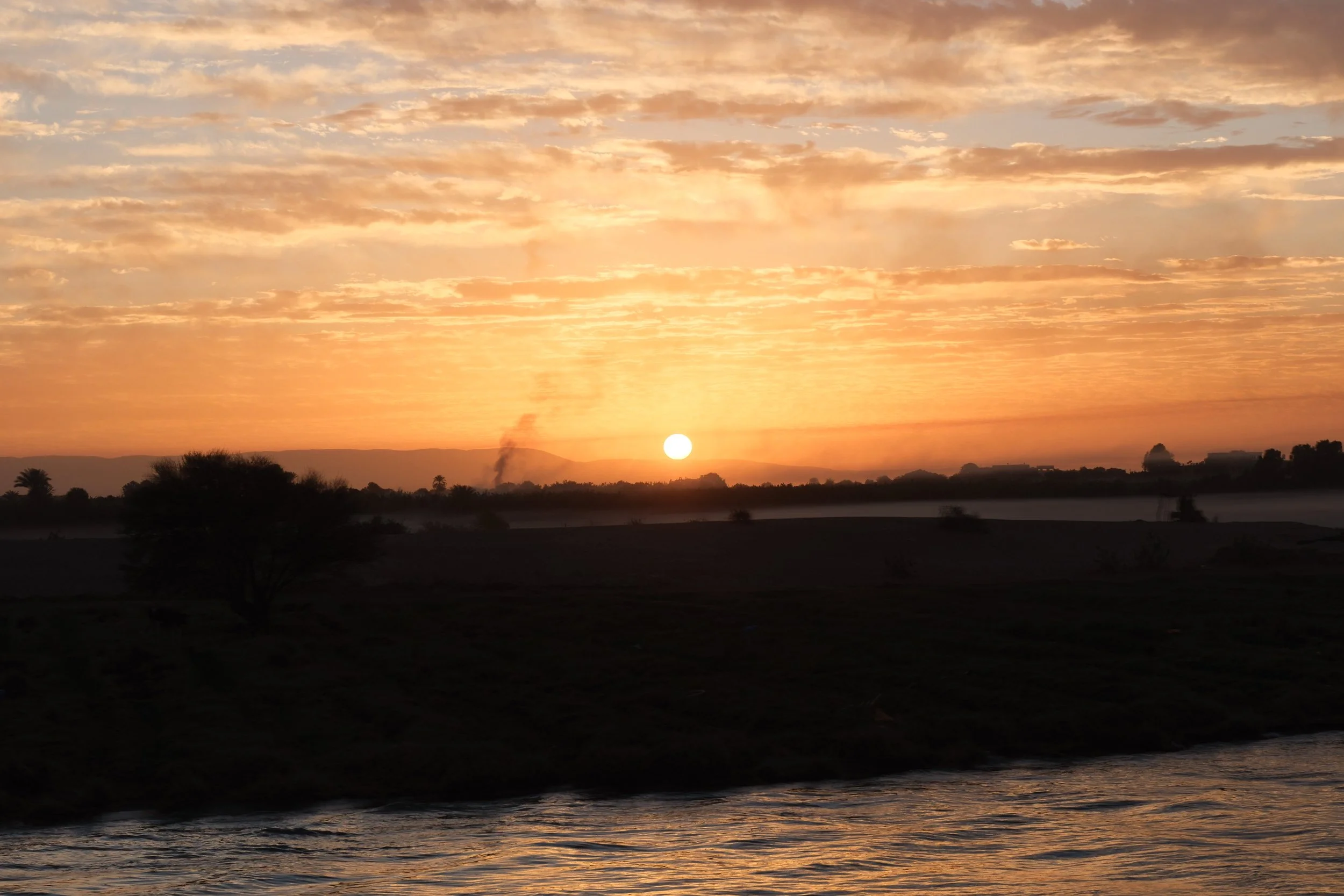
As we travelled on our dahabiya - the traditional wooden houseboat - we kept moving south at a pace dictated by the river. Mornings are for moving; afternoons for stopping; evenings for watching the sunset over the grassy banks. From your little floating village, you can observe the life around you, happening on the Nile: the fishermen, irrigation pipes, a heron gliding to stop in the marsh, a boy slapping the back of his donkey for it to move faster, agricultural workers, and the spotty grey clouds emitted by the scarce industrial presence around. There is no way to rush your way through the river; it’s an exercise in patience.
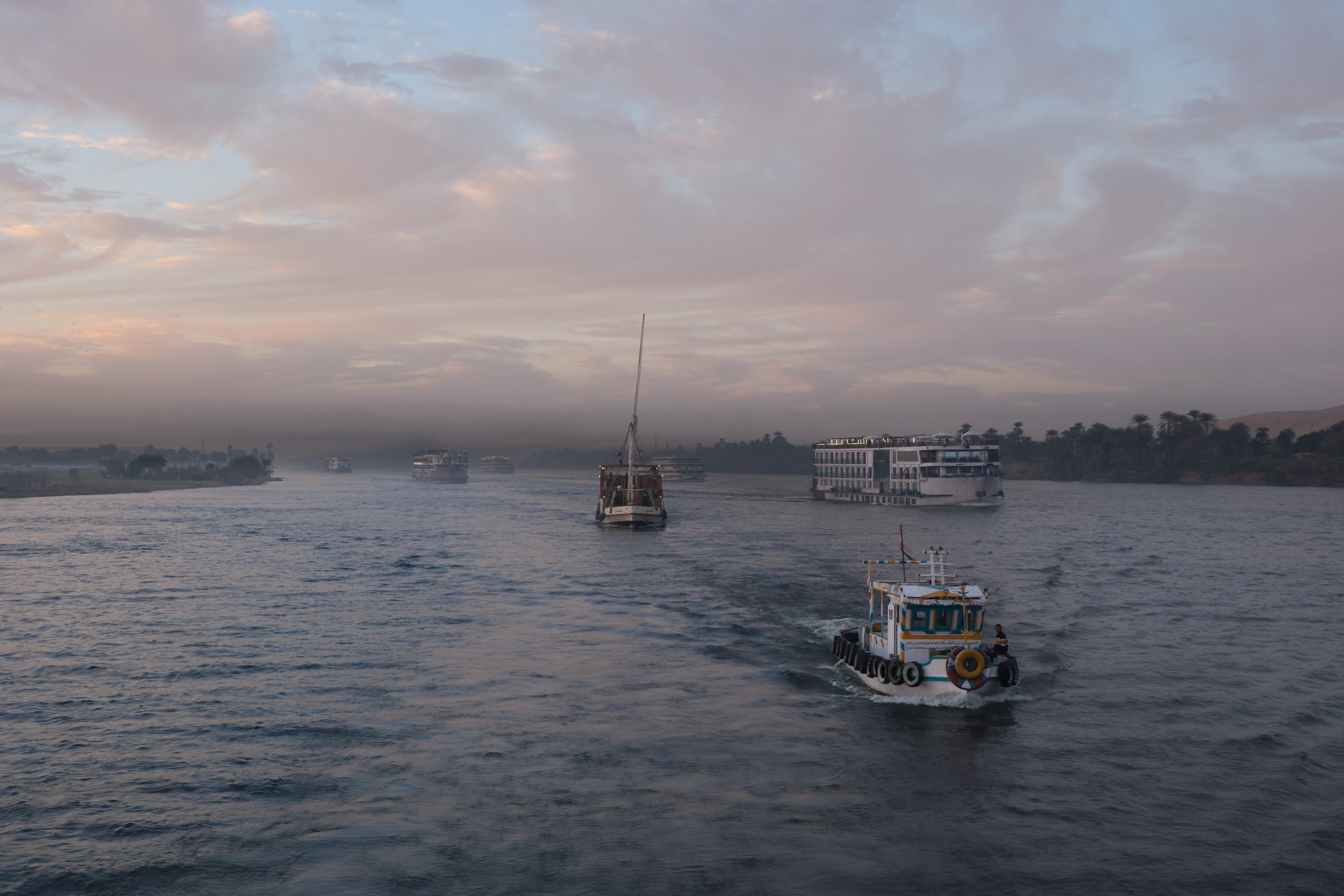
Esna
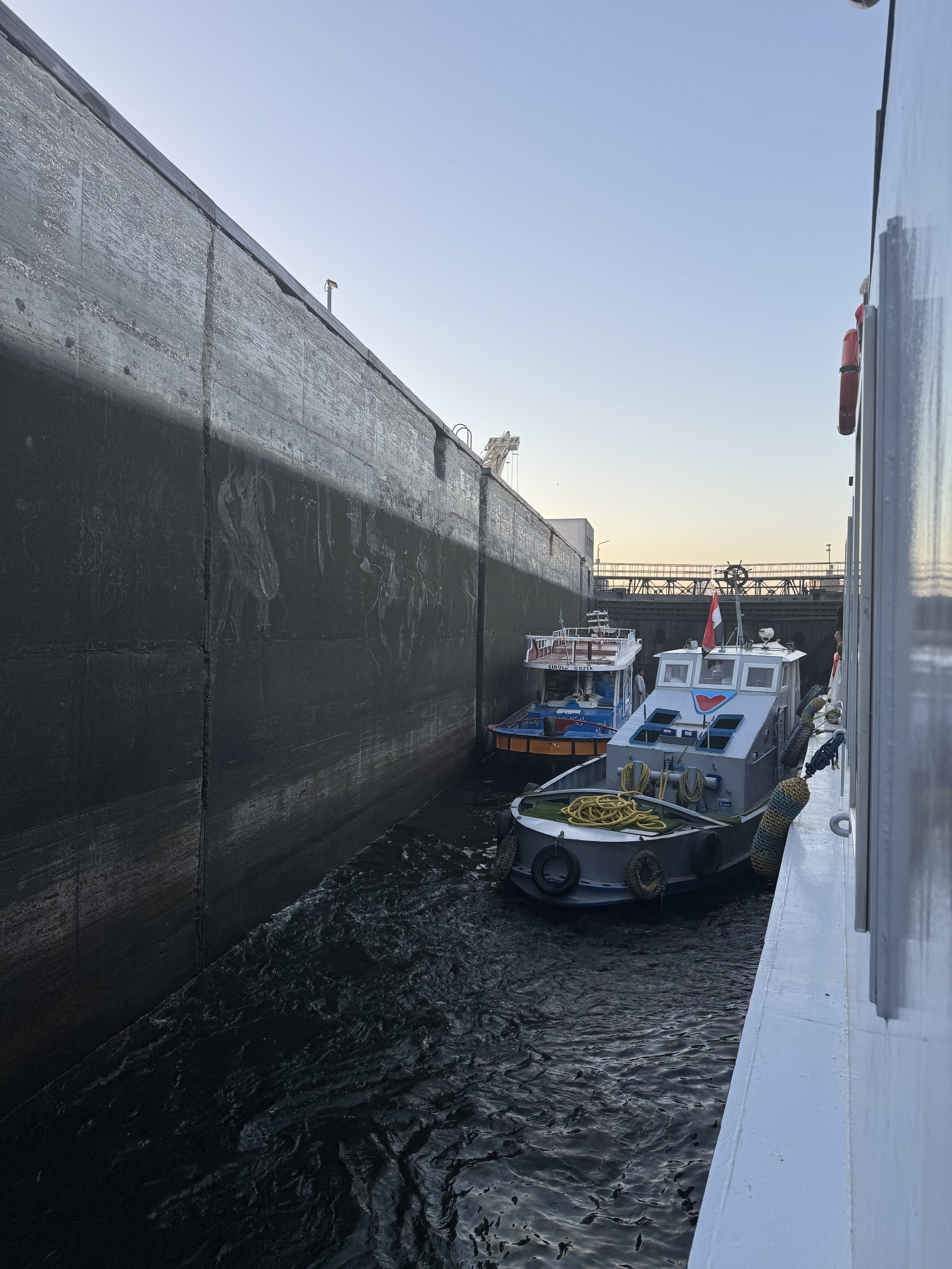
The first lesson comes early, at the crack of dawn. Sleep is interrupted by the metallic clanging and the dull percussion of the hull against a wall. The dahabiya enters the Esna lock.
Built at the beginning of the twentieth century, the lock controls the Nile’s water level all year round, making navigation possible along the full length of the river. Every boat that travels between northern and southern Egypt must pass through. In the early morning sounds of horns and engines, with other vessels pressing close on all sides, this feels more like a threshold than functional hydraulic infrastructure.
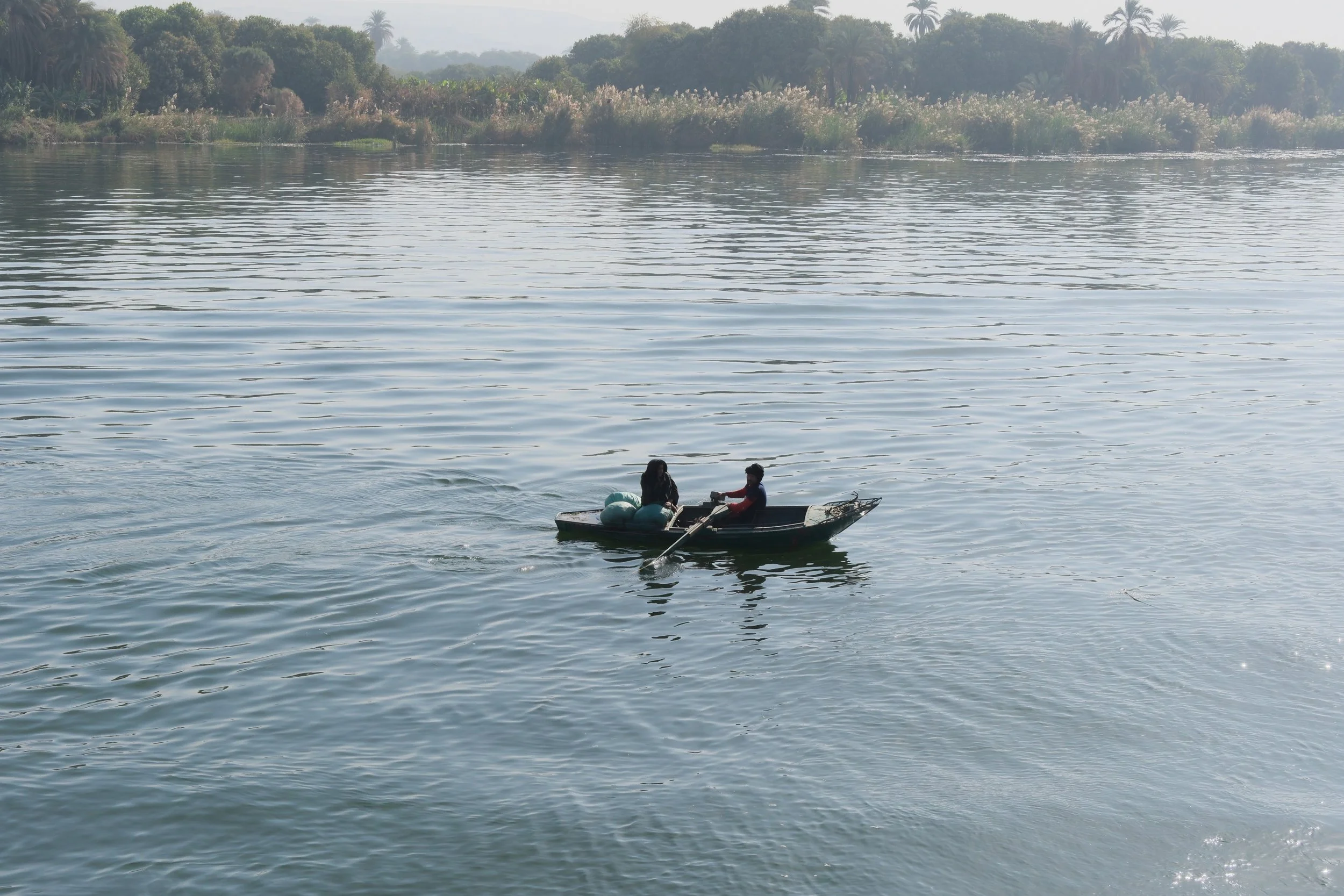
That’s exactly what it is. North of Esna, the chaos gives way to a slower-paced atmosphere. As the water level rises in the lock, you can finally overlook beyond the metal walls onto a golden dawn. The smog and the noise of the busy northern stretch of the Nile give way to palm-lined banks, the line of boats dissolving behind you. A father and son in yellow waders move an inch a minute on a narrow wooden canoe with their violet paddles. They are undisturbed by the passing dahabiya.
Life on the Dahabiya
A dahabiya is not a cruise ship and gives you the space to build the itinerary at a more comfortable speed compared to the bigger boats. The scale is domestic — private cabins with their own bathrooms, a small balcony off each room that becomes your personal escape during the quieter stretches of the day. Meals are served on the rear deck at breakfast and lunch, where the river moves past at conversation speed; dinner retreats downstairs to the common room, sheltered from the crisp cold over the water after dark.
The food reflects the rhythm of the journey. Breakfasts lean western — omelettes, crepes with Nutella, yogurt — the kind of spread designed to ease you gently into the day. Lunch and dinner are more local: fresh vegetables, olives, hummus, tahina, pita and local breads, always a generous spread of steamed rice, stews, lentils, warm broths. The mango, when it appeared, was sweet and creamy. The desserts were the chef's weak point — a heavy hand with condensed milk left a soapy aftertaste.
The top deck is the social heart of the boat: tables and chairs, sun loungers, and a jacuzzi tub for those willing to use it. That willingness, it turned out, was not uncomplicated. As a woman, climbing into the jacuzzi under the crew's gaze wasn’t something done lightly — not hostility exactly, but the distinct sensation of being tolerated rather than welcomed. You do it once, quickly. It is a small thing, but it rhymes with something larger: the same dynamic you'll notice again on the island that evening.
Guests manage their own schedules — except for meals. Brief interactions happen on the deck, but mostly everyone keeps to themselves. By 9:00 PM, everyone is ready to retreat to their cabins, and silence takes over.
Edfu
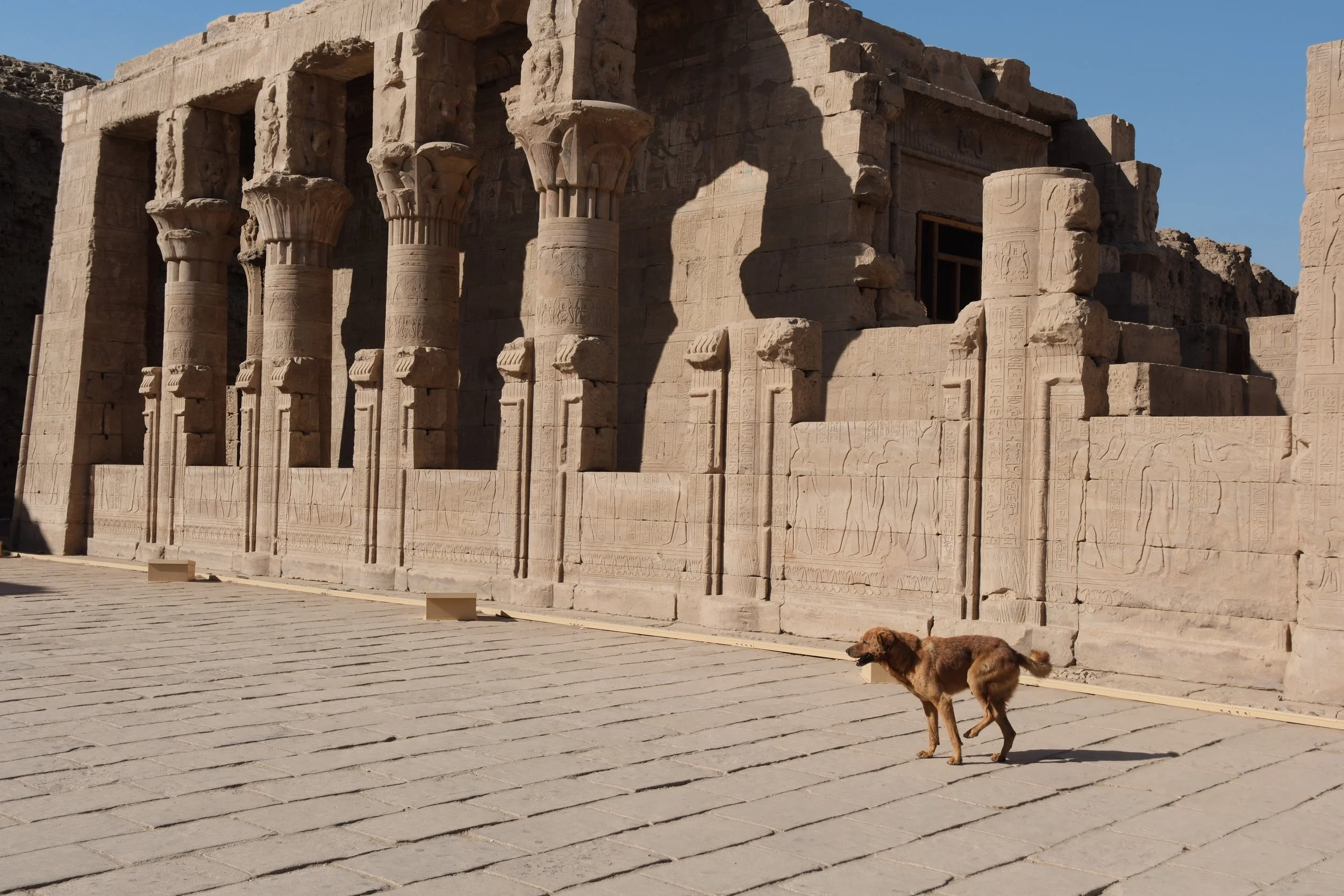
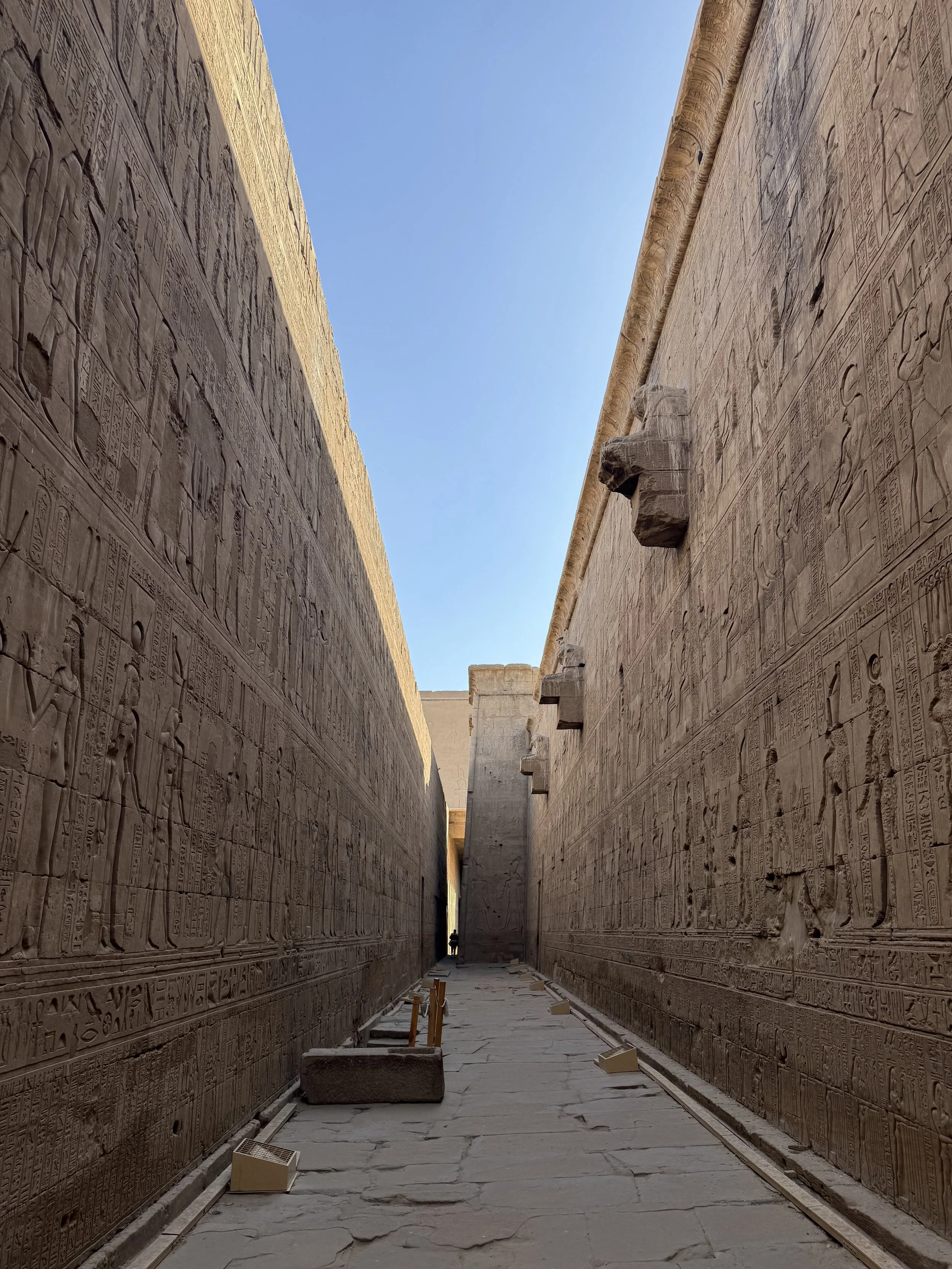
The town of Edfu is a must on all Nile cruise itineraries; here you’ll find the best-preserved ancient Egyptian temple in existence. As you arrive, the contrast between the architectural marvel and the town surrounding it is stark.
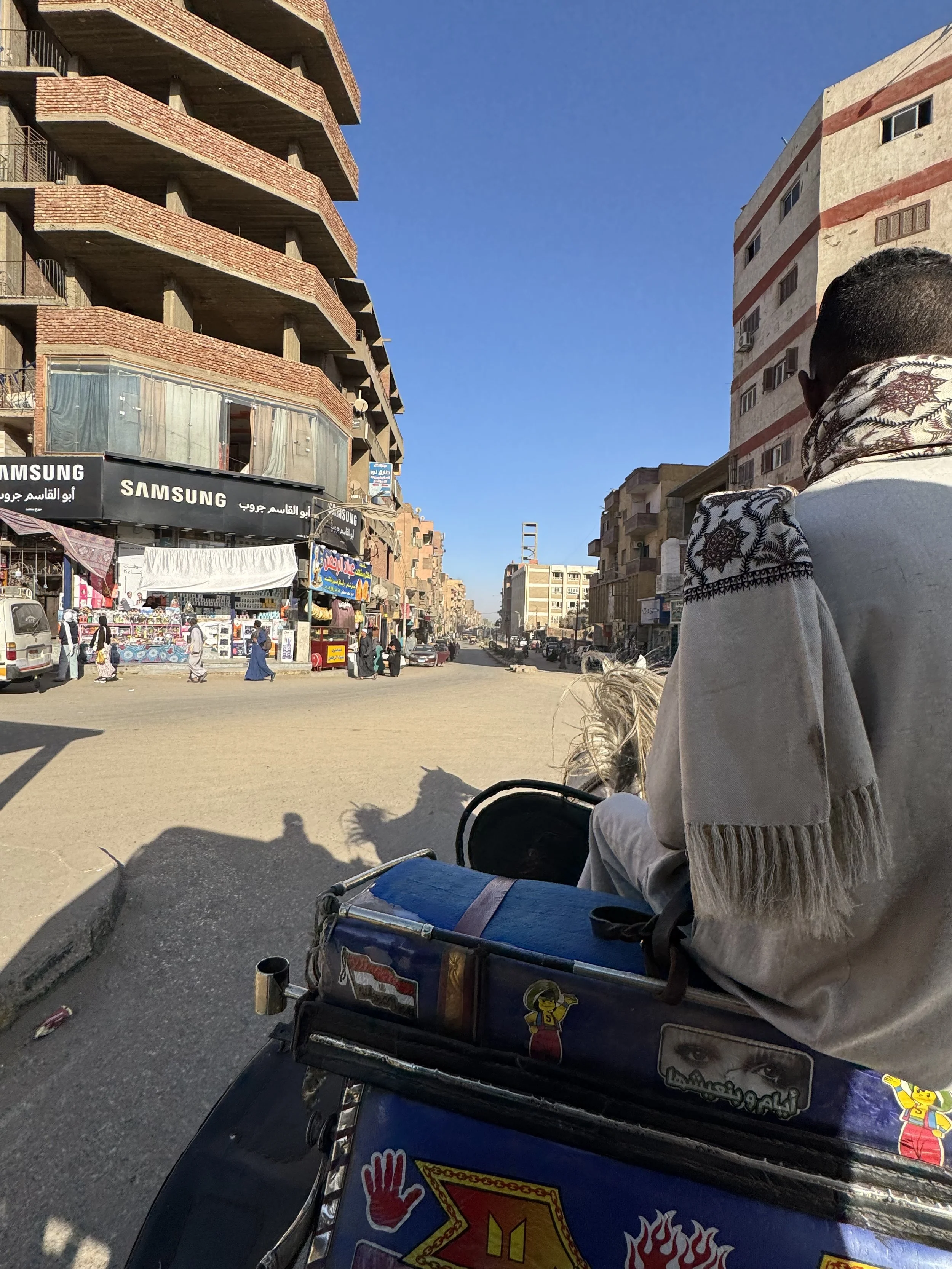
The docking is the best-maintained structure in sight; the rest of the town is in disarray. Walking the twenty minutes to the temple is highly advised against - and at first this seems odd - but already at the dock you’ll understand why. An armed guard is stationed at our dock’s entrance, a safety precaution for visitors. Outside, the acrid smell of horse manure takes over. Several patched-up horse-drawn carriages await. The horses are thin and dusty, their manes stiff. Some carriages are personalized with stickers and tags, like a race car, which is a great treasure for their riders who’ve secured a job in a difficult context.
Our rider - a boy - couldn’t have been over fifteen years old. He spoke a few words of English, learned through necessity, to build a connection to the tourists he drives around and ensure a bigger tip. I couldn’t help but feel a pang of anguish for the boy, the animals. I wondered who had it worst. Possibly the animals, given no choice. But did the boy know better? Would he be able to leave this town? Would he want to leave this country? The whole economy here runs on what visitors spend in the time between the boat and the temple. When the boat leaves, the economy pauses. Is a whole life spent waiting for that ten-minute ride worthwhile? In a way, life could be simpler here — probably not easier, though.
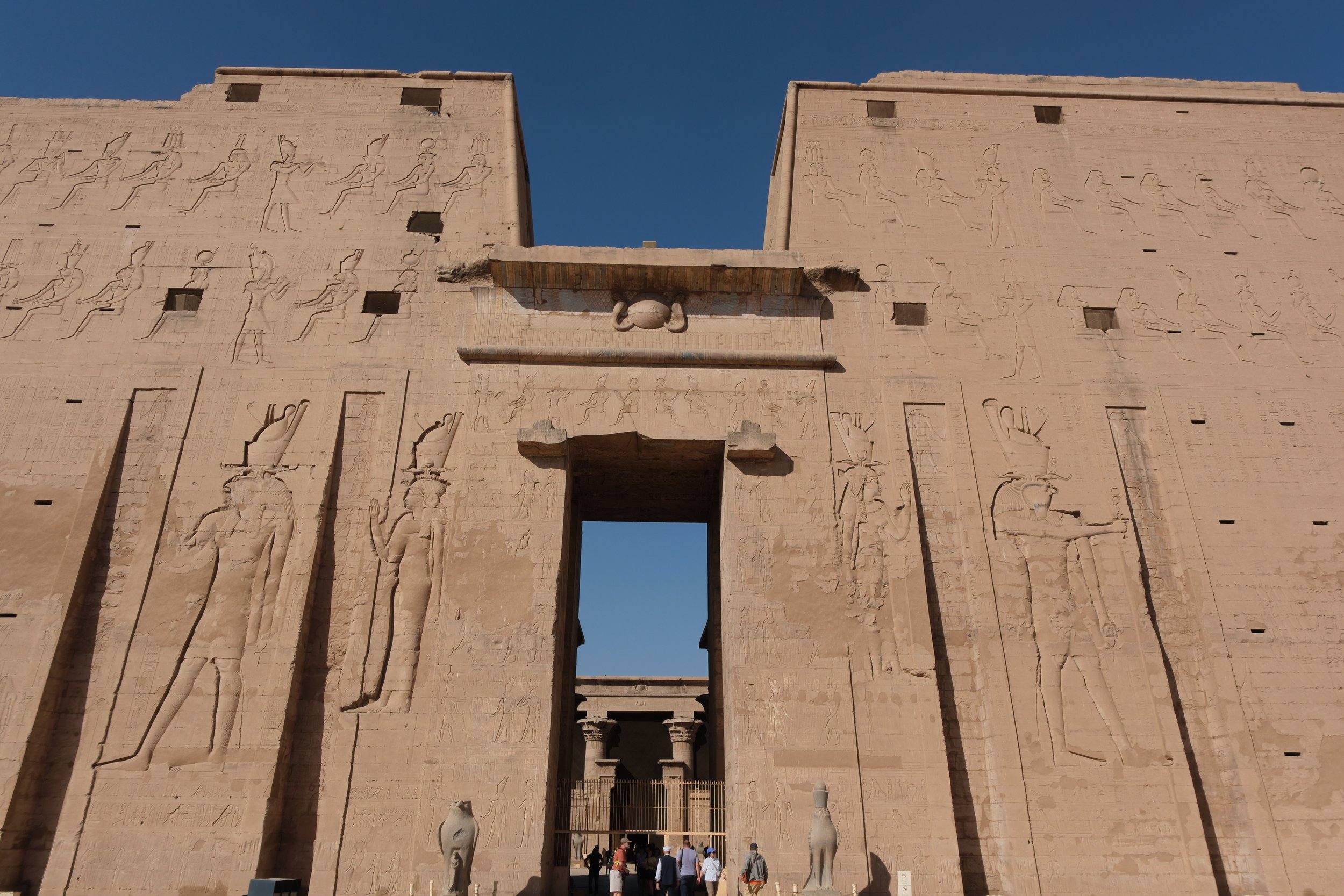
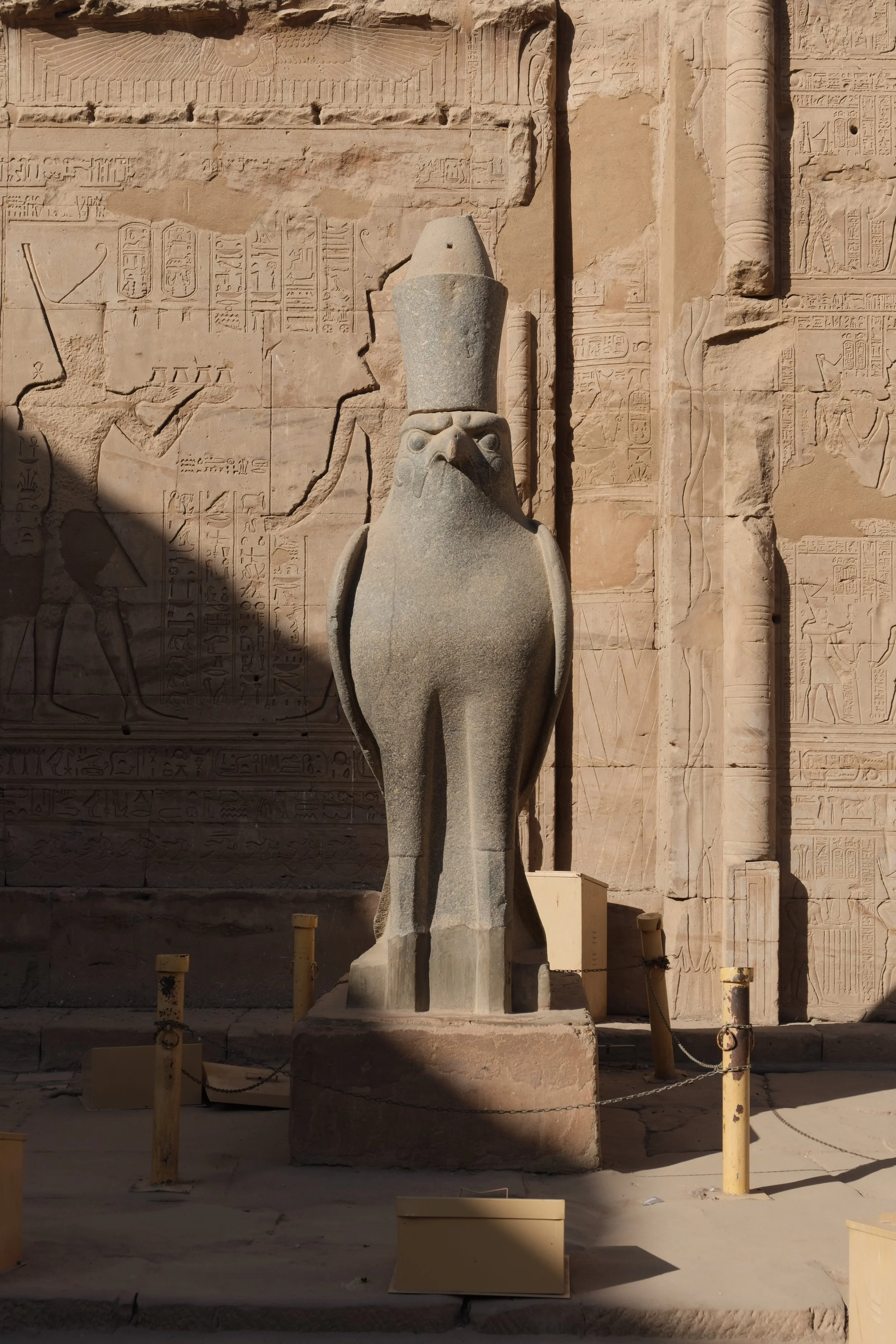
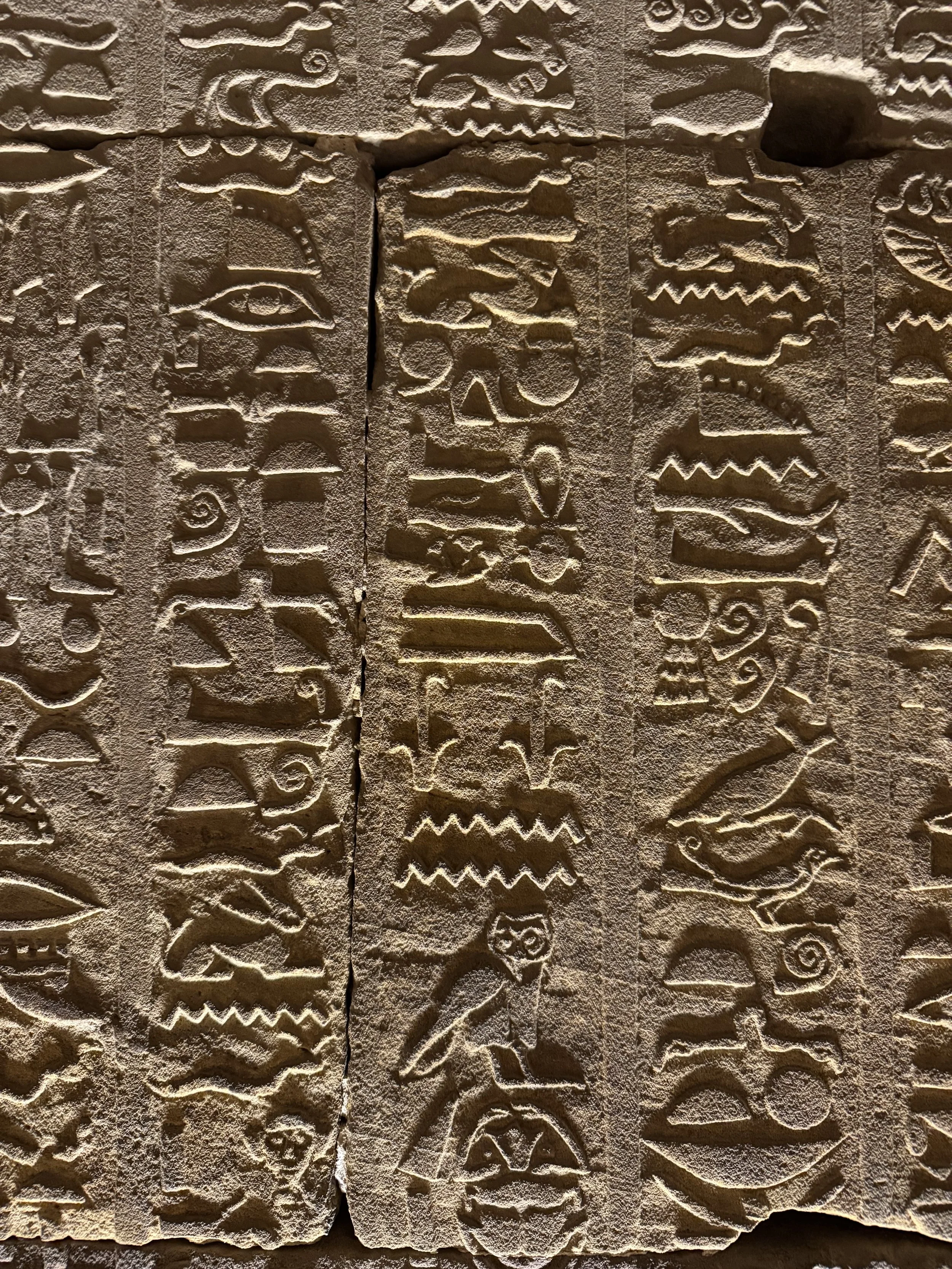
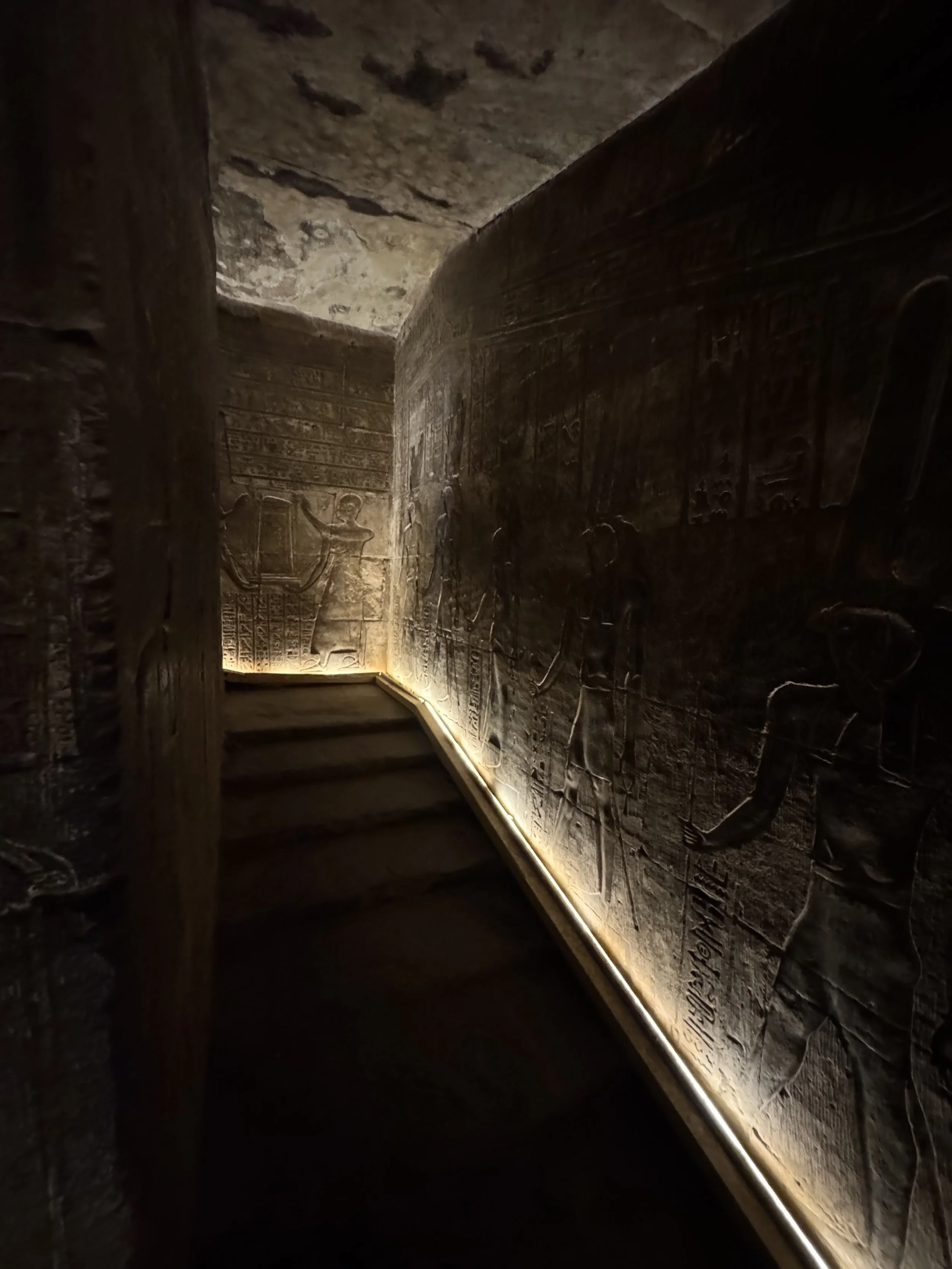
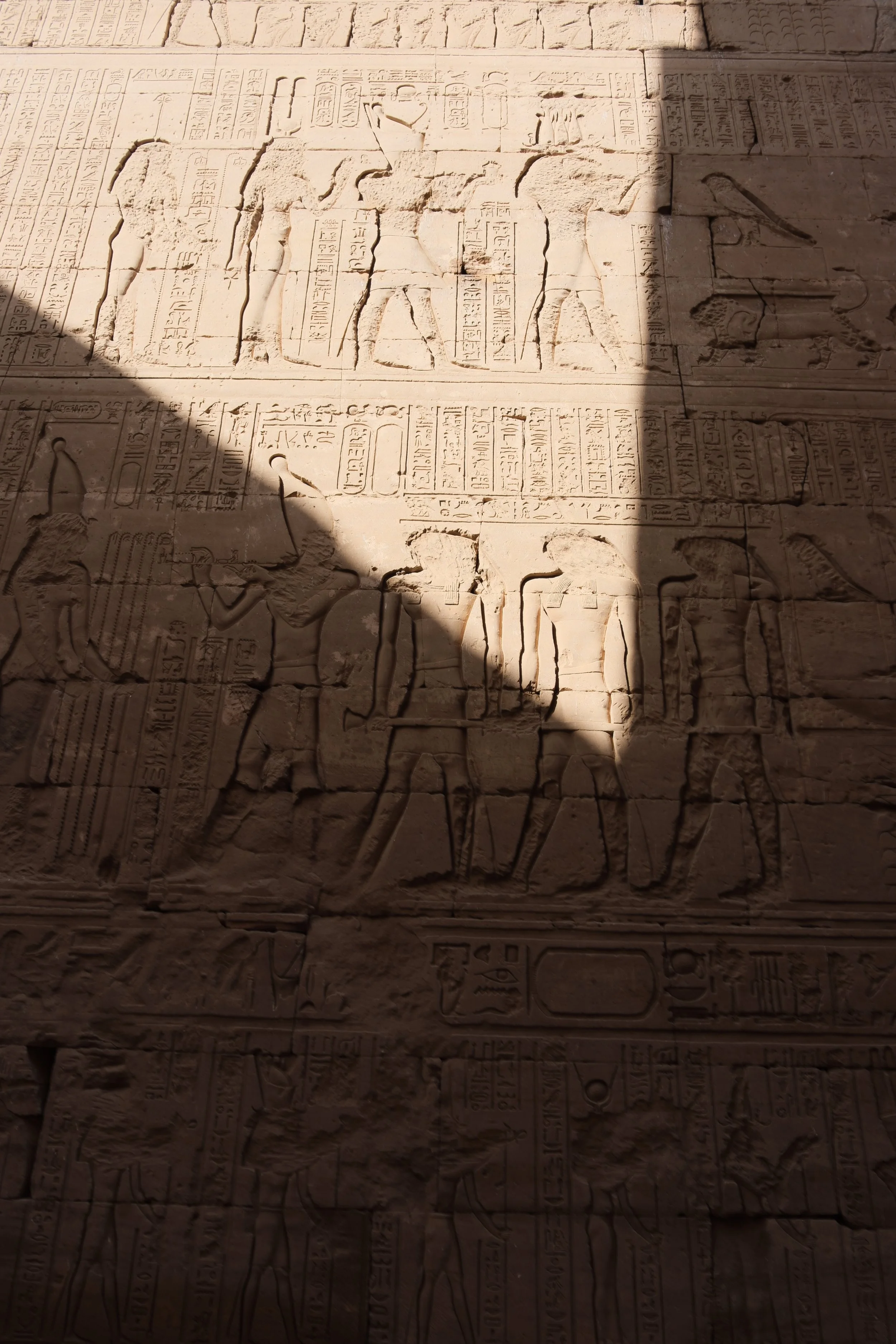
Arriving at the Temple of Horus, the structure reveals itself by towering over the protective walls. Inside the walls: two thousand years of near-perfect stone, the falcon-headed god of order gazing from every surface. Outside: a poverty so visible it seems to push back against the idea that any of this belongs to the people who live next to it. The Ptolemaic temple was built between 237 and 57 BC, recent by Egyptian standards. Dedicated to Horus, the falcon god who embodies legitimate rule and the defeat of chaos, this temple was designed to represent how order is always provisional; it must always be maintained. Horus continuously defeats Seth - chaos, dissolution, and everything that threatens the system. Power must be continuously reasserted to remain.
As you navigate through the corridors and around the temple’s high walls, you can catch yourself imagining what it might have been like to see the temple actively used in its time. Today, it is but a monument, frozen in stone. While Edfu has been on the itinerary of Egyptian river tourism for over a century, and the town has built its economy around that, there is a limited relationship between the temple and the people who live in its shadow that has never quite resolved into something comfortable. The state protects the asset. The town survives on the margins, never truly allowed to benefit from the treasure they have there.
Al Ramady Island
That evening, the dahabiya docked at Al Ramady, a small river island — lush, fluvial, not on most maps. There are no monuments here, no pharaonic sites, no entry fees. What there is: a rababa performance by local musicians, the single-stringed instrument filling the air with something between a lament and a celebration.
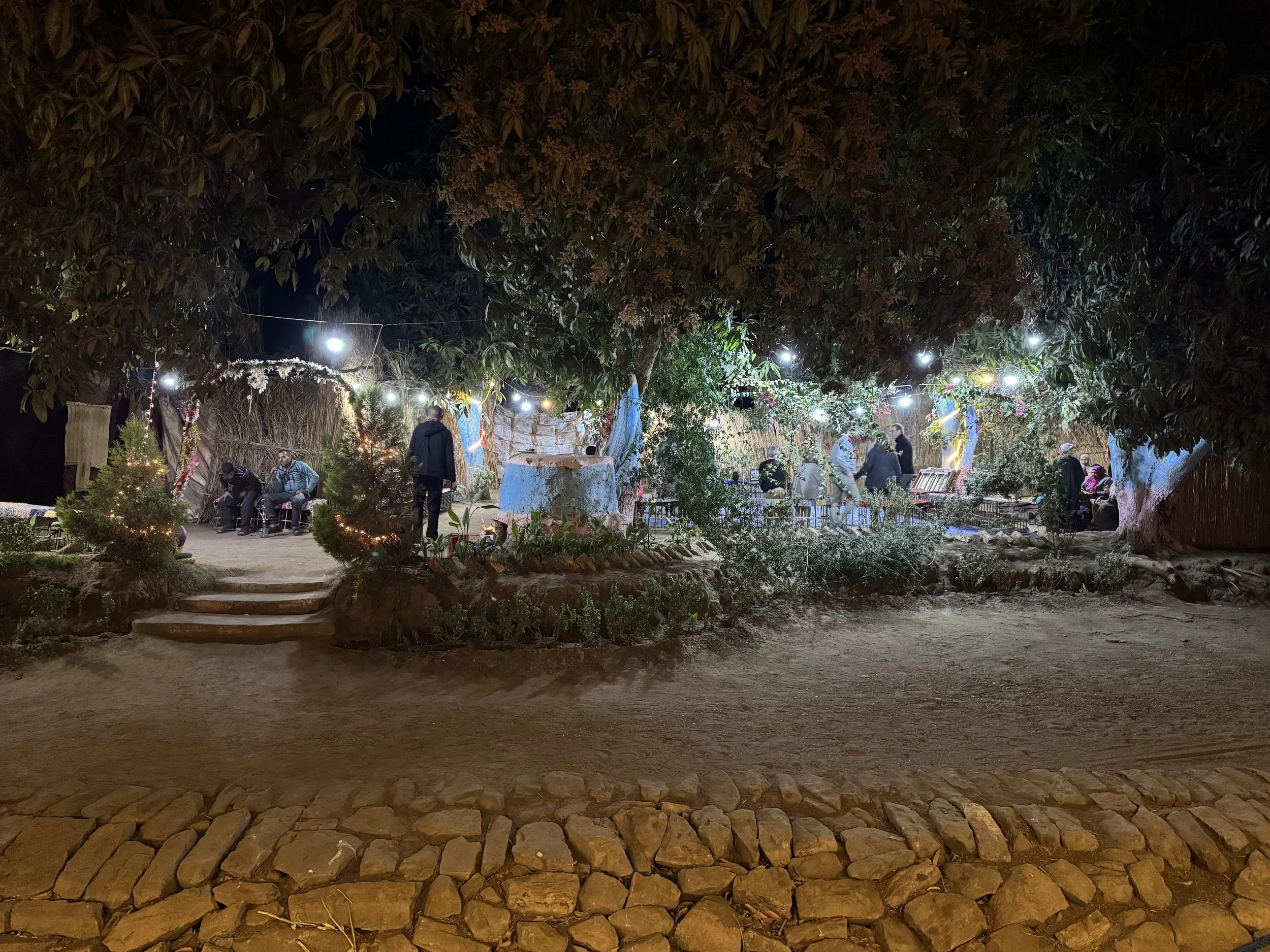
The men played. The men danced. The female and male tourists were insistently invited to join them on the makeshift floor, where the dirt is covered with a plastic tarp. The local women watched from the edges, seated, still. Nobody commented on this. It was simply how the evening was organized. Which is to say, it was organized the way public space in rural Egypt is generally organized, with the implicit understanding that certain freedoms of movement apply to some people and not others. While the awkward party unfolds, this thought sits alongside the music and the warm air and the river sounds, part of the same picture.
Kom Ombo
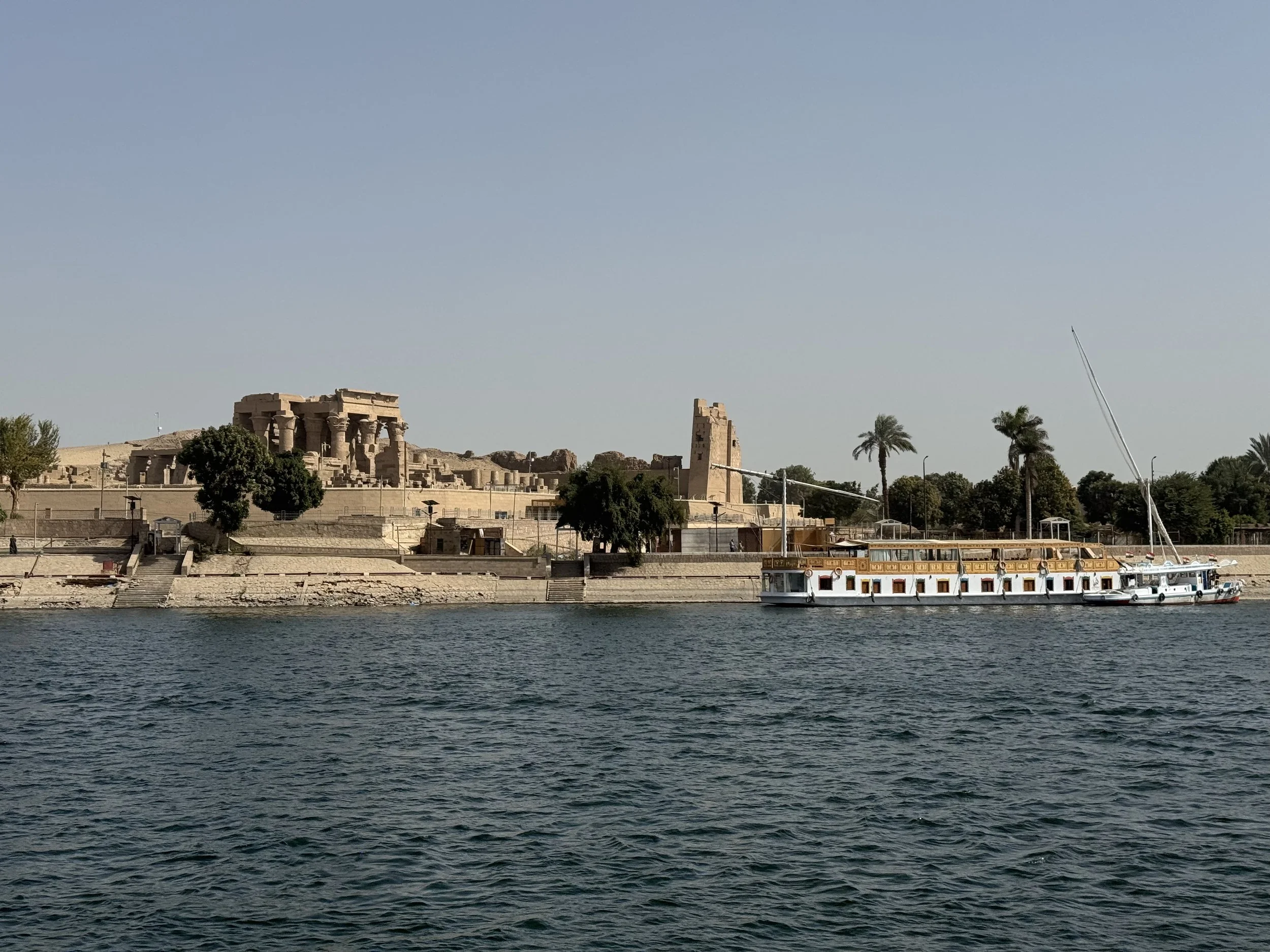
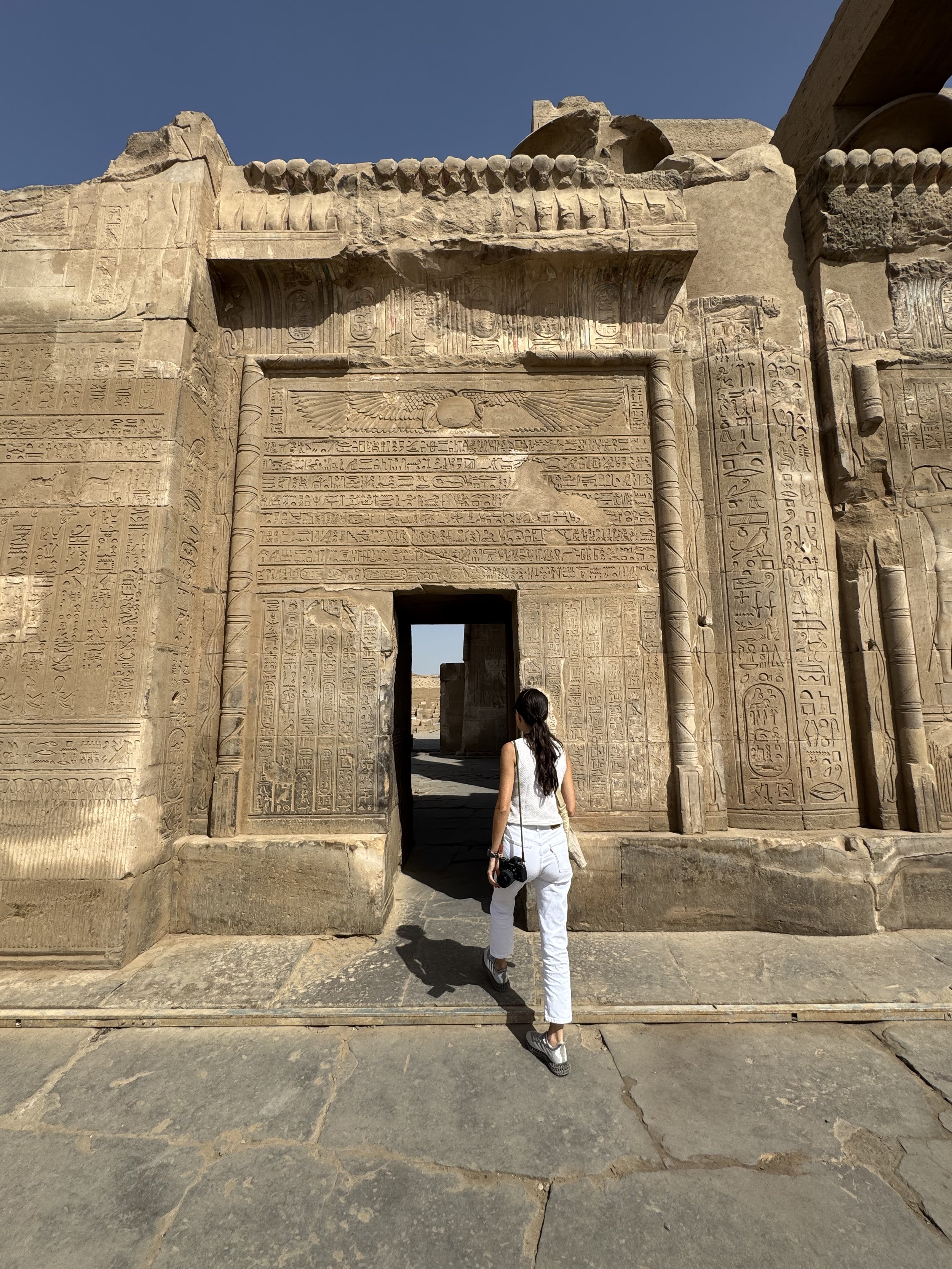
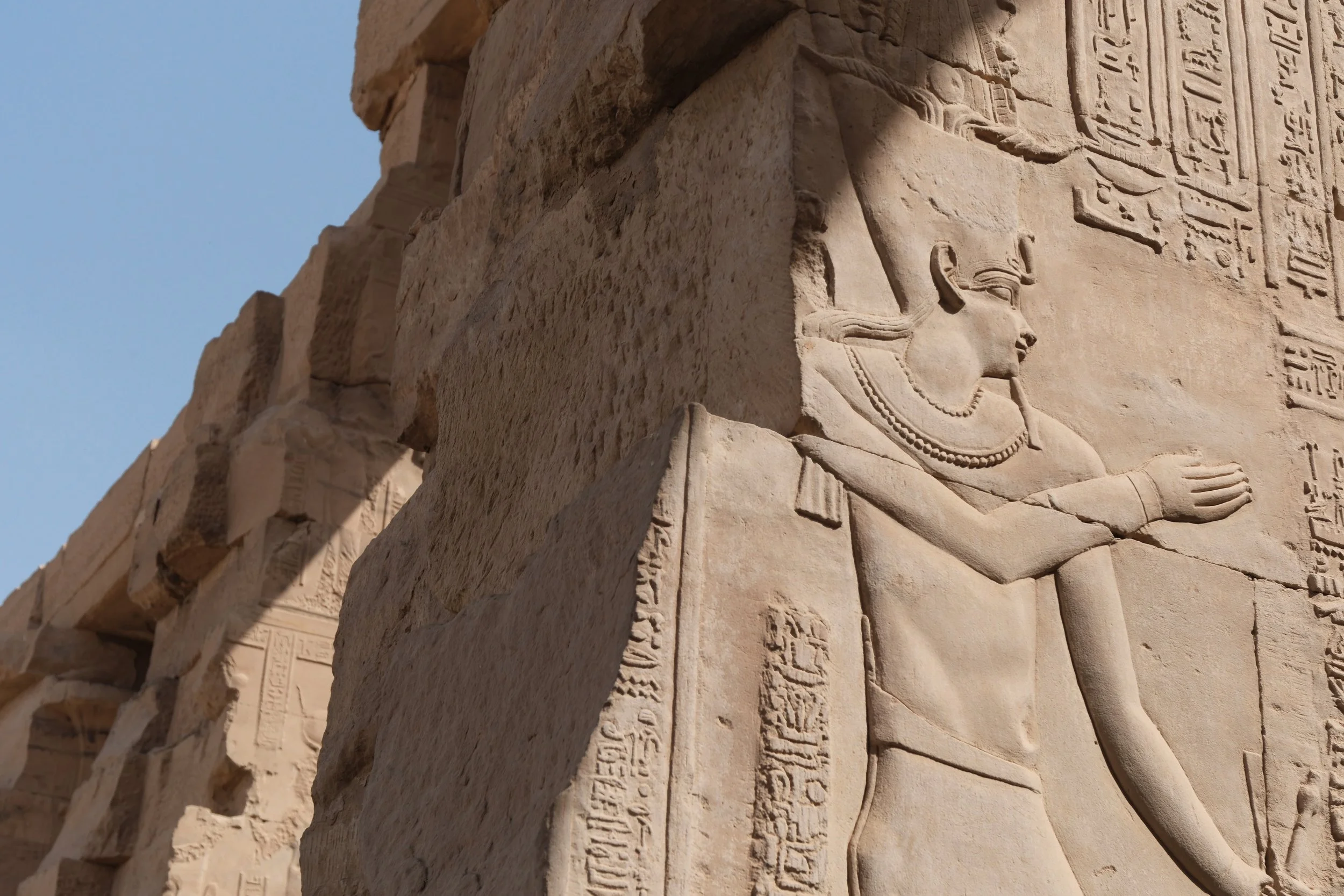
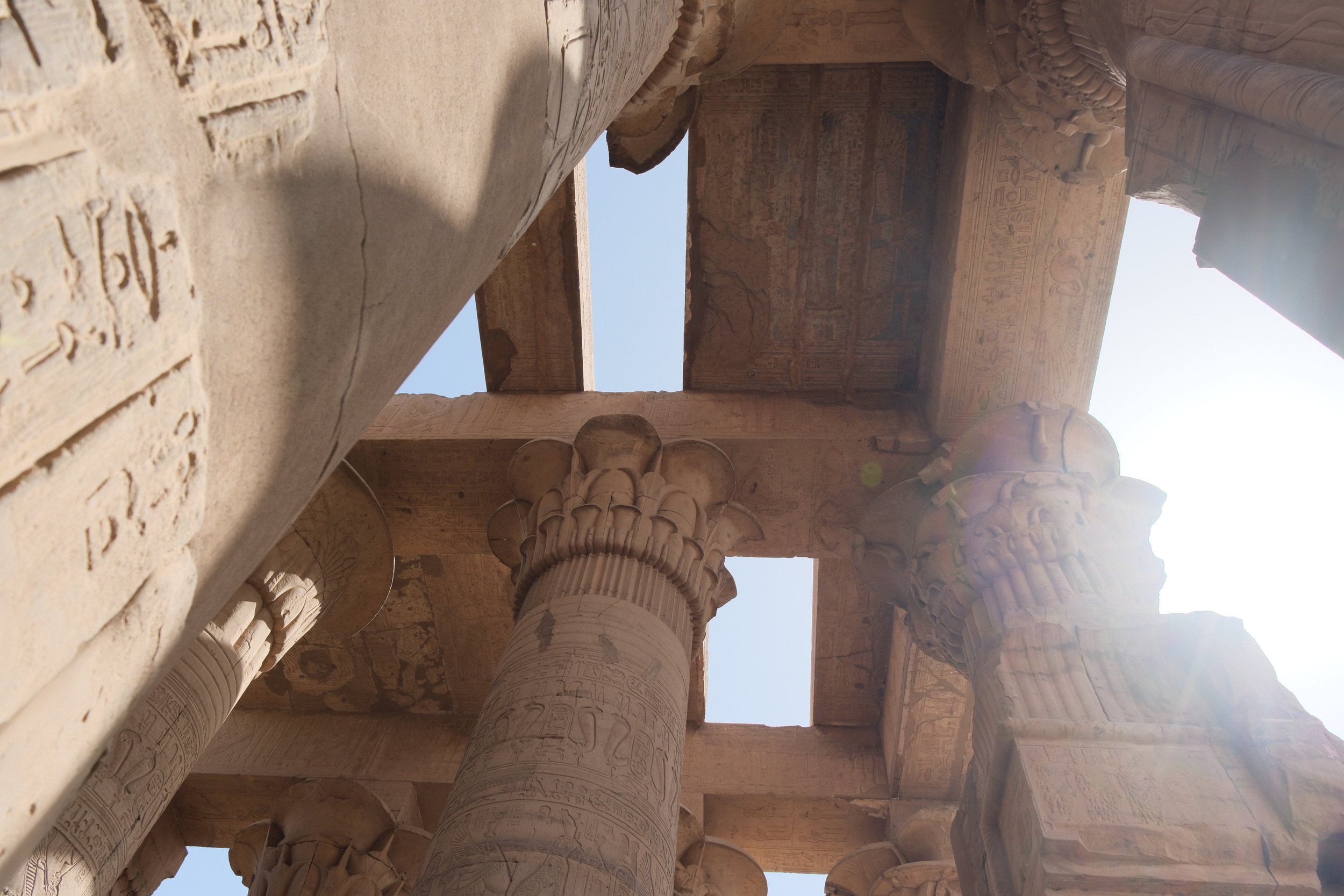
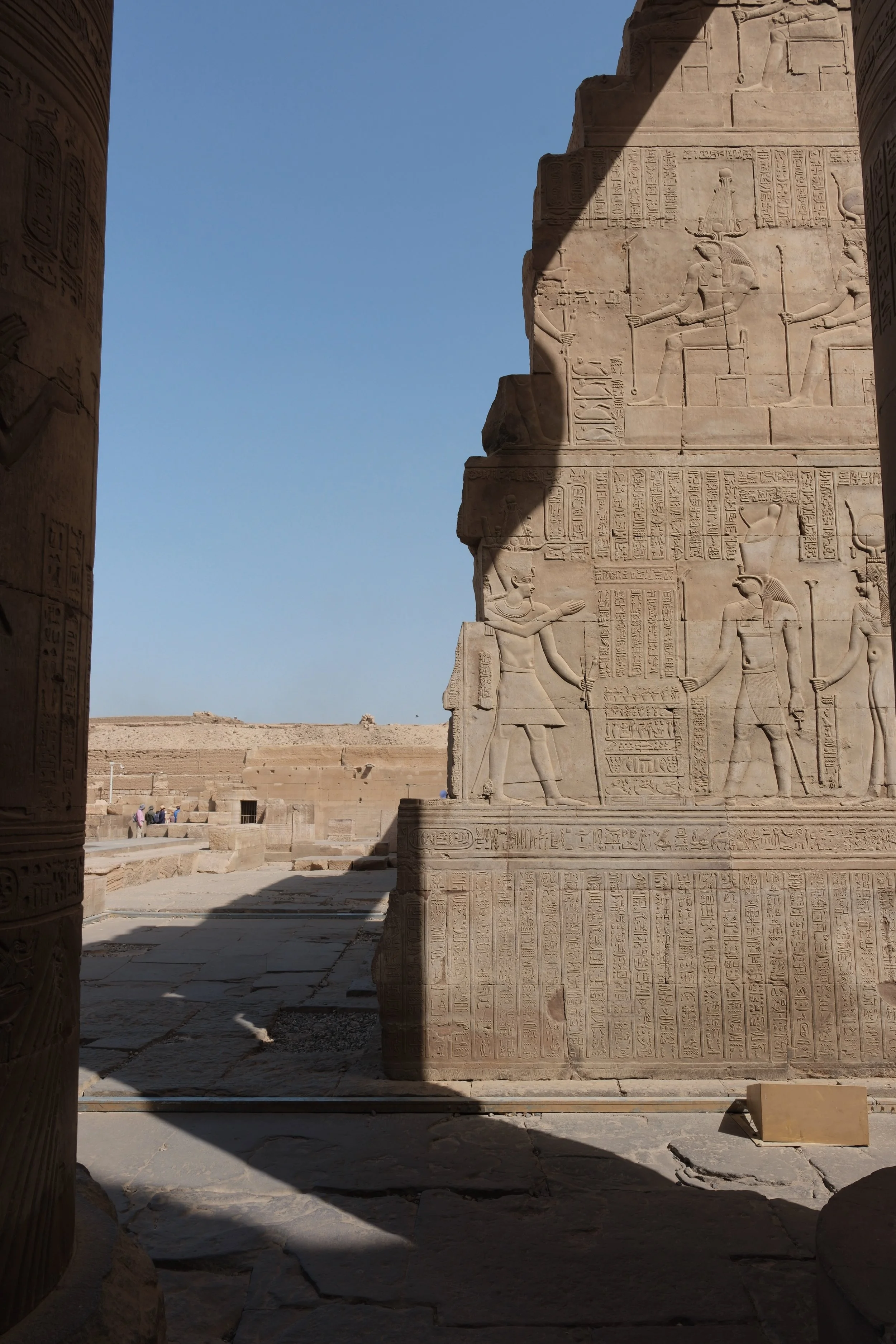
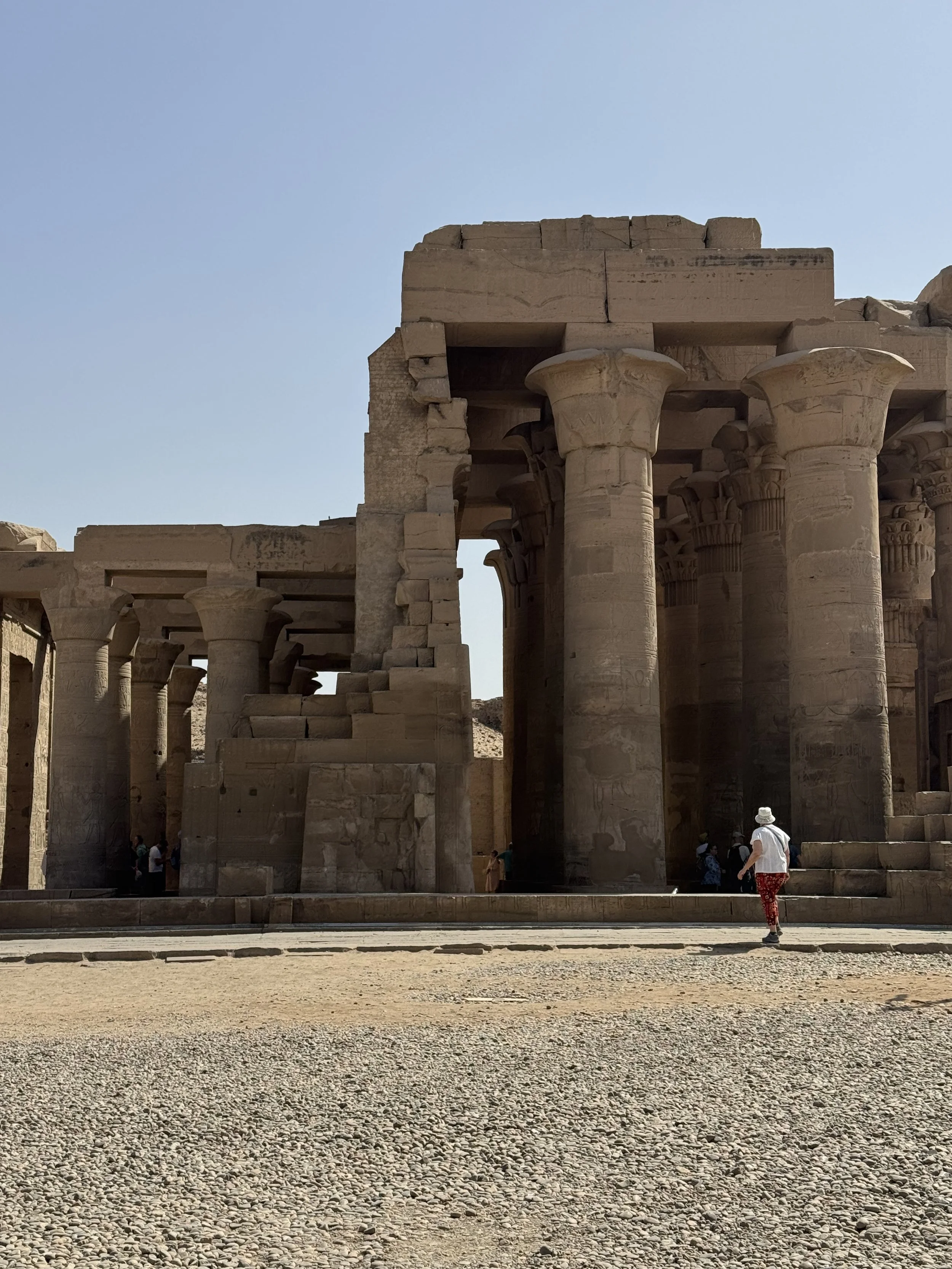
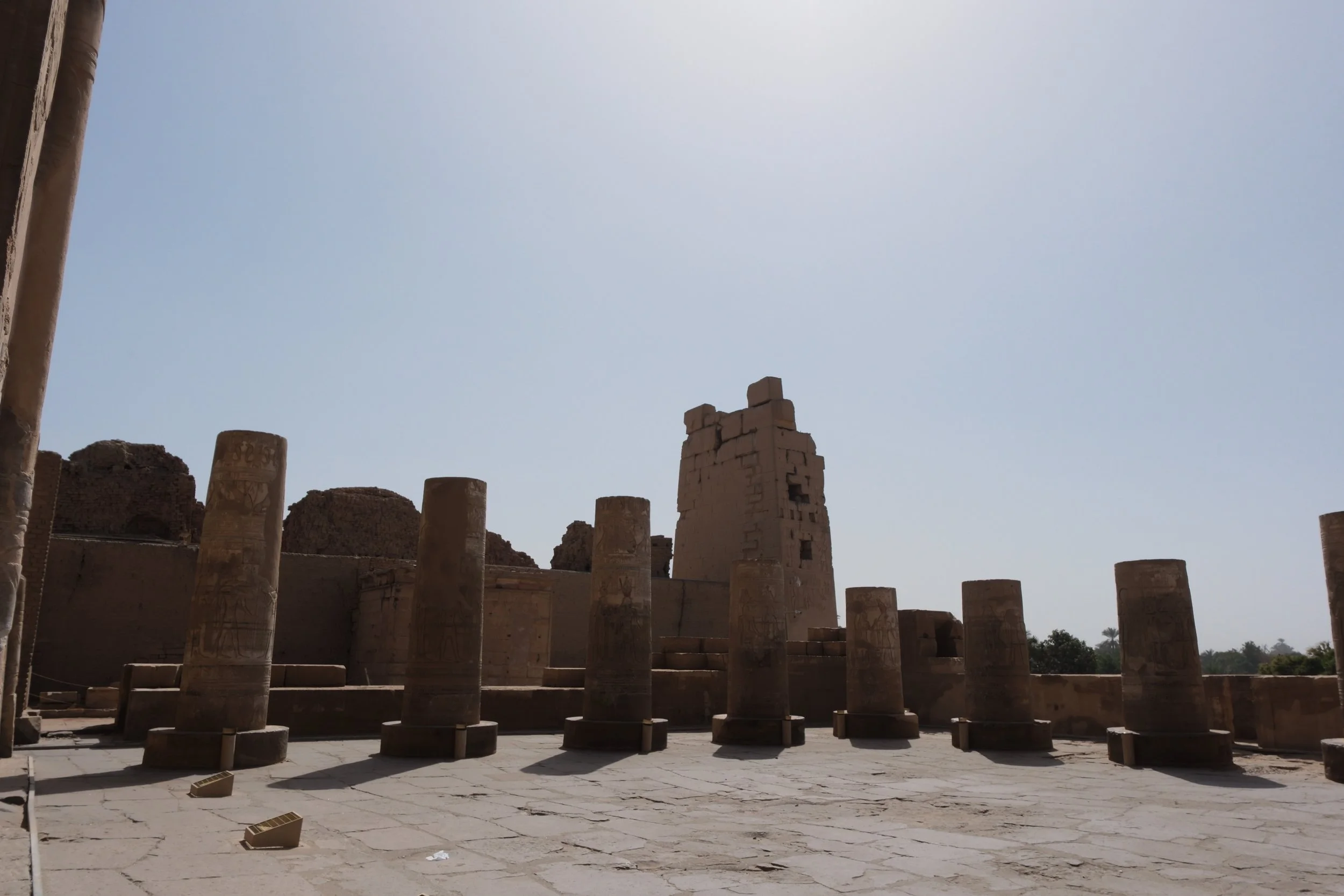
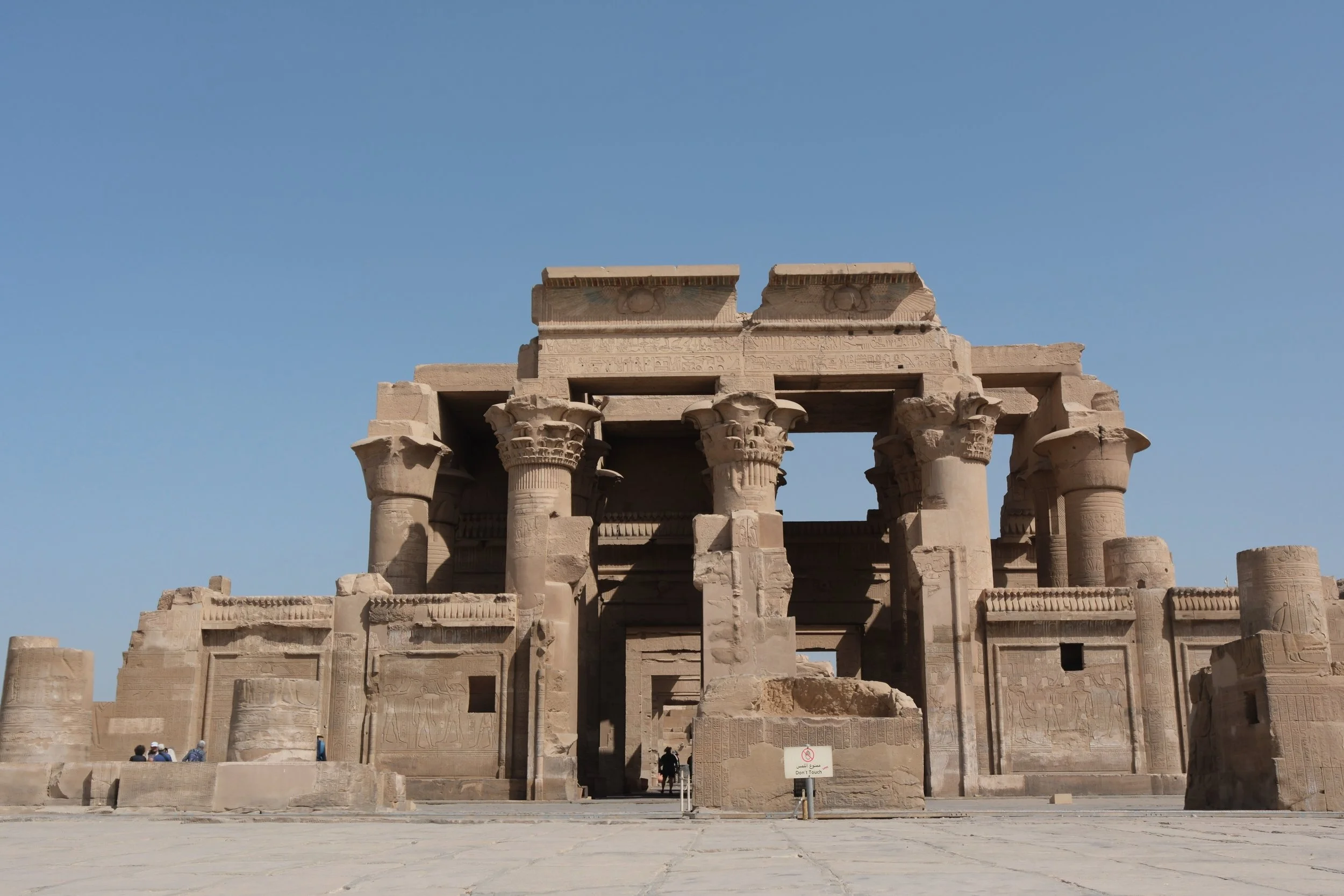
Kom Ombo is the only temple in Egypt dedicated to two deities: Sobek, the crocodile god, and Horus. The building is perfectly symmetrical — two entrances, two hypostyle halls, two sanctuaries — a duplicity which would sound logical until you stand inside it, and where the mirrored design disorients you, and you lose your way through the ruins. Sobek represents the Nile's destructive power, its capacity to flood and devour. Horus represents order and control. The Egyptians chose not to pick a side but to build the same temple twice and place them together.
Along one corridor, carved into the stone with the same precision used for hymns and royal genealogies, are what appear to be medical instruments: scalpels, forceps, scales. Kom Ombo was a place of healing. The crocodiles kept in the temple precinct were not decorations. They were reminders of what the system was working against.
The Crocodile Museum next door holds mummified specimens, including one killed by a local governor centuries ago in an act of grief-driven vengeance after the death of his son. It is a strange thing to stand in front of mummified crocodiles, but it fits.
Hor Diab / Sheikh Fadl Island
The dahabiya stops briefly at a sandbank island: dark sand, patches of marsh vegetation, tufts of what might be papyrus, dry grass flattened by animals into something resembling a carpet. The Nile looks a lot cleaner than you’d expect and a lot colder than it looks.
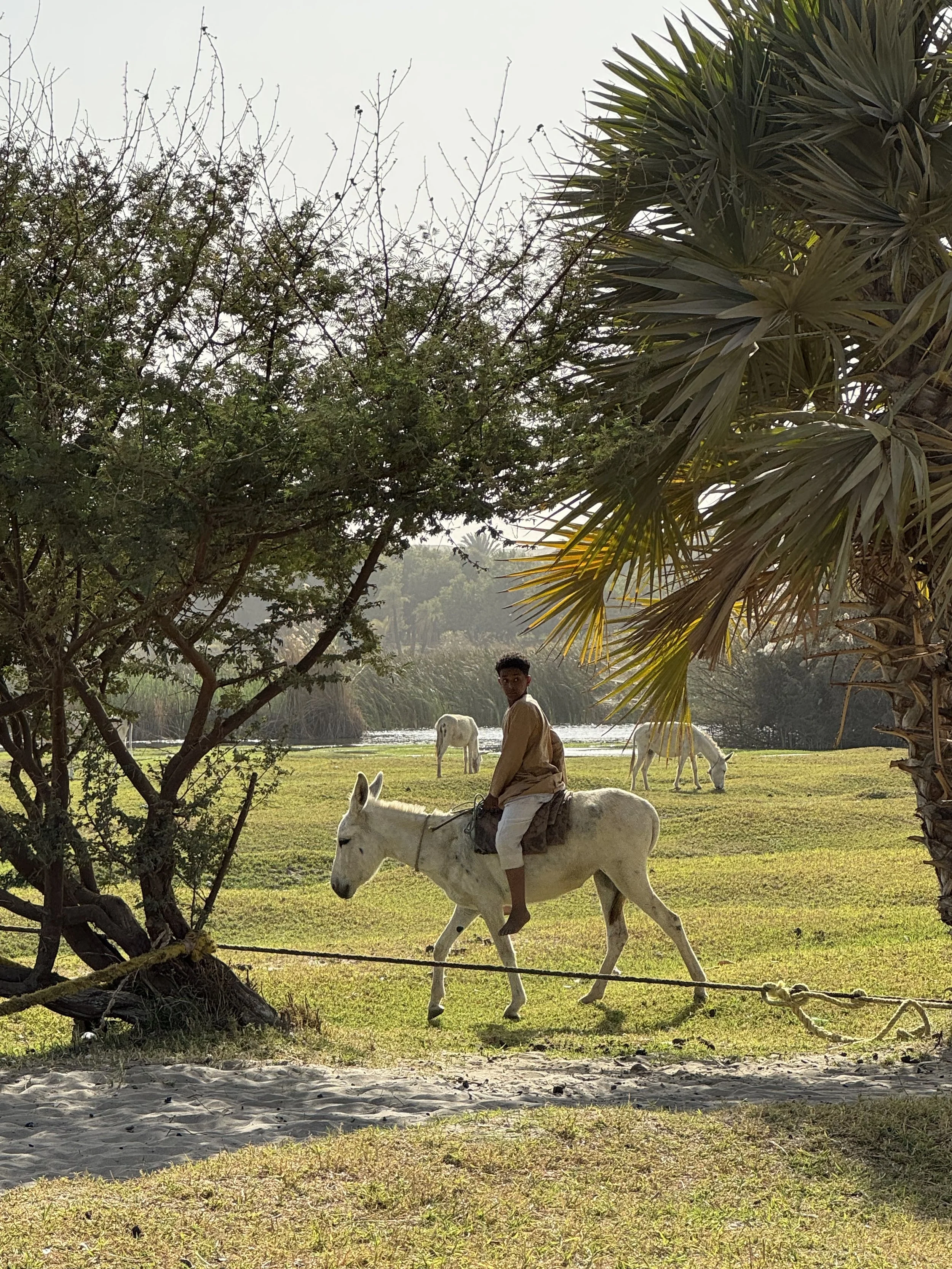
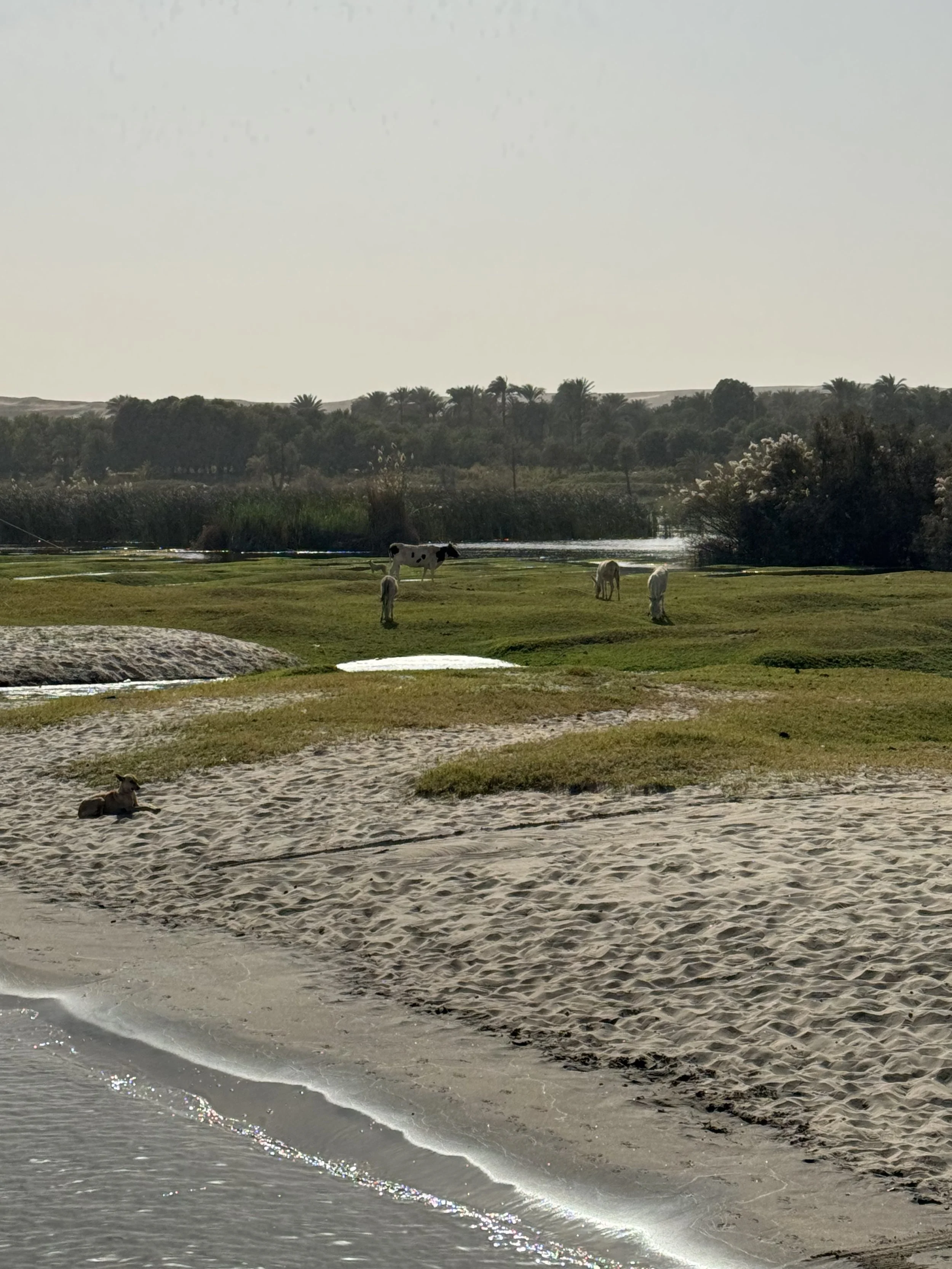
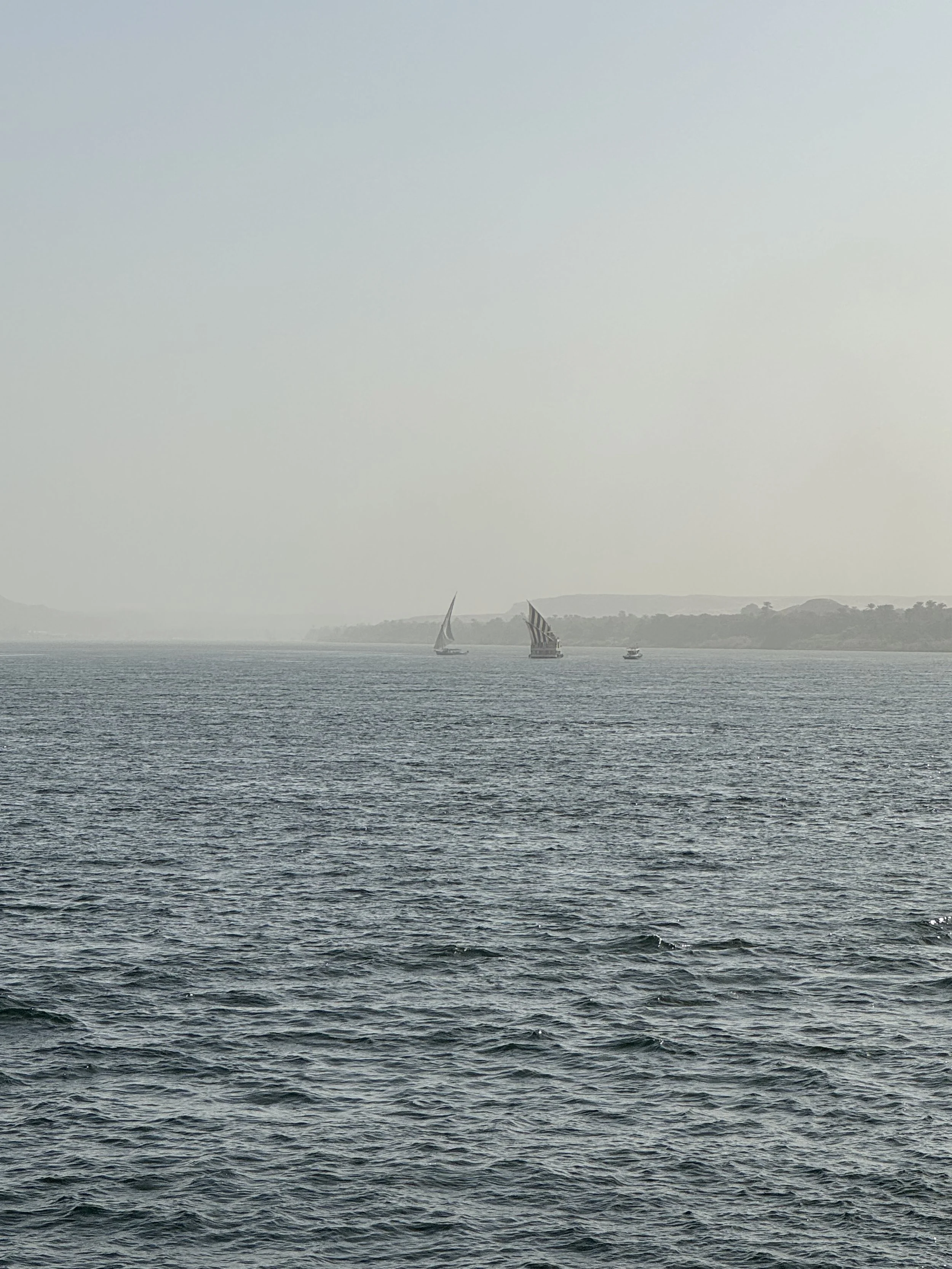
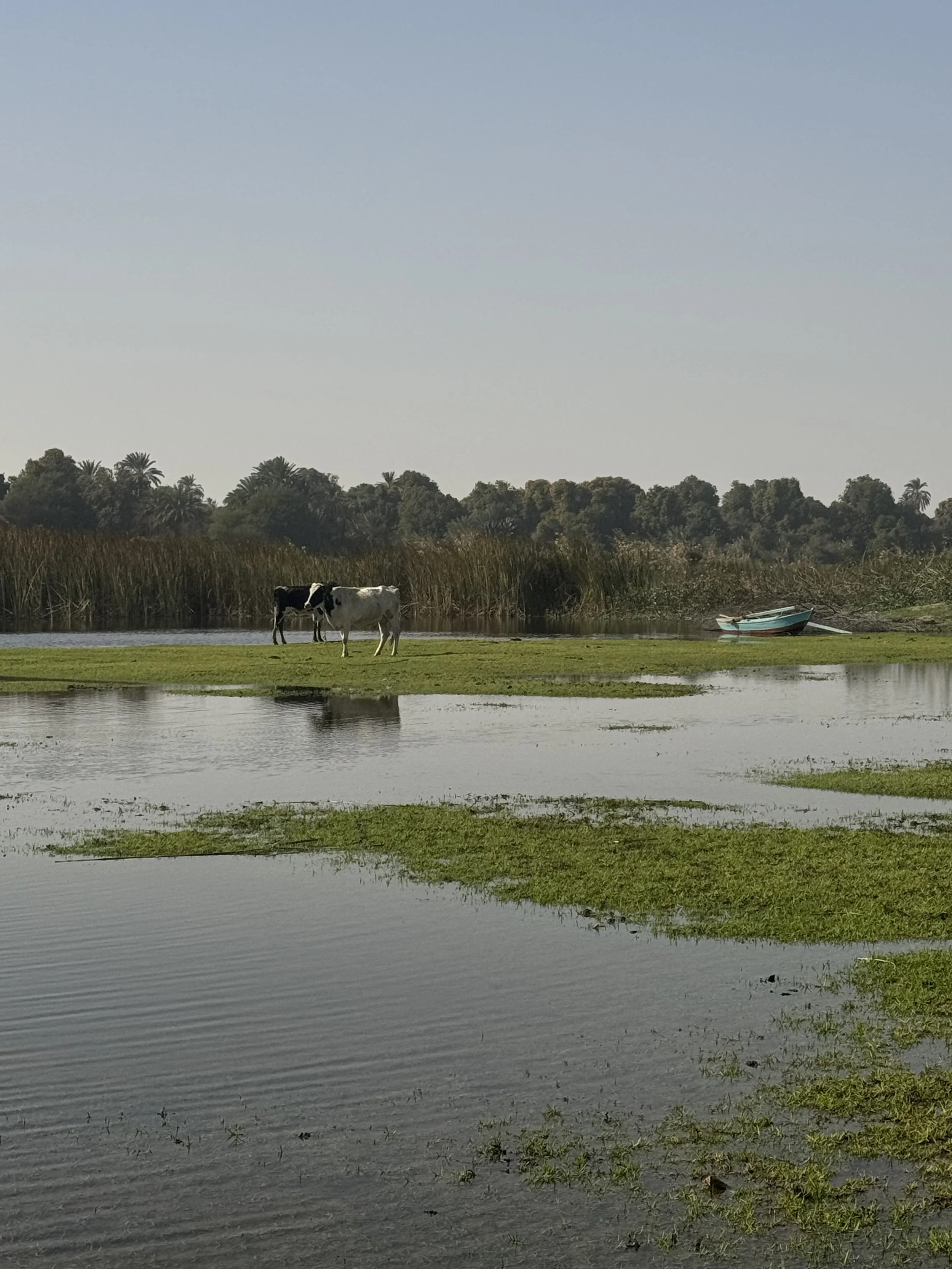
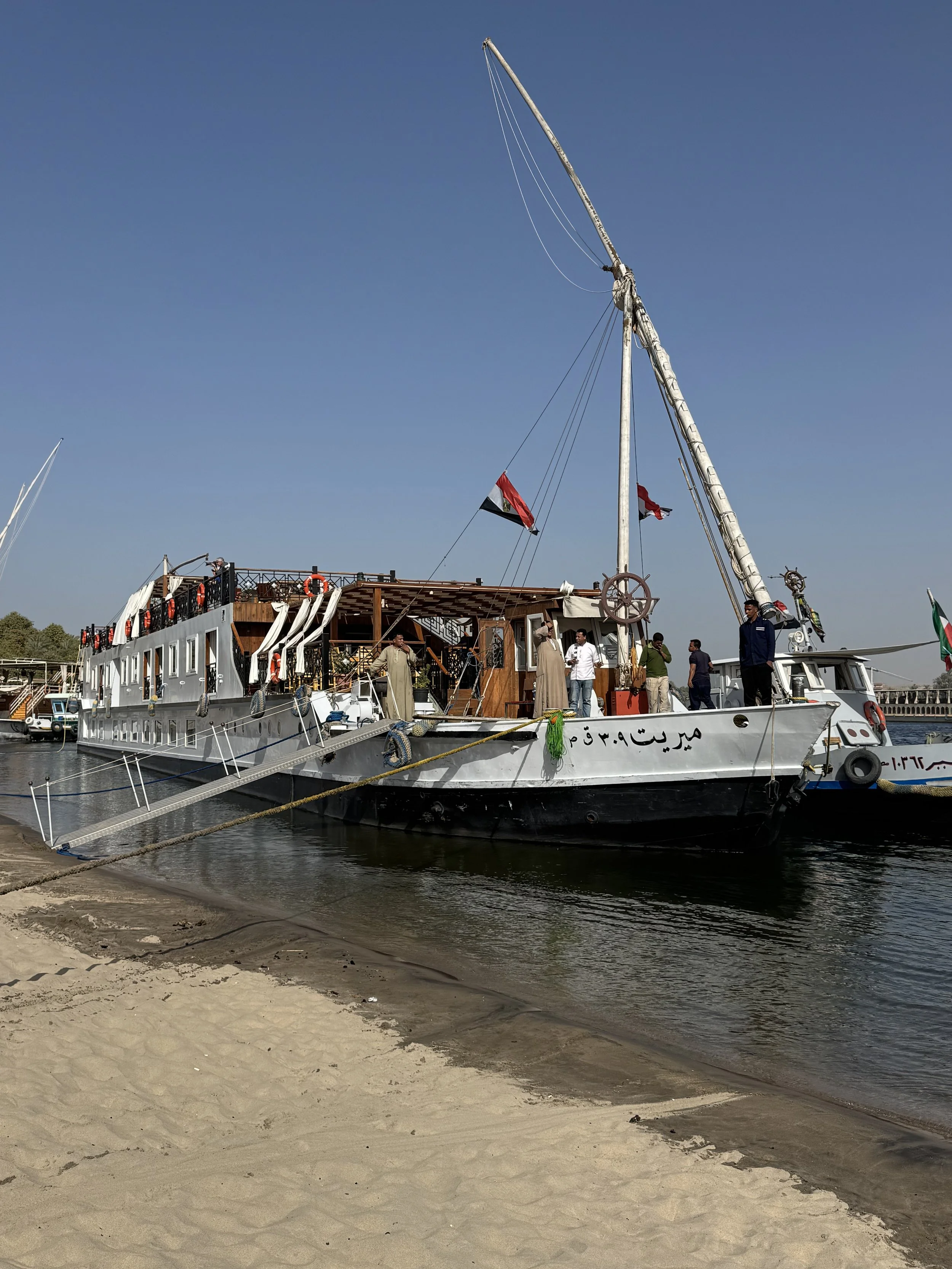
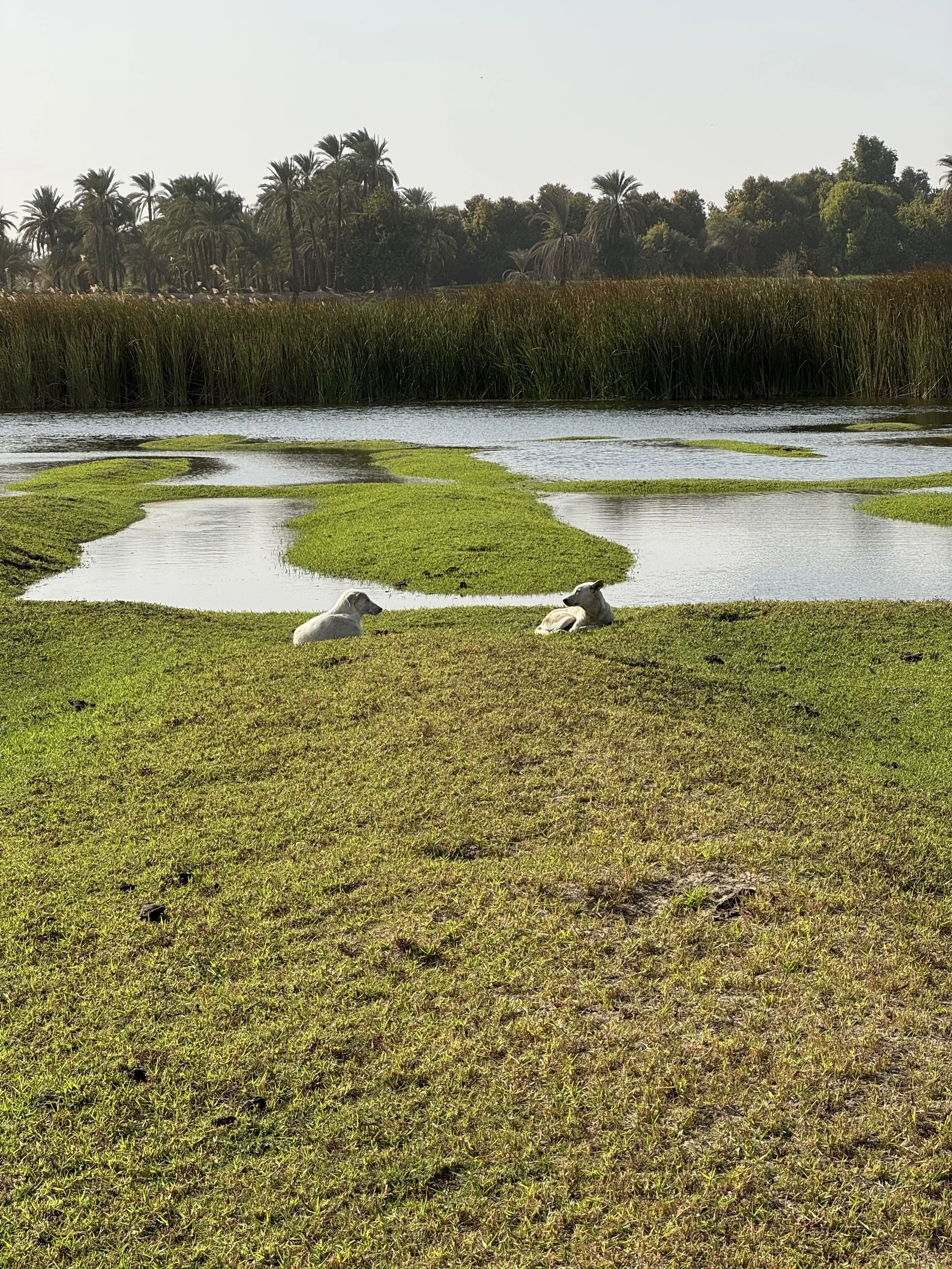
This is another organised tourist stop — the kid on the donkey ready for a photo, the kiosk selling souvenirs, the boats waiting as you explore that small stretch of land. But for the most courageous, it is an opportunity to say goodbye to the river by immersing themselves in it. To imagine yourself, for a moment, as one of the many who have explored these banks across the centuries.
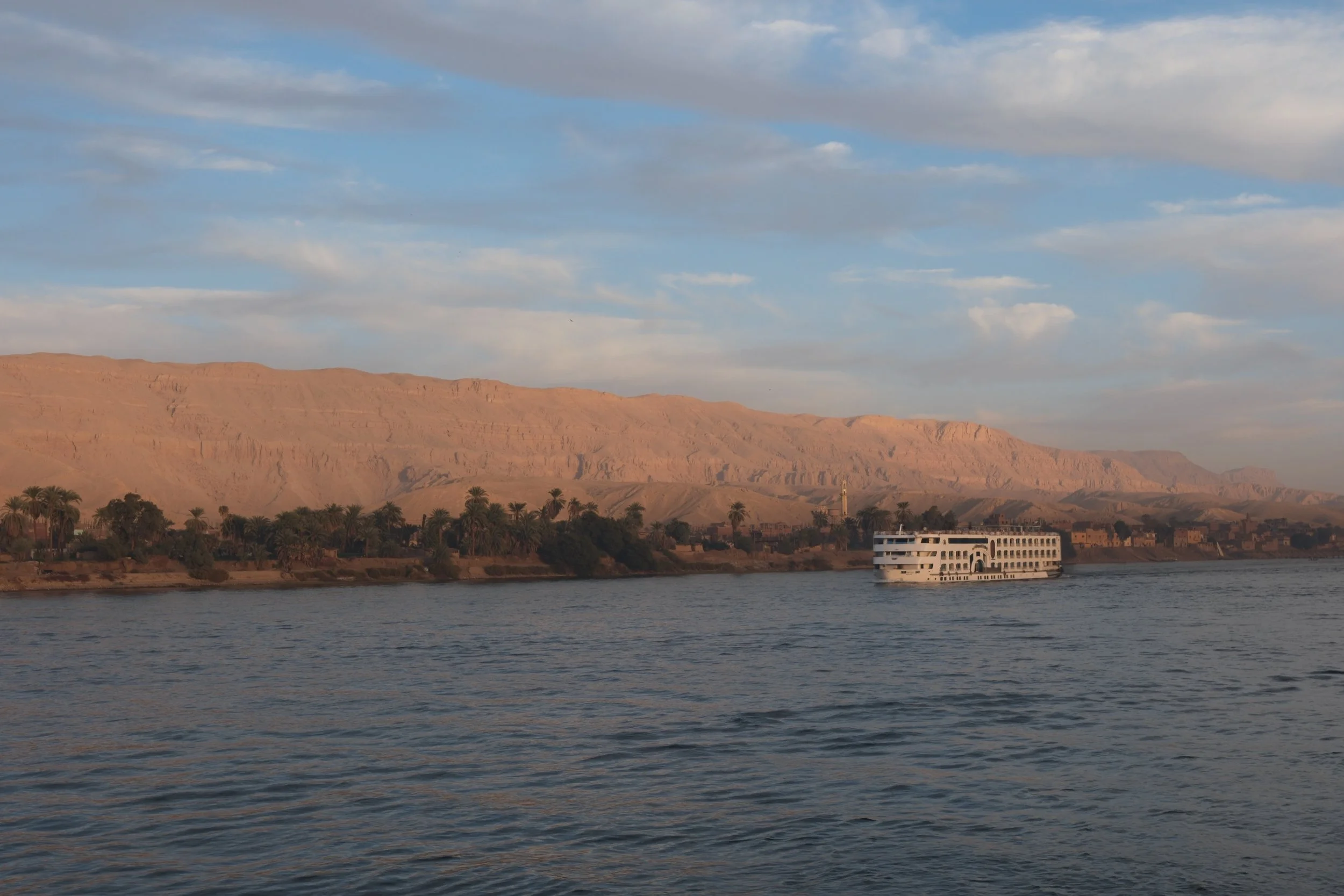
The Nile lives in its present but ensures you know about its permanence across centuries. It does not care about the empires that have risen along its banks. It was there before them, and it will outlast every monument they built. Navigating upstream on its waters, the river makes you reflective. What the ancient Egyptians understood is that the river is the only thing that never tries to last. It simply does.
