Luxor - Architecture of Immortality
Landing in Luxor immediately feels like you're in a different realm. The airport is small, orderly, set in the desert; a pale stone façade with a modern geometric pattern welcomes travelers — it seems restrained, quiet. Outside, the air is cleaner.
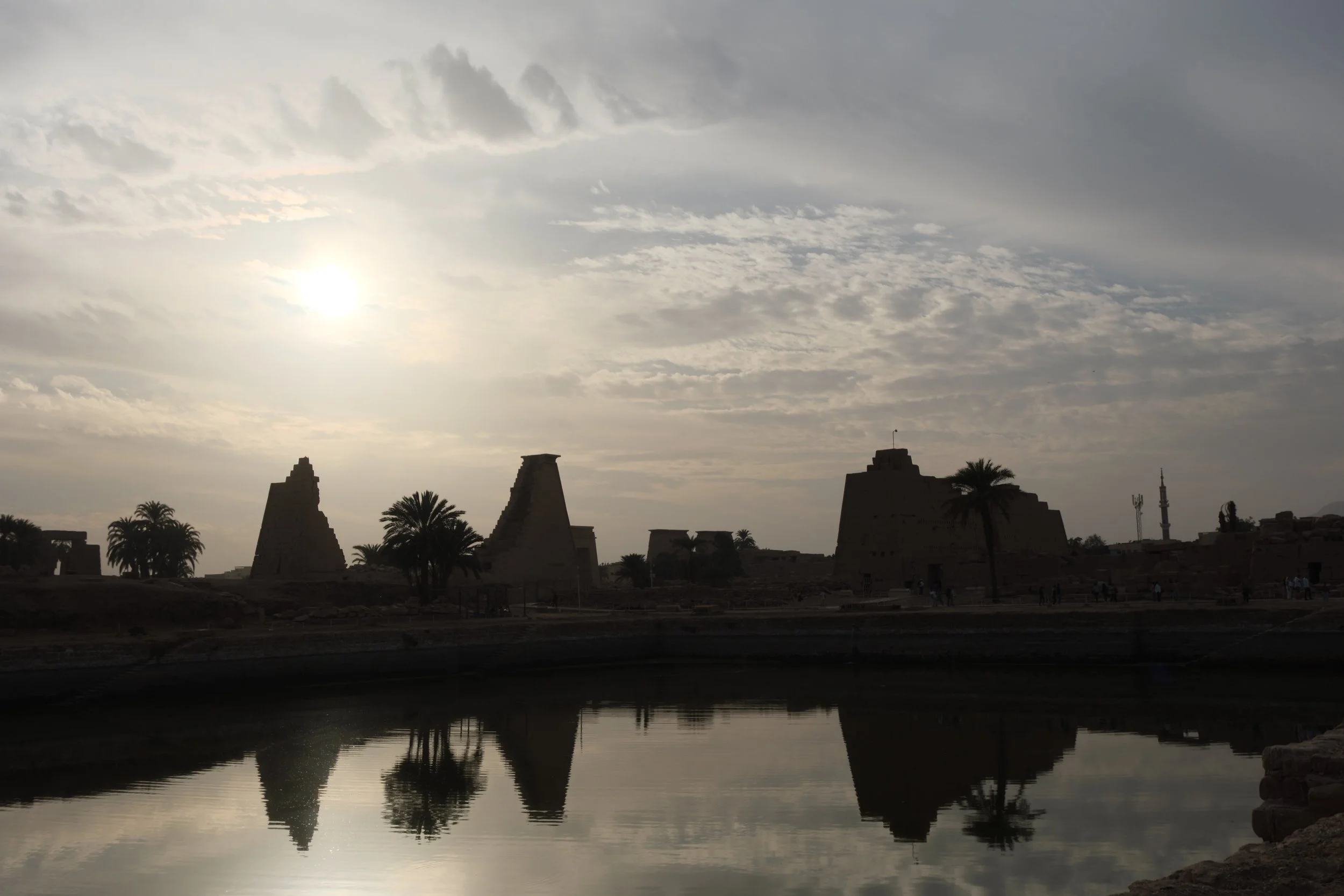
Here, with the growing influence of the kings of the New Kingdom, the political and religious center of Egypt shifted to what was known as the city of Thebes. Today's Luxor still safeguards some of the most valuable pieces of architecture and art that have allowed us to learn so much about ancient Egyptian civilization.
From the airport, all the main sights are located along the banks of the Nile. The bus runs parallel to the river, where small shops line the streets; children run curiously toward buses that stop; local life unfolds with its own rhythm. Dust and traffic are present here, too, but they don't overwhelm you.
Here, the Nile is what it's always been: a source of fertility, continuity. Bright green fields stretch along its banks, in contrast with the surrounding desert, with agriculture being the key driver of wealth.
But the Nile holds a cosmological meaning — it represents a shift: the sun rises in the east and sets in the west. Temples belong to the rising light; tombs belong to the descending sun.
The key to understanding Luxor, and how power defined itself, is through architecture. Starting from the eastern bank, which hosts both the Karnak and Luxor temples, two poles of a sacred axis that once connected divine power and political legitimacy.
Getting closer to the sights, there are several checkpoints. Tourist buses are stopped; policemen sharply ask questions of the driver, recording indecipherable codes in their paper booklets. These checks were intensified following several attacks that targeted tourists, and they ensure protection for visitors.
The first stop on your itinerary should be Karnak — the largest religious complex of ancient Egypt, a city built in stone over two thousand years, to which every major pharaoh contributed. Each added without erasing their predecessor, stratifying years of rule one on top of the other. The relevance of this temple was that it was dedicated to Amun, the local god who rose to national importance because of pharaonic devotion. They presented themselves as the chosen sons of Amun.
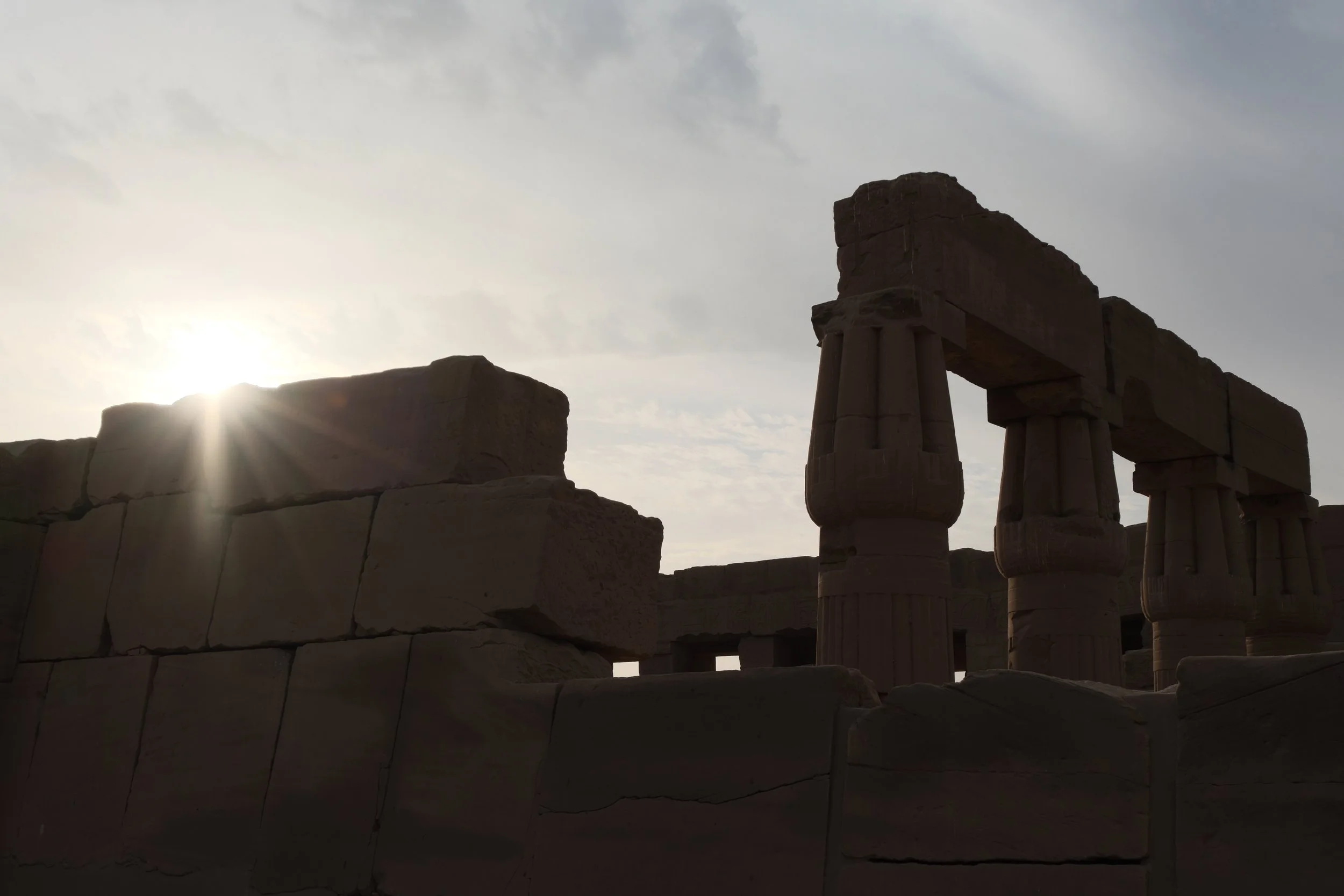
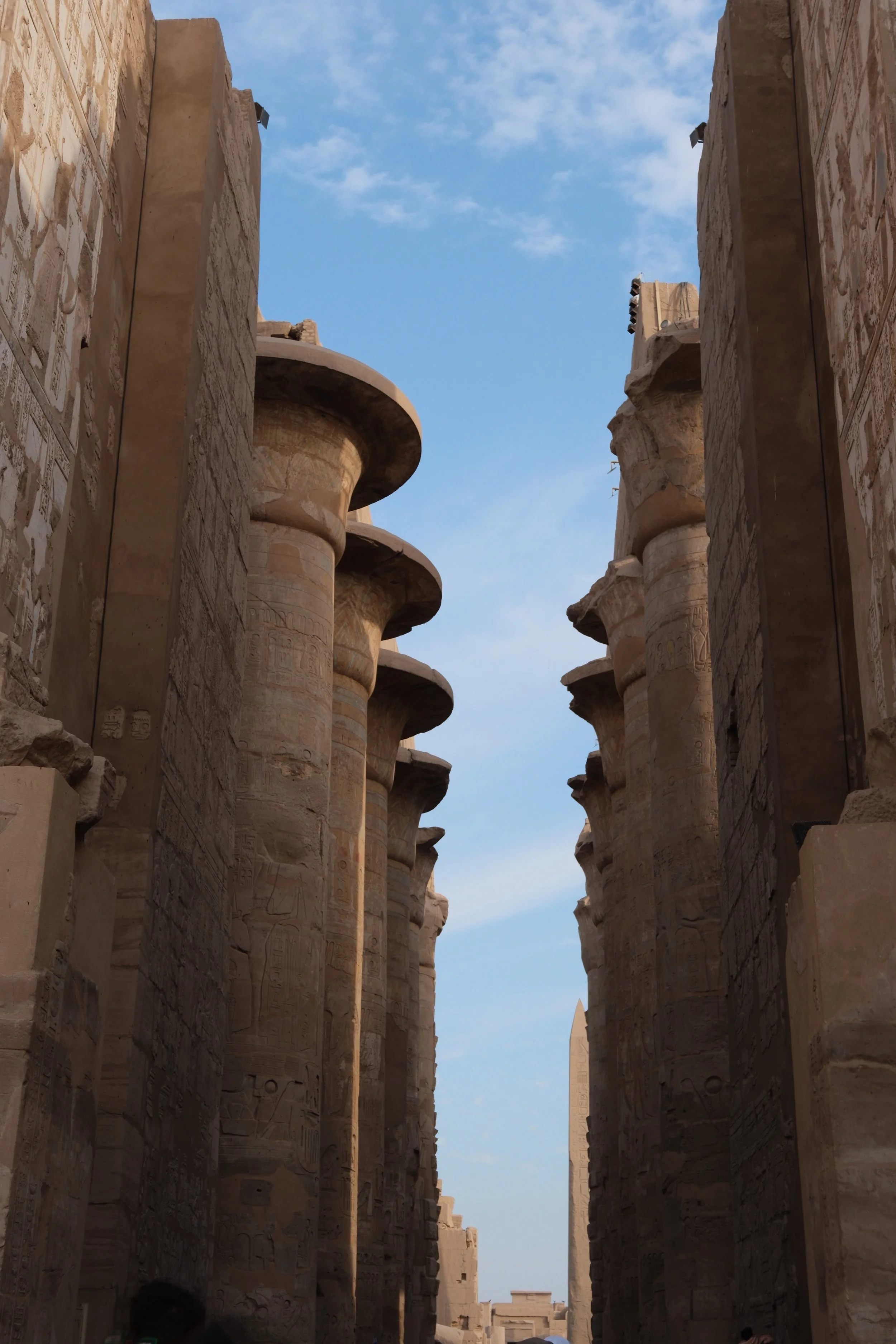
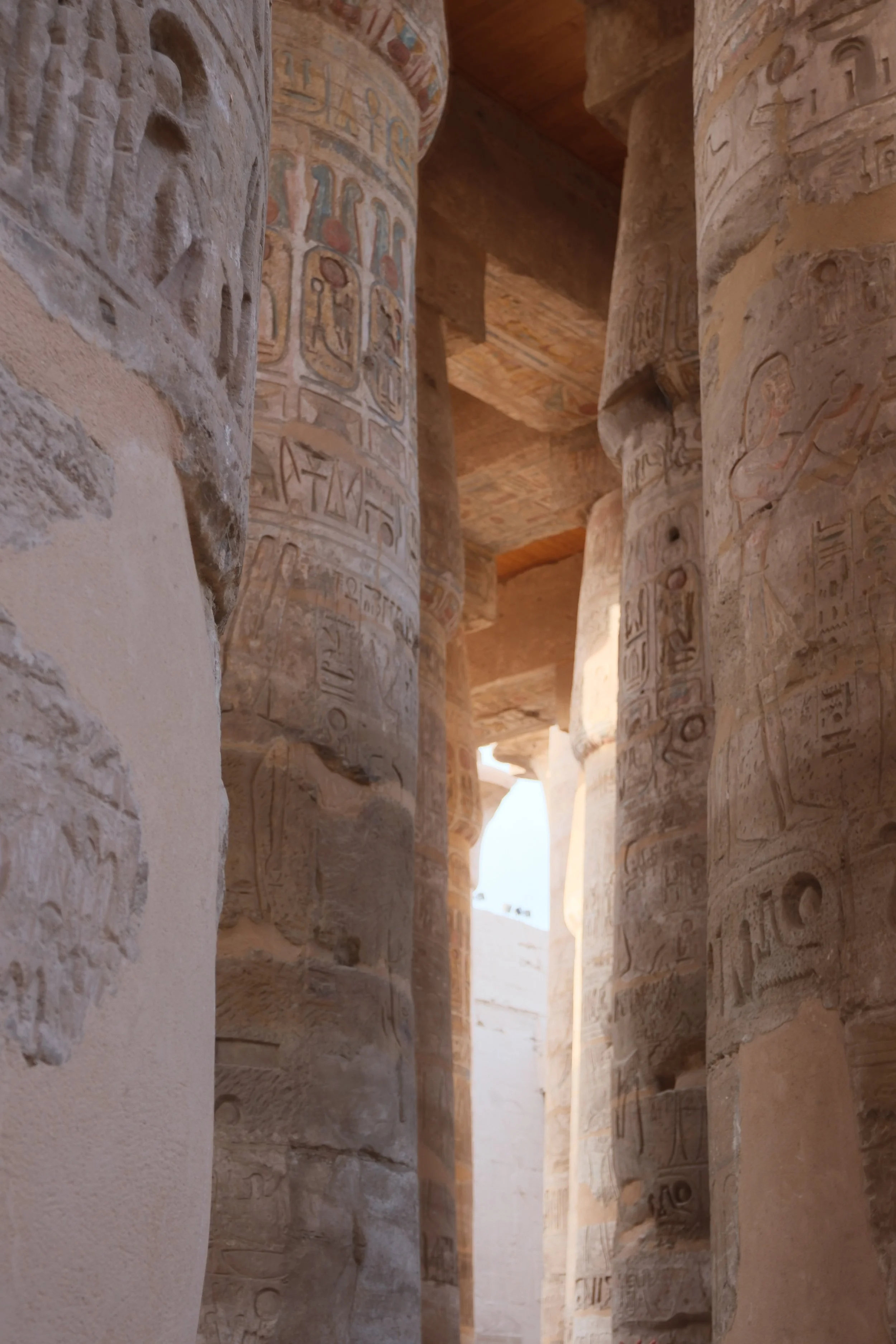
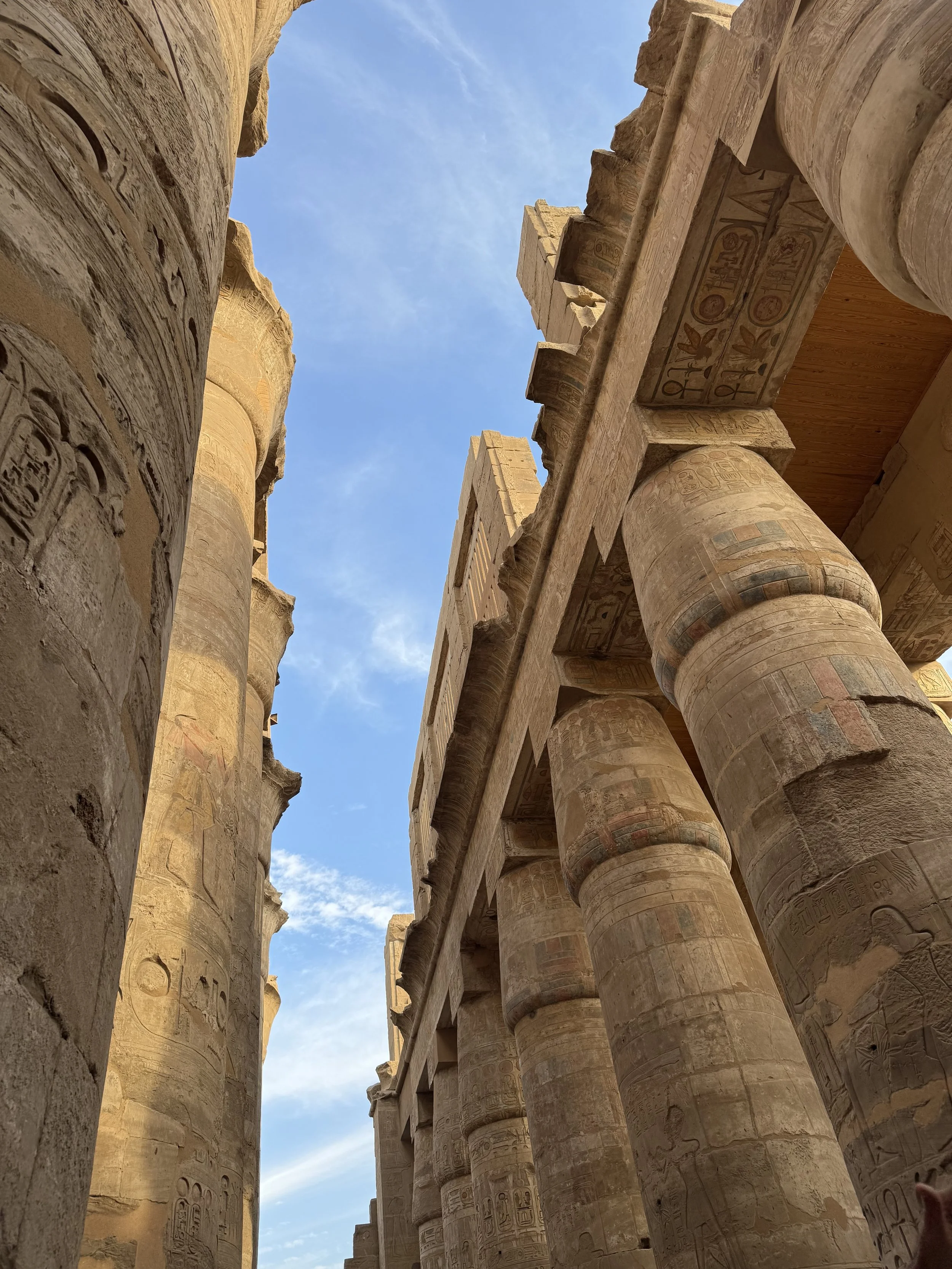
At its entrance, you are welcomed by a processional avenue of ram-headed sphinxes; they lead inward toward the Great Hypostyle Hall. Even in ruin, it overwhelms. One hundred and thirty-four columns rise overhead, massive, petrified across millennia. The side aisles are dense and give the impression that you are walking through a labyrinth — evoking the idea of chaos. Only the central aisle, distinguished by its taller columns, establishes order. This represents maat: the cosmic balance restored by the pharaoh. Here, architecture plays a political role.
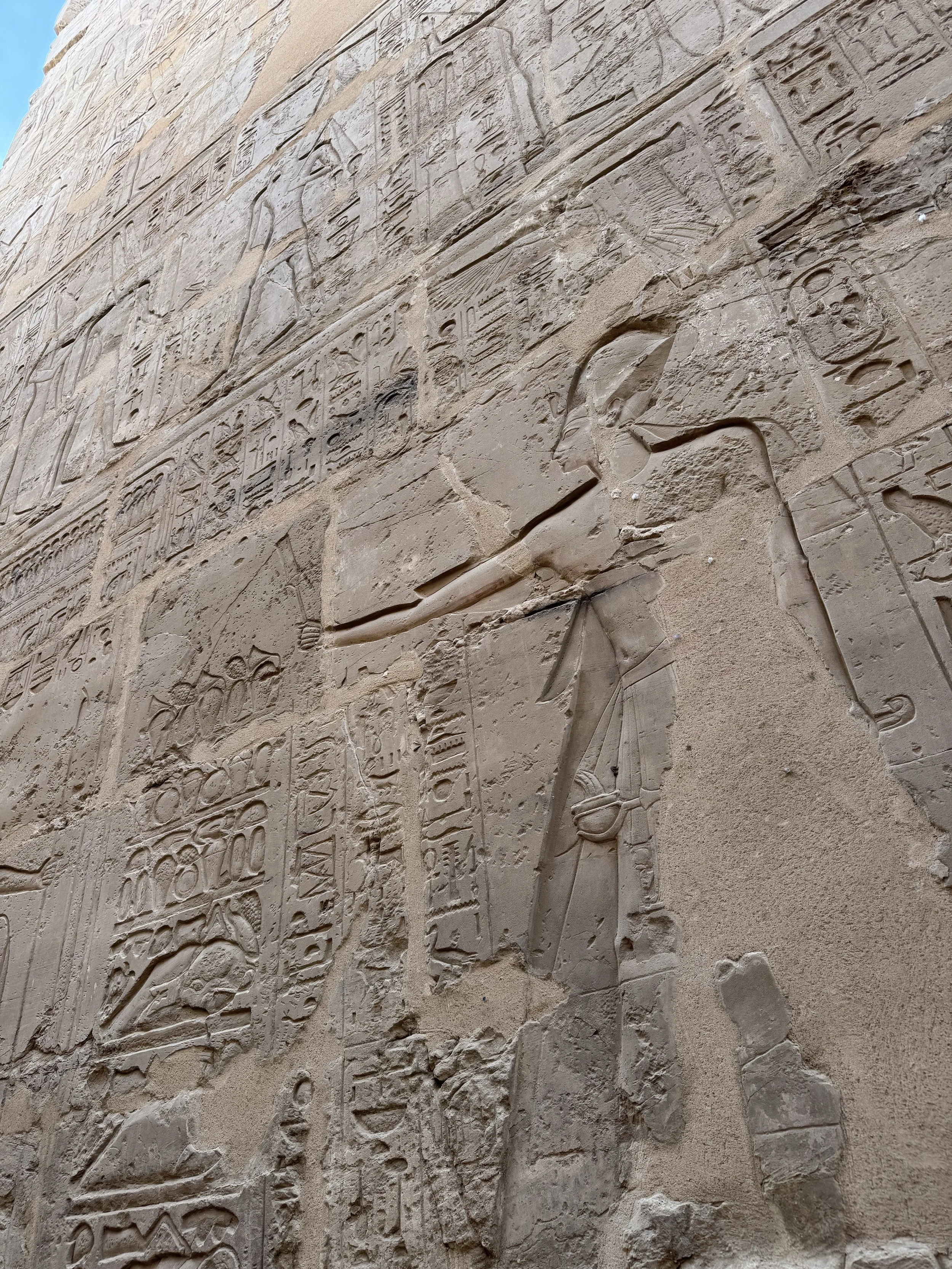
On the walls, reliefs play the role of narrators: the pharaoh presents offerings to the gods to maintain order; the pharaoh strikes enemies to keep chaos at bay. The ruler plays a key role in society — he is indispensable in ensuring the equilibrium of their world.
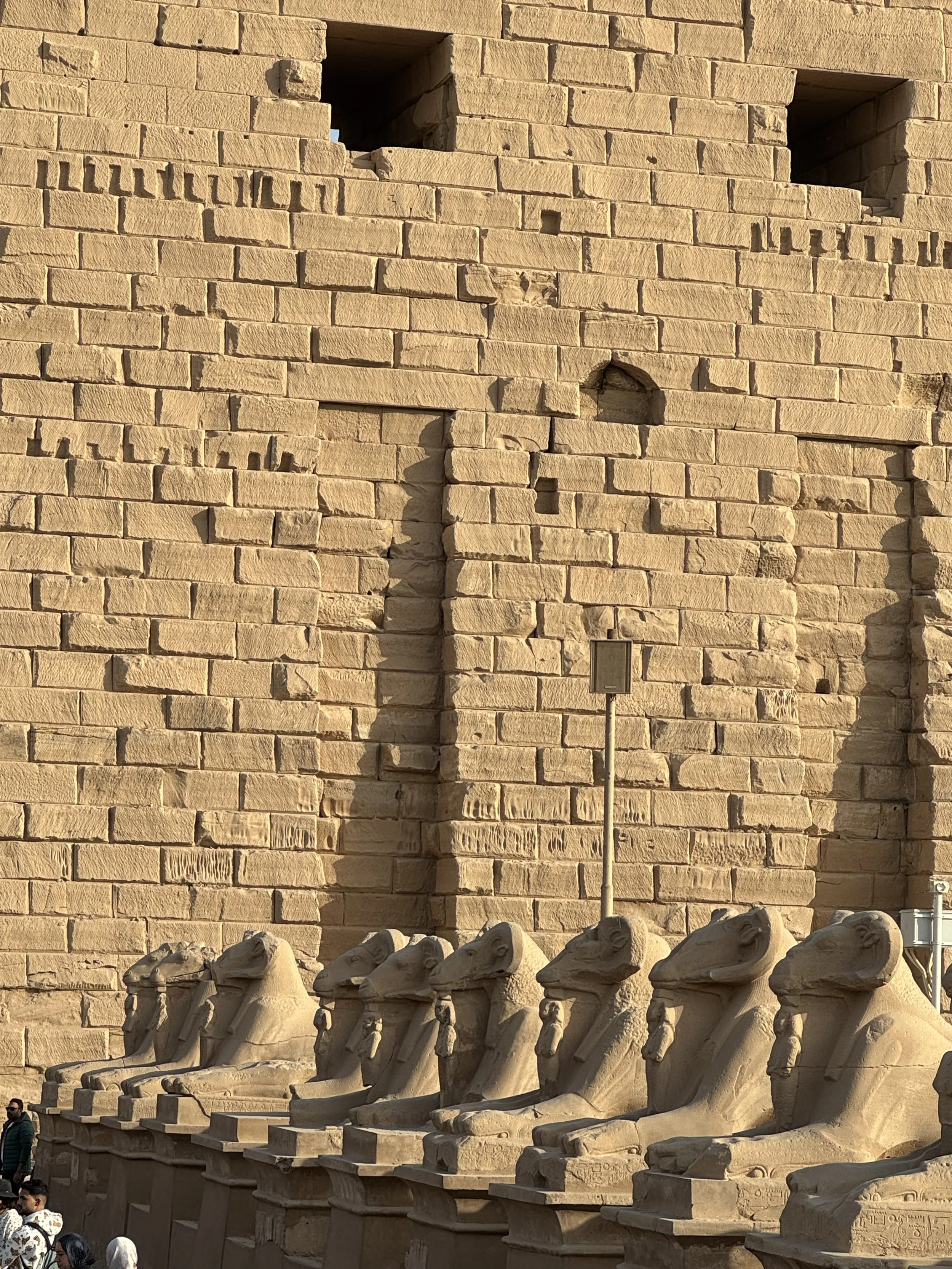
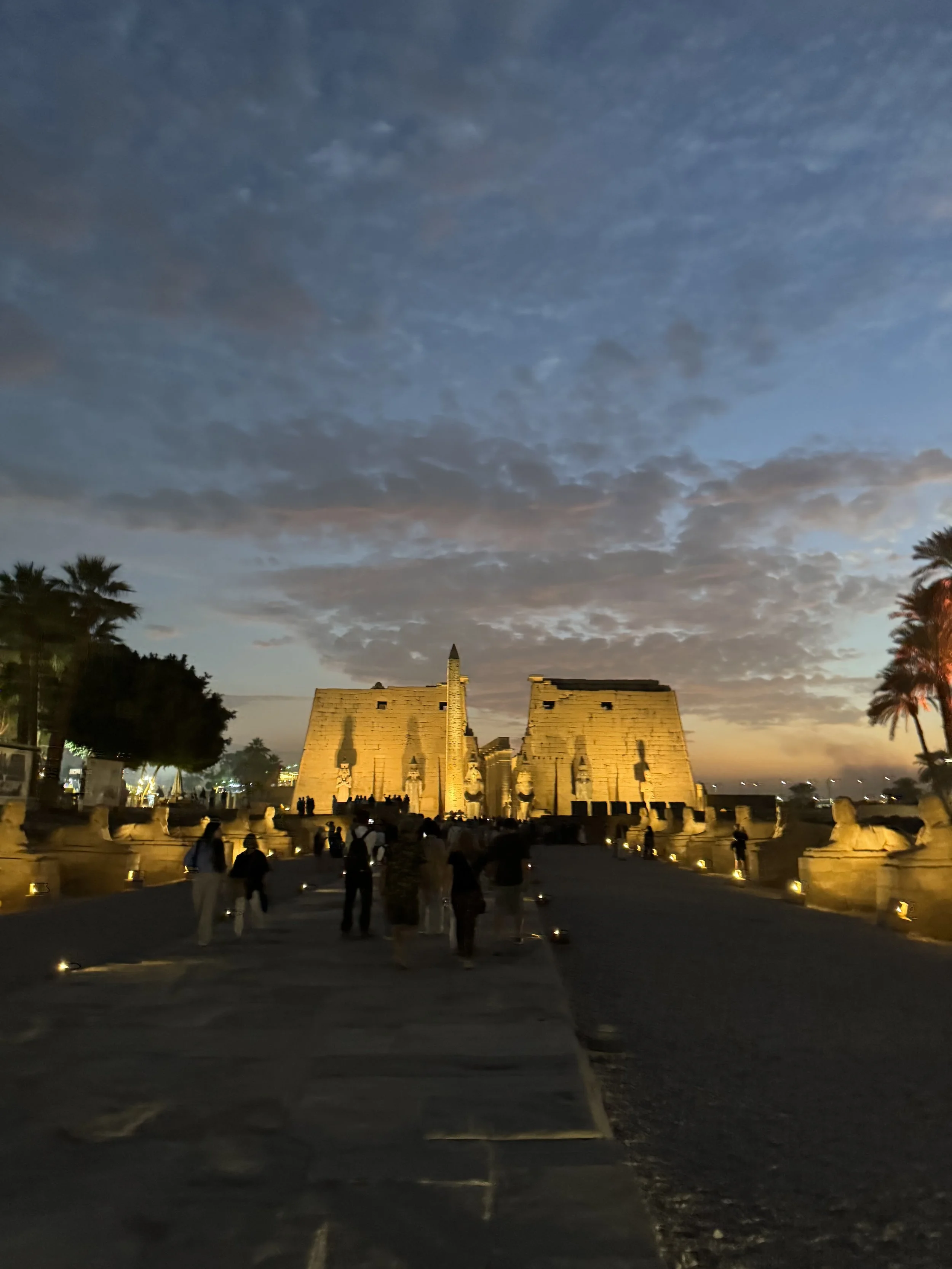
From the temple of Karnak, the ceremonial Avenue of the Sphinxes stretches for three kilometers to the Temple of Luxor, symbolizing a link between the absolute divine authority of Amun-Ra in Karnak and the renewed legitimacy of kingship in Luxor. During the Opet Festival, Amun's statue would travel on a sacred boat carried between the two temples along this road — a fundamental ritual that allowed the pharaoh to reaffirm his role. In ancient Egypt, power wasn't assumed permanently; it always had to be reconfirmed. Luxor Temple gave legitimacy to the king; it wasn't meant for worshipping any specific god, it had a ceremonial role.
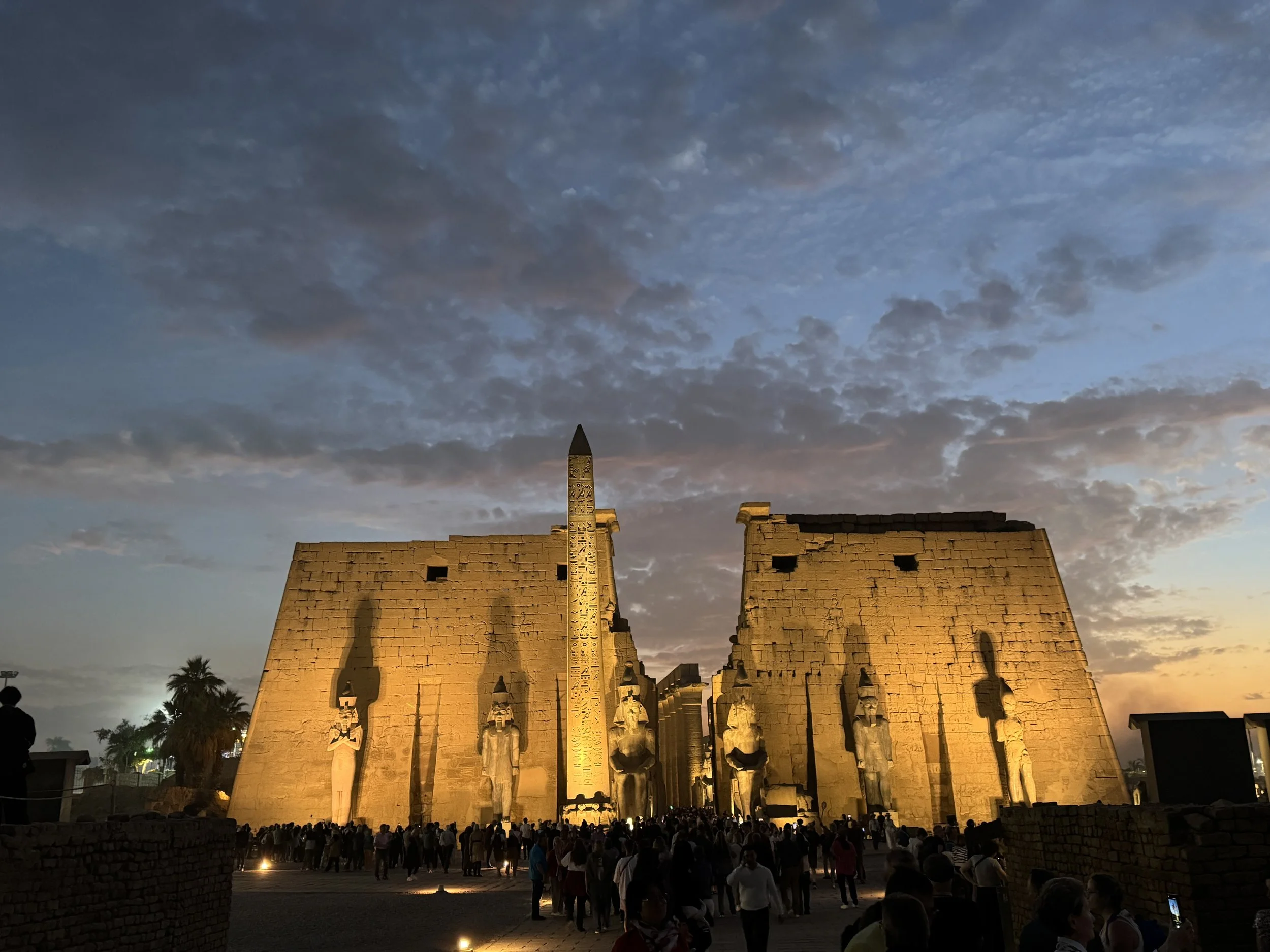
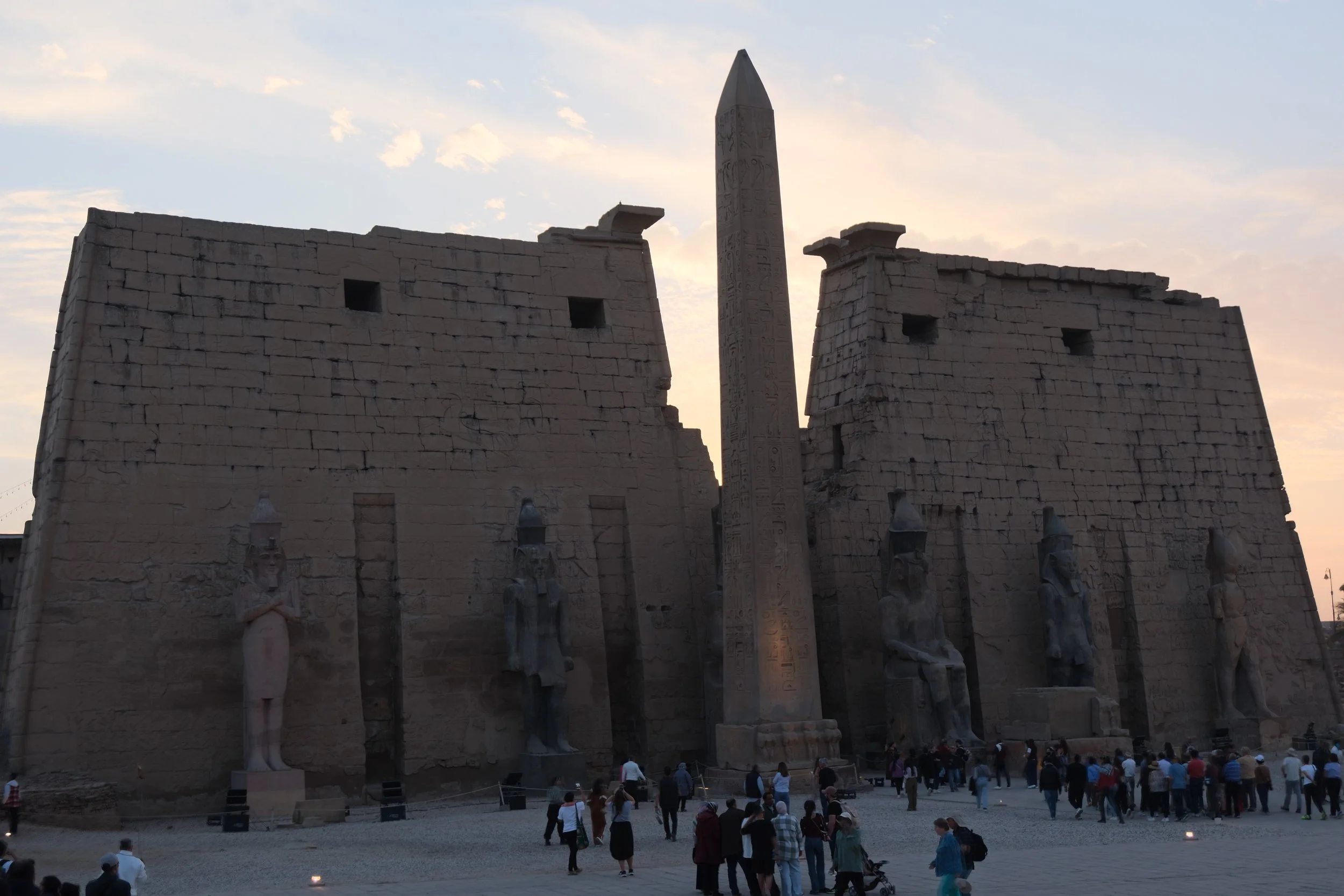
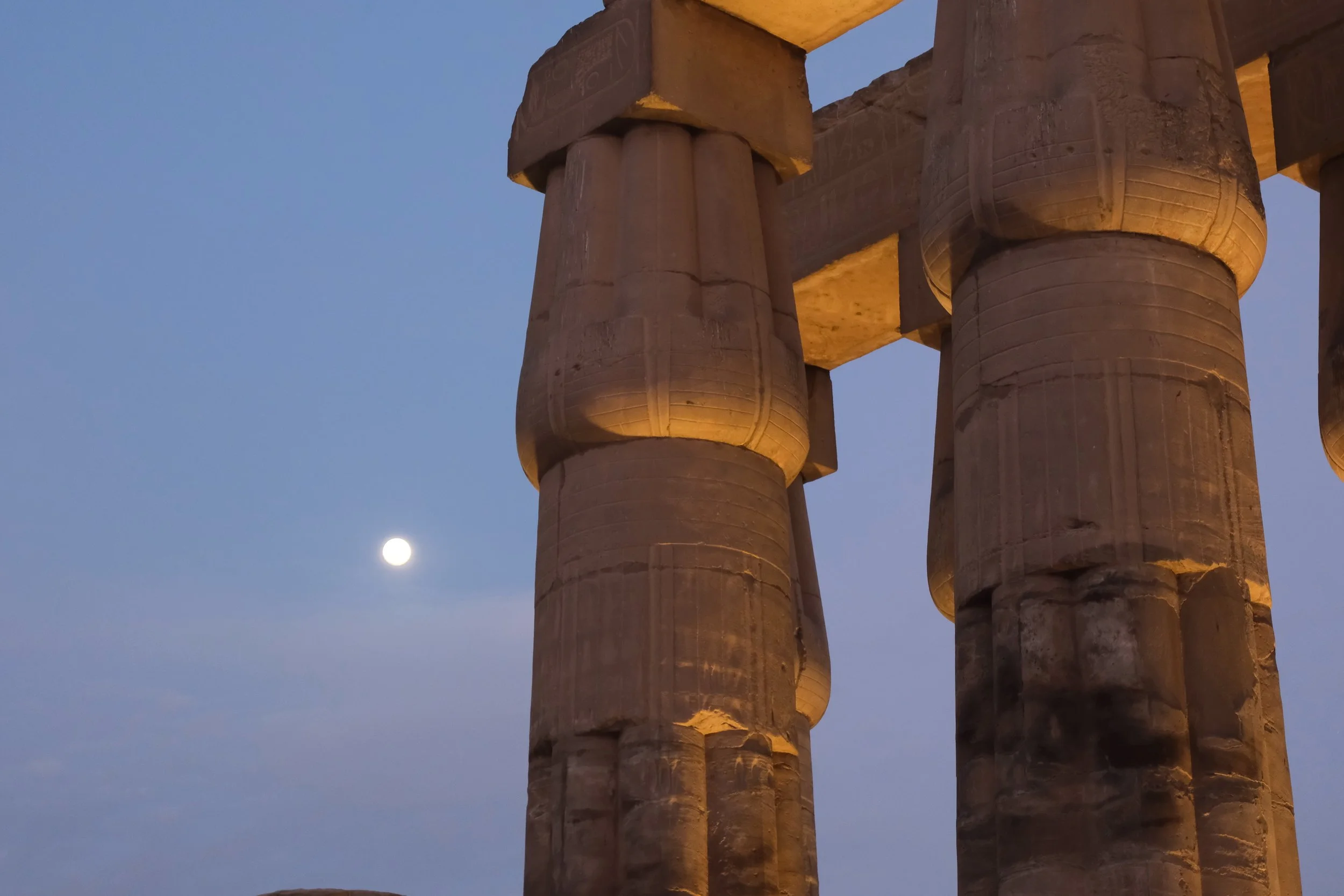
Compared to Karnak, Luxor hits differently. Placed in the center of the city, it feels urban, part of everyday life, but also theatrical — it's meant to embody power. Built by Amenhotep III and expanded by Ramses II, it was designed to be seen and lived in. The temple itself, with its location, was never completely abandoned: it became a Roman military site, then a Christian church, and still today it keeps evolving, with a mosque where worshippers can overlook right into the temple from a balcony above. This means the temple has had over three thousand years of religious continuity in the same space — a place that never stopped being sacred.
At sunset, the golden rays of the sun fall behind its façade while elegantly placed lights turn on to highlight the magnificence of the colossal statues of Ramses II, seated and standing, that guard the temple's entrance. One of the original obelisks still rises in place, while its twin can be seen in Paris, in Place de la Concorde.
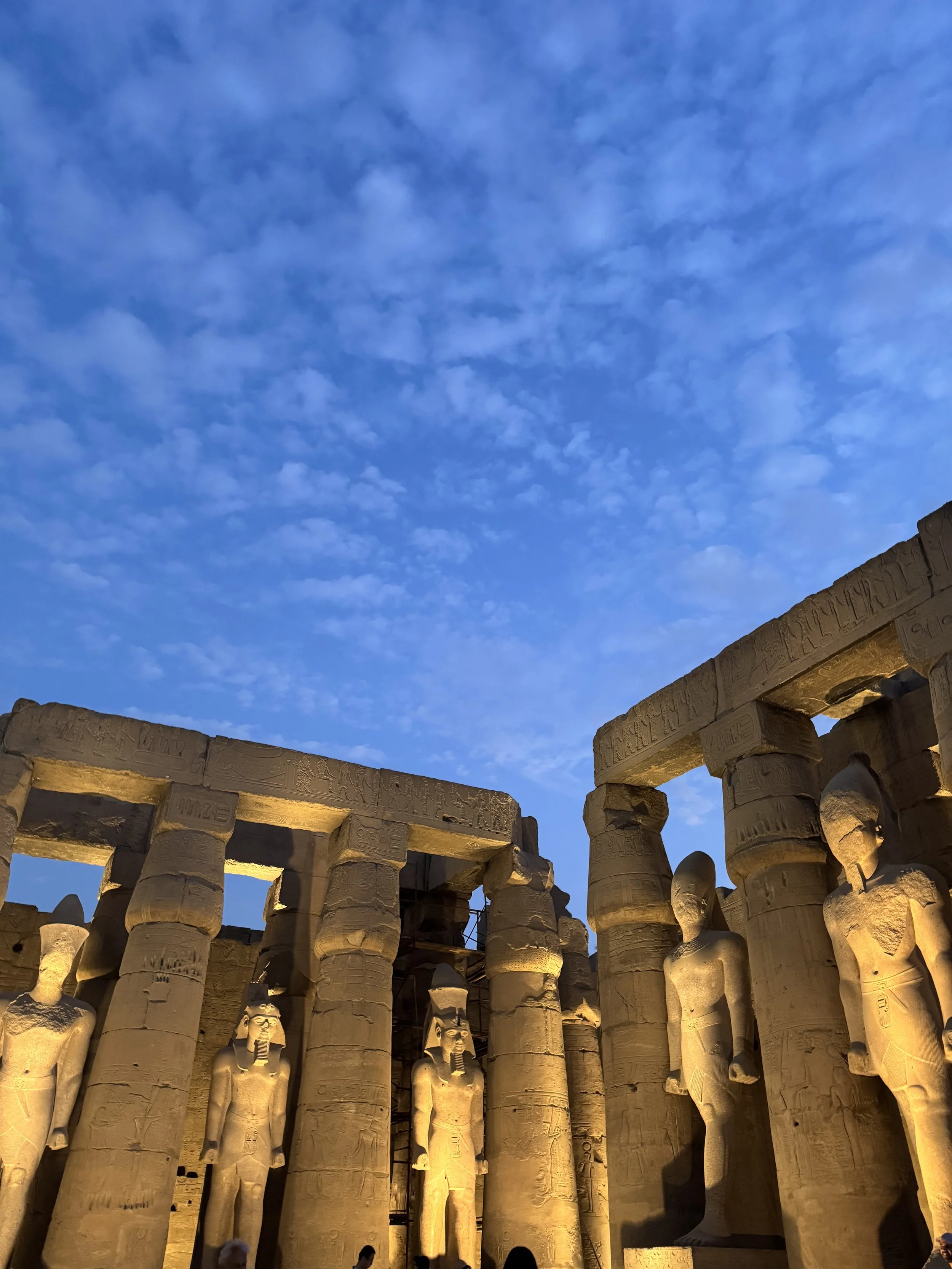
While the east of the Nile represents life, crossing to the west — where the sun descends — means moving toward where power prepares for its most stable form in the afterlife.
The Valley of the Kings is carved into a mountain chosen for its relative invisibility — in stark contrast to the monumental pyramids, though the mountain's pointed shape somehow recalls that same geometry. Today, the valley is marked by the incessant movement of buses and visitors, openly revealing what was once meant to be concealed and never visited.
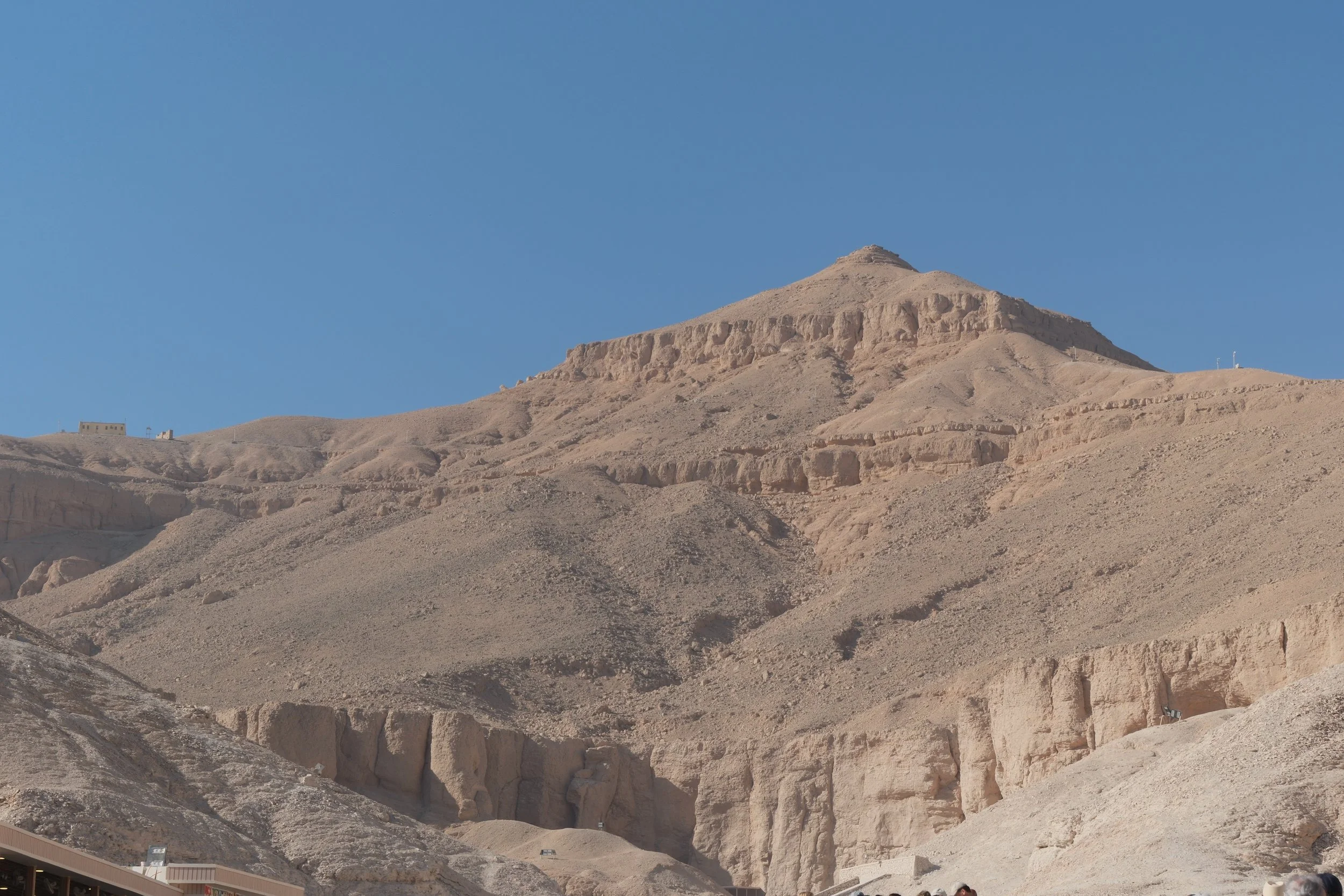
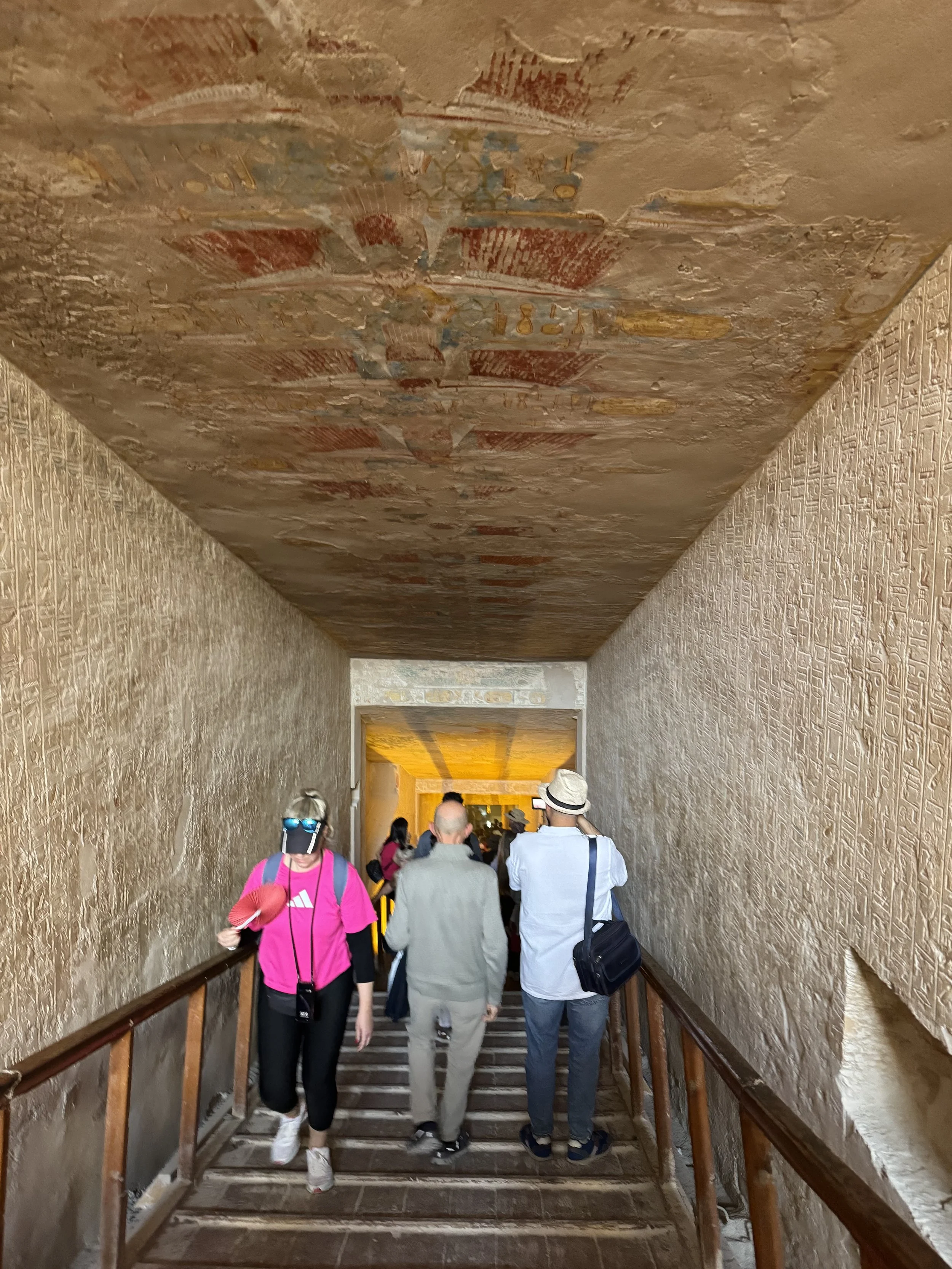
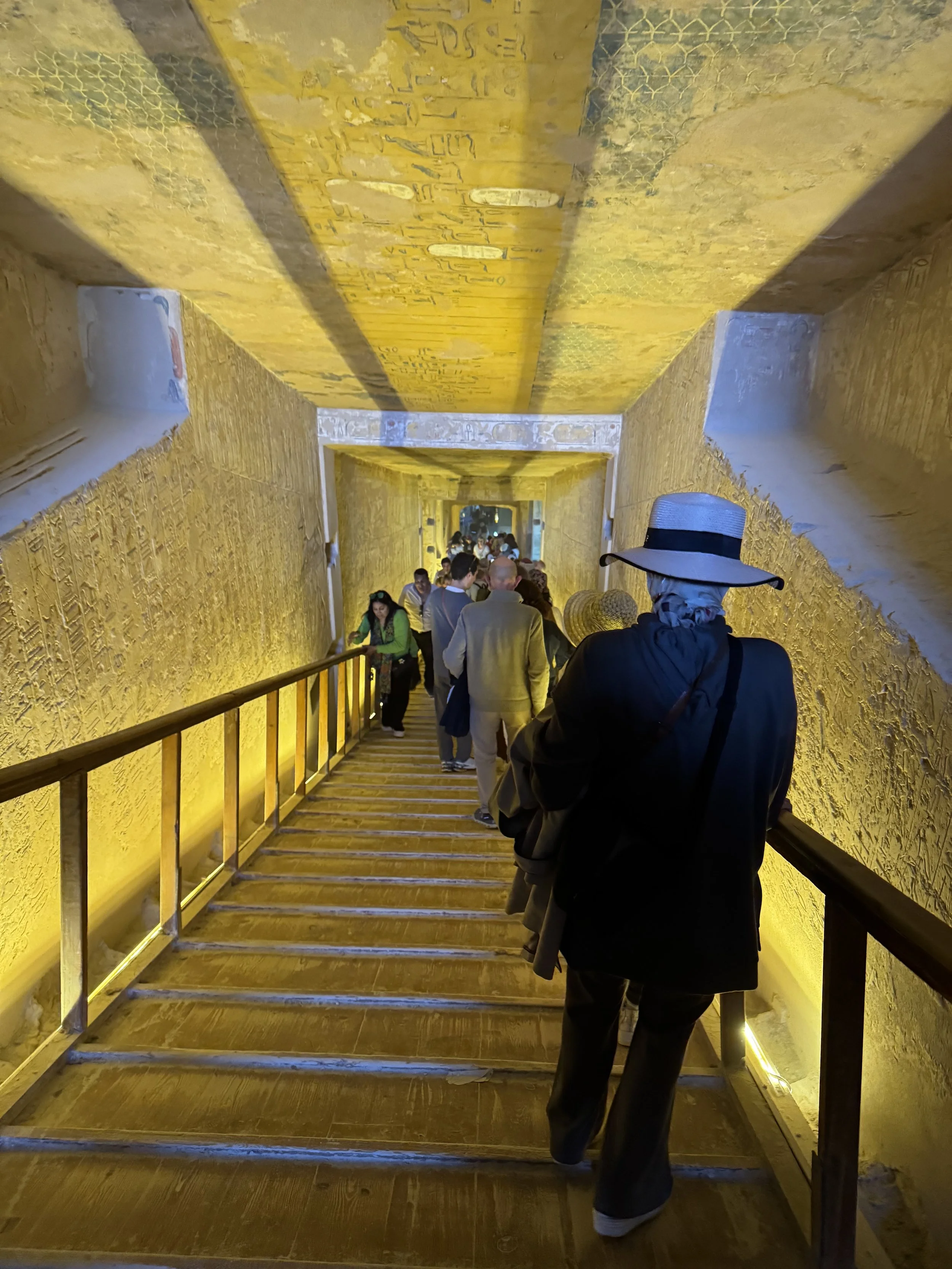
The tombs of the pharaohs are cut deep into the limestone rock, in corridors that descend sharply into the earth. Entering feels almost intrusive. The air grows heavier and hotter; the passageways narrow as the crowd slowly descends the steep slopes.
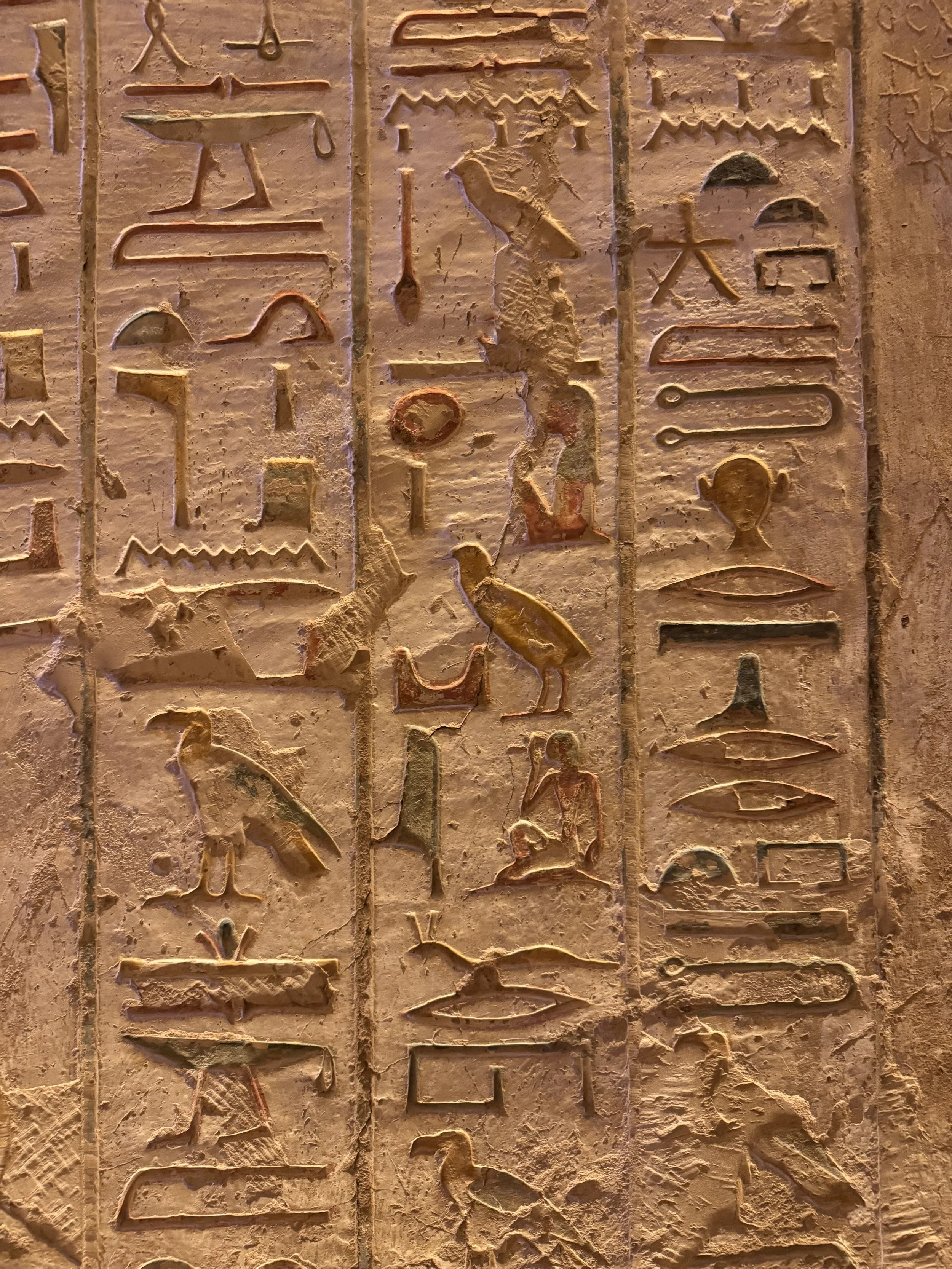
These were not commemorative spaces — they were functional ones, meant to provide pharaohs with instructions for the afterlife. The walls are covered with illustrated hieroglyphs: maps of the underworld, the deities to recognize, the steps to follow, the dangers to overcome. The journey of the soul follows a precise diagram, carved and painted in stone along the descending pathways that the sarcophagus would follow until its final resting place.
Standing inside, as hundreds of visitors move through corridors designed for silence, feels both fascinating and uneasy. There is something slightly sacrilegious about photographing with our phones a space conceived to guard a soul for eternity. I had the opportunity to visit the tomb of Merenptah, which descends in a sharp S toward the chamber where the sarcophagus once stood. Ramses III's tomb was brilliantly preserved, only its final section was interrupted for renovation. If you have the chance to visit Ramses II's — the most celebrated pharaoh — it is definitely the one to go for, though it is often closed for restoration.
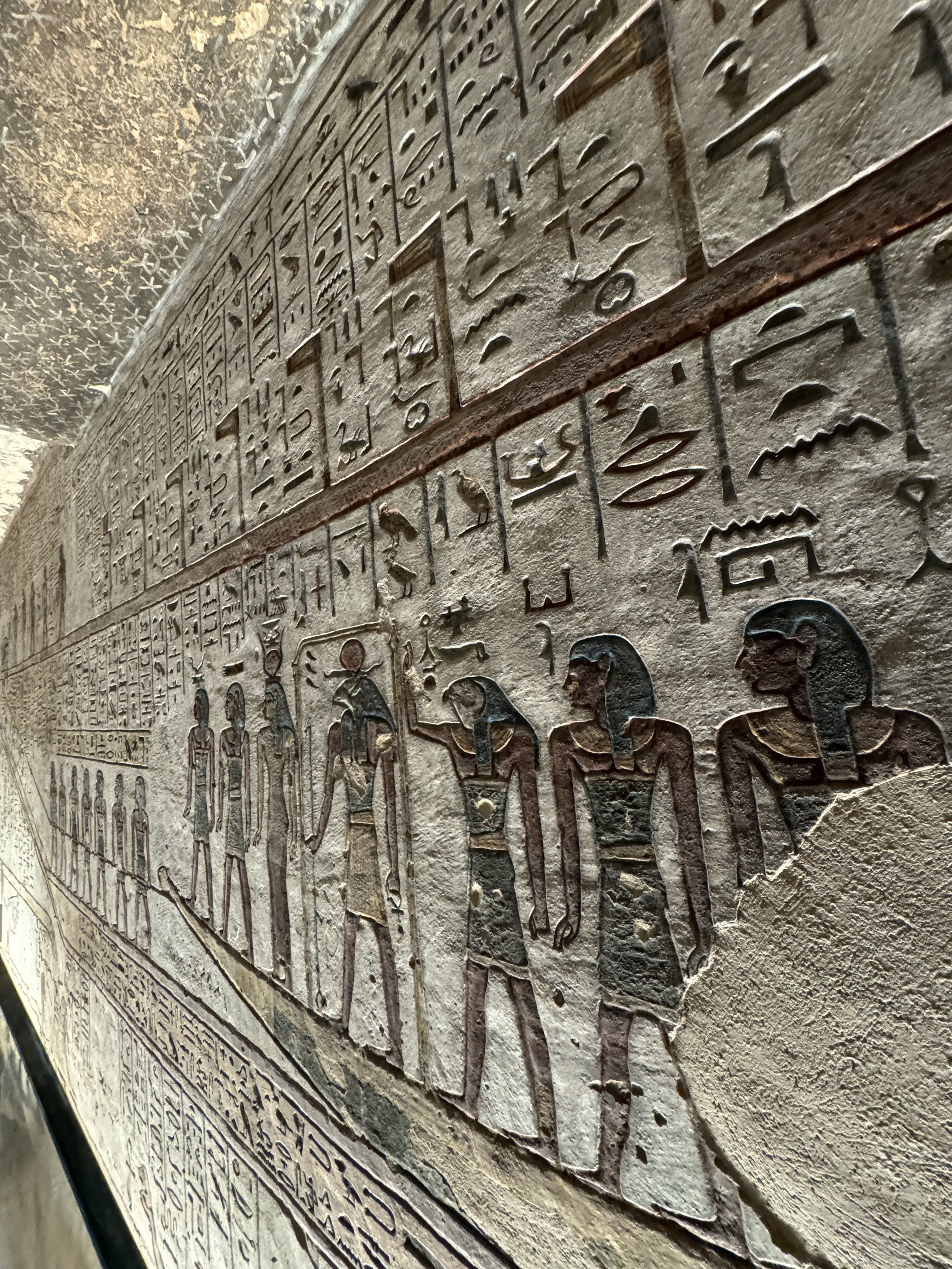
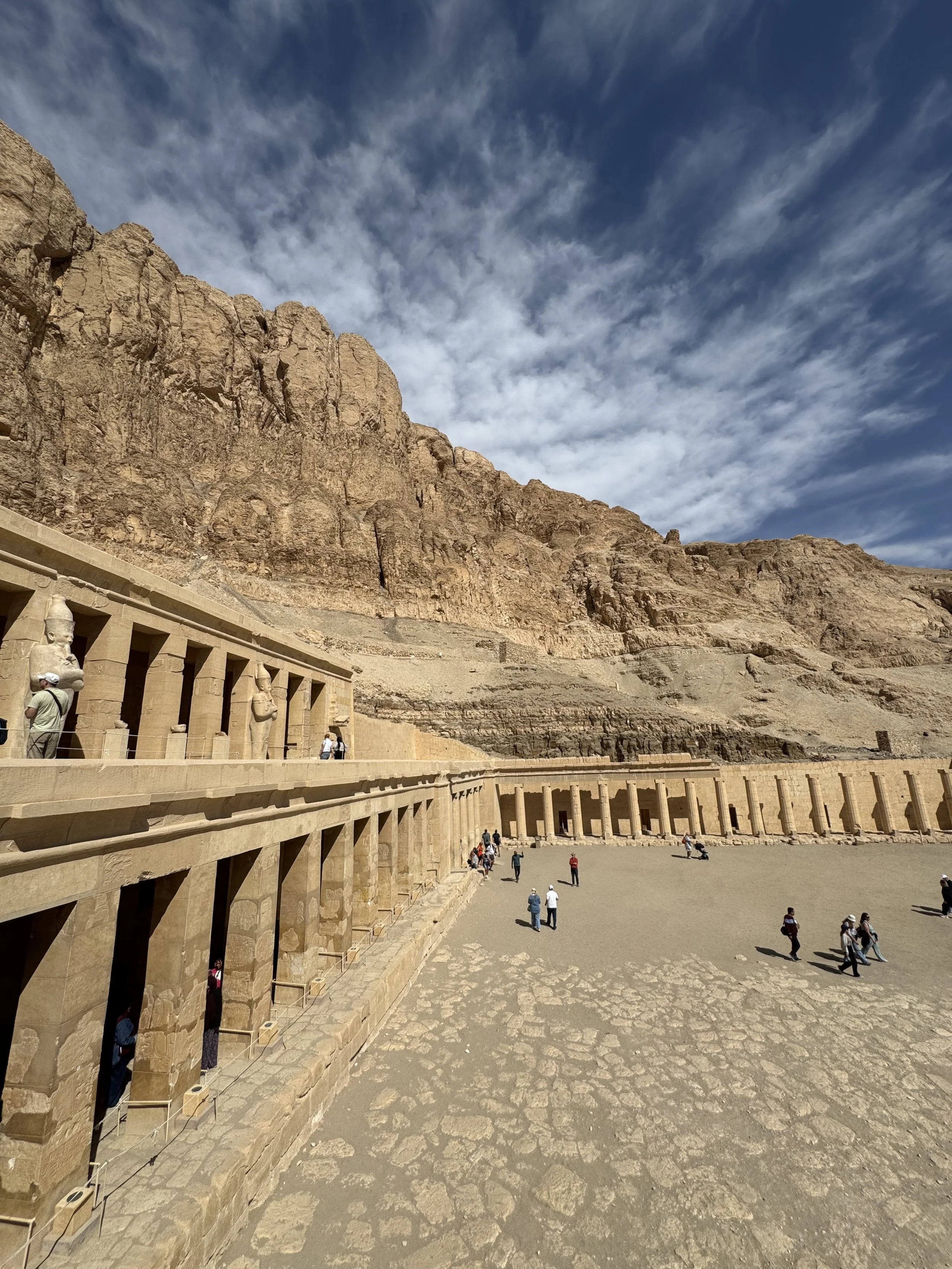
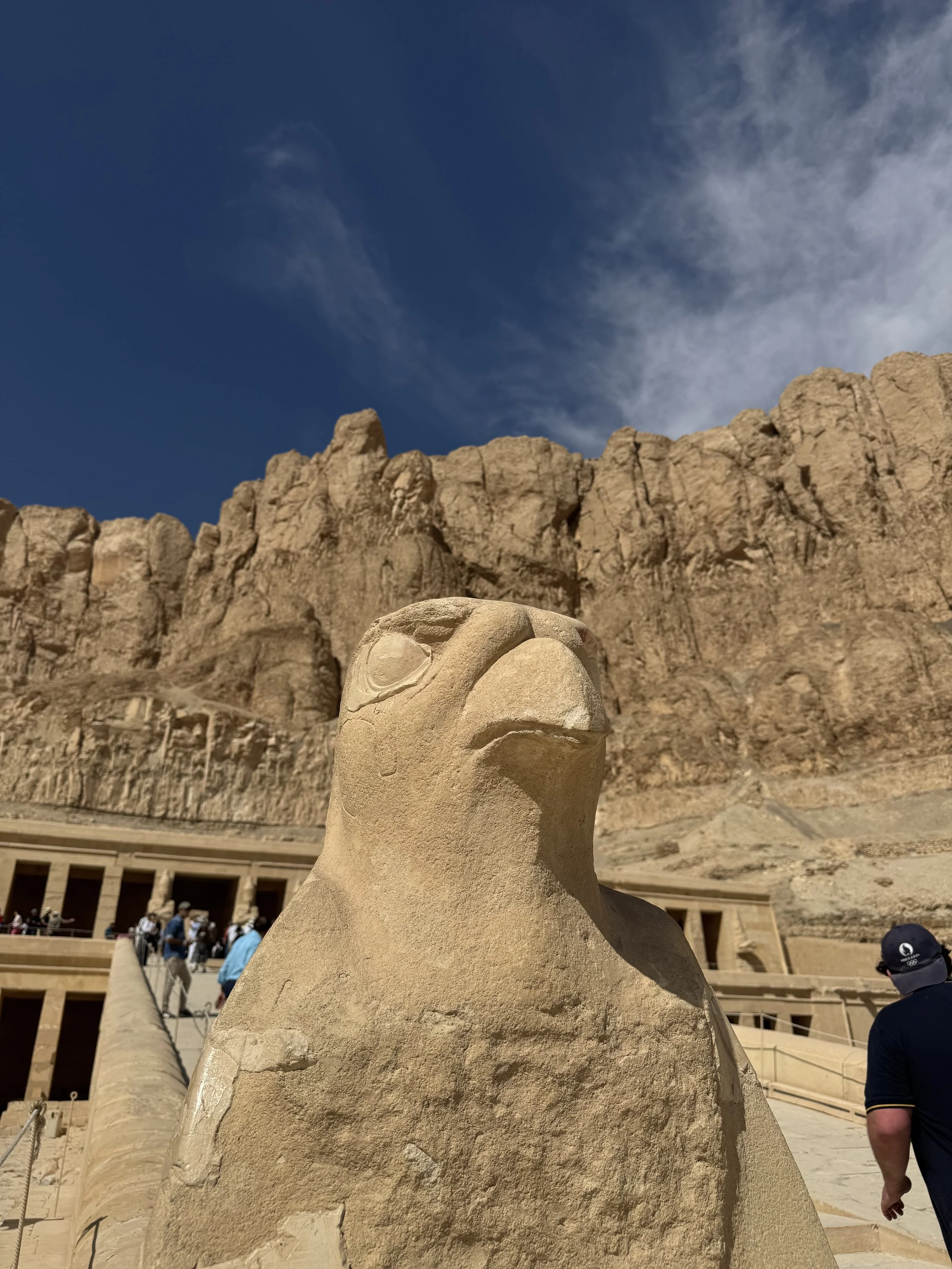
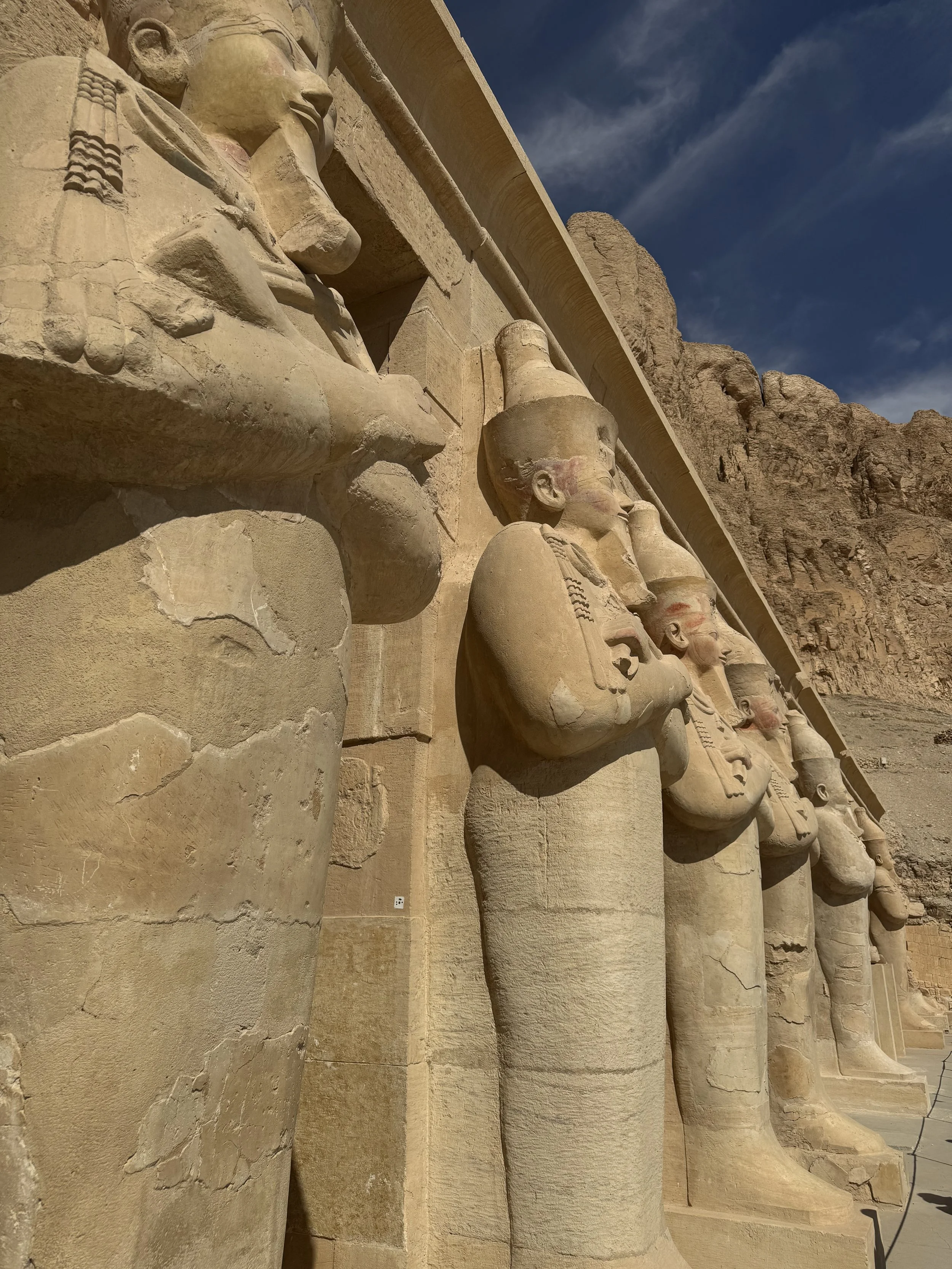
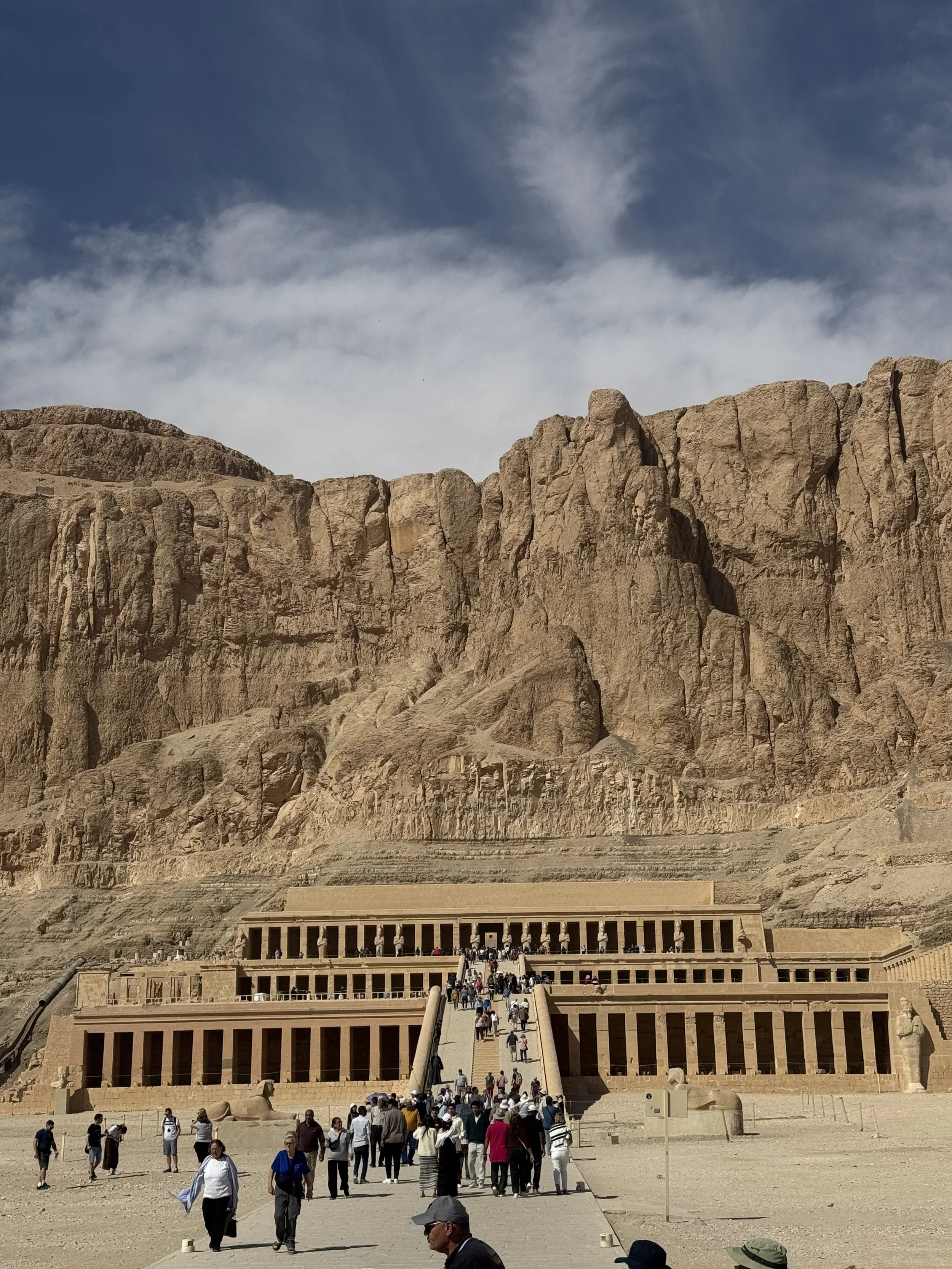
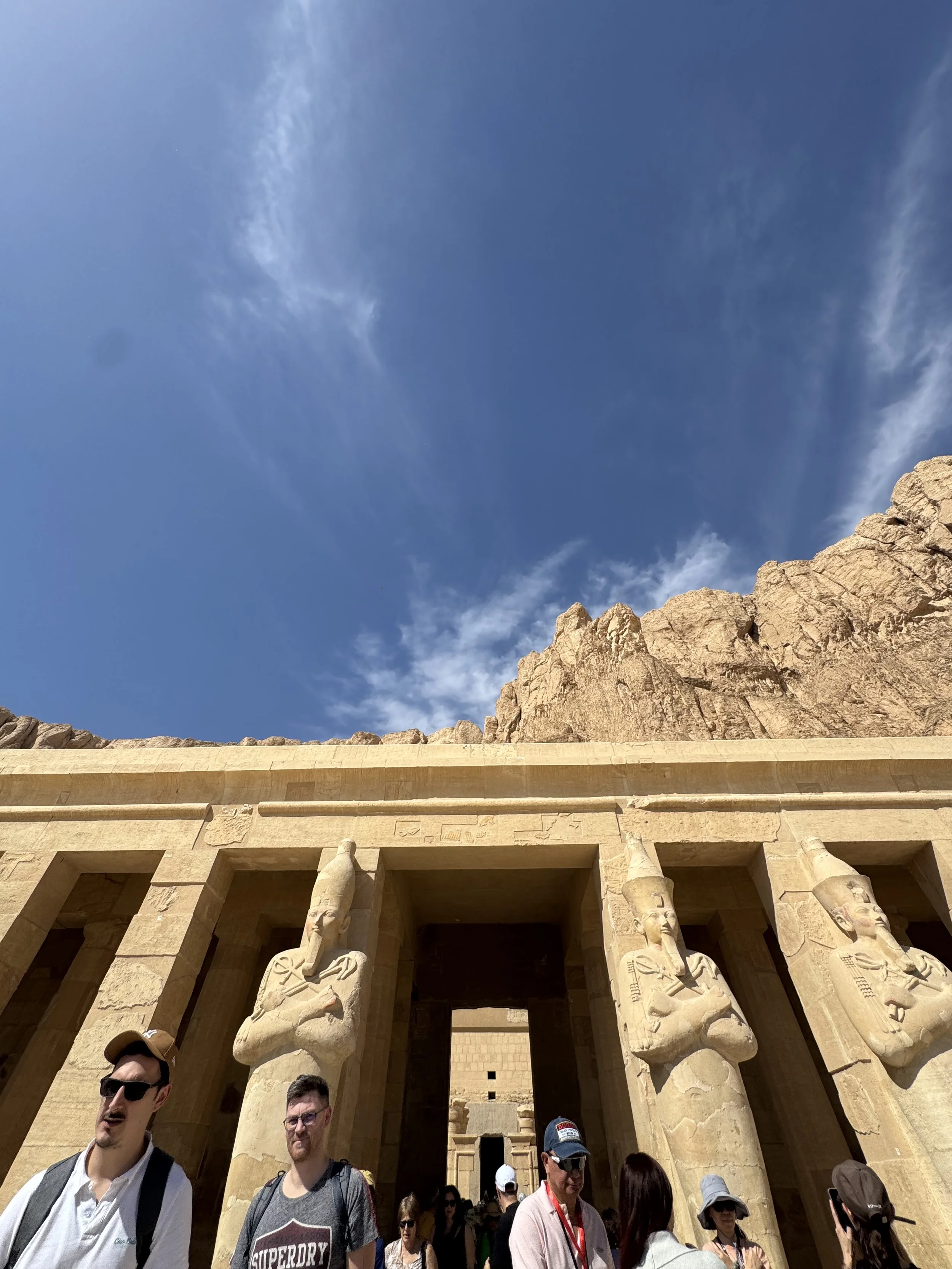
While the Valley of the Kings is known for its mythical tombs, there is a temple designed by the only female pharaoh that is truly outstanding and worth the trip: the mortuary temple of Hatshepsut.
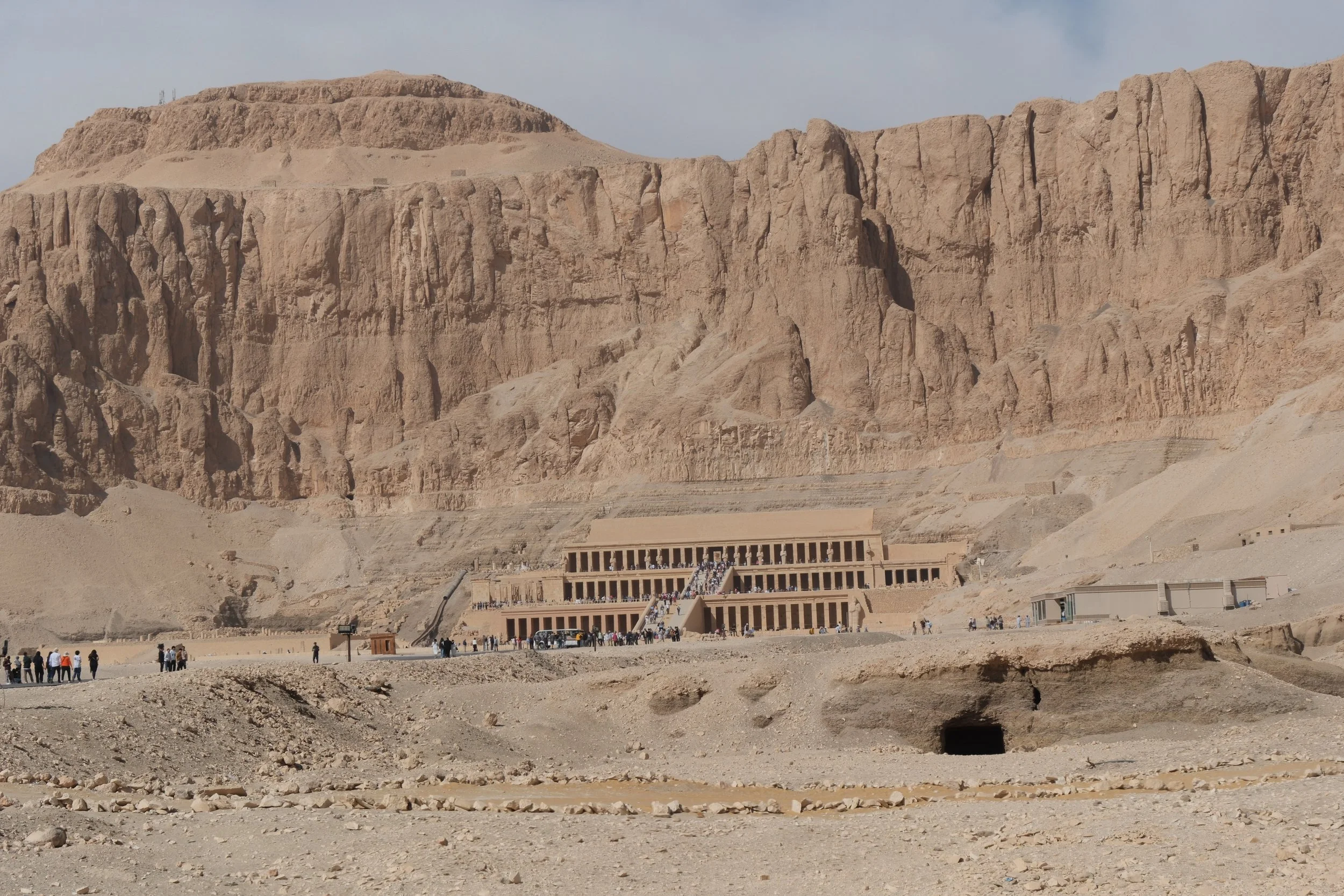
She was the only woman to ever rule in a male-dominated system, and to do so, she adopted the full iconography of kingship — ritual beard, male titles, conventional representations — as a way to assert her authority, establishing it not as an exception but as a necessity within the cosmic order. Beyond her significance as a woman ruler, she was also one of the greatest pharaohs, bringing cultural and architectural innovation to ancient Egypt during her more than twenty years of reign. This is clearly visible in the design of the mortuary temple: carved into the cliffs, with precise geometric symmetry, a sequence of ascending terraces and sharp lines that blend seamlessly with the mountain behind. It feels startlingly modern.
Much of it was later damaged in an attempt to erase her from the official line of succession, carried out by her stepson Thutmose III after her death. Even today, some local narratives still cast her as a wicked mastermind who seized what wasn't hers — a reminder that political memory is rarely neutral.
The final stop, the Colossi of Memnon, are the last remnants of what was once a vast complex built by Amenhotep III, now destroyed. Even in isolation, their massive scale hints at the size of the building they once guarded.
As you embark on your dahabiya, ready to set sail on the Nile, the relevance of Luxor settles into perspective: in ancient Egypt, ruling was inseparable from preparing for eternity. Death wasn't the end of power — it guaranteed its most stable form. Everything was designed to outlast the human body, and stone, art, and architecture allowed this ambition to take shape, ensuring that the authority once held by those rulers would remain visible long after they themselves disappeared.
