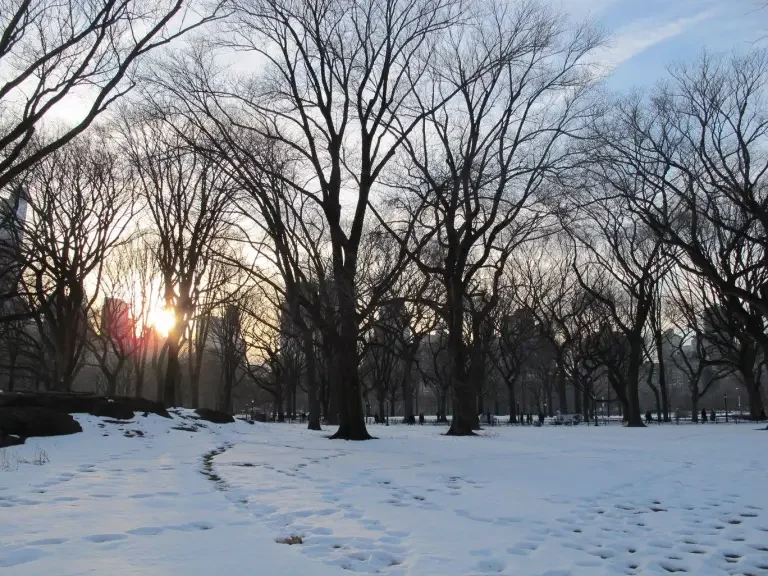
Walking into Central Park, the grey of the city's cement, stone, and metal gradually subdues, overtaken by the stark contrast of the saturated, dense nature. Entering through any of its eighteen gates, the city’s sounds disappear, and you can only see the tops of the skyscrapers, still peeking above the treeline, framing the edges of the sky. The pace changes and you find yourself inside something that feels less like a park and more like a world that was always here, waiting.
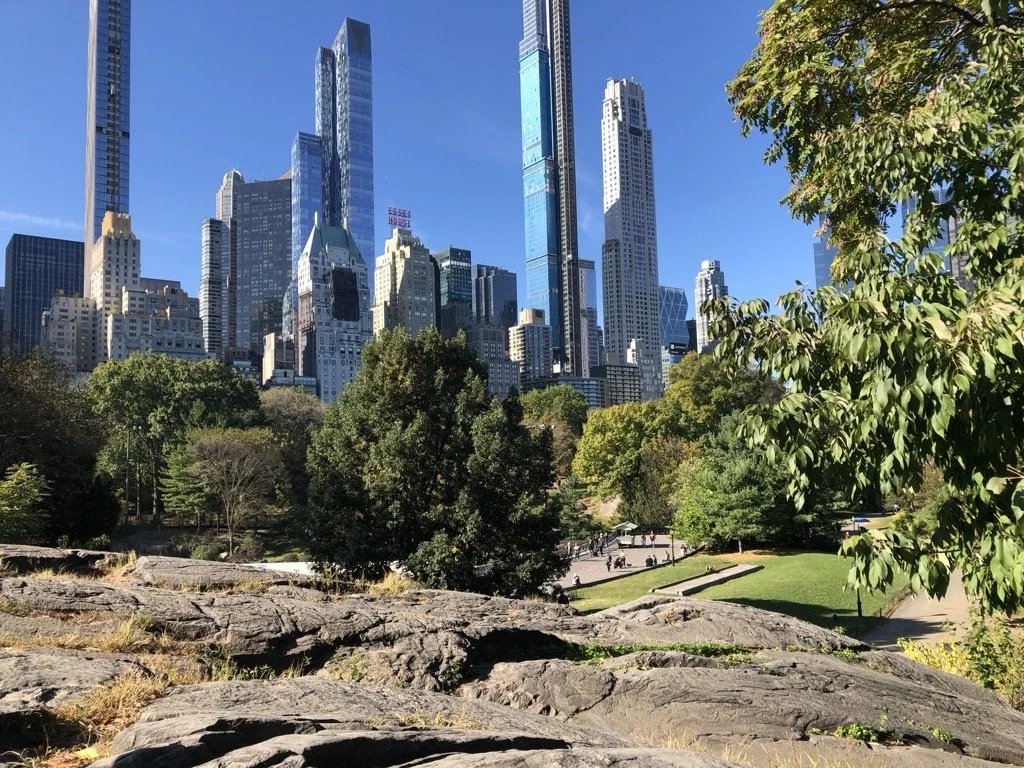
Frederick Law Olmsted and Calvert Vaux designed it that way in 1857, engineering the naturalness of this place with the same precision the city engineers everything else. The result is one of the great architectural achievements in American history: 843 acres of designed wilderness that has spent 160 years learning to feel undesigned.
What makes Central Park different from every other great urban park is the geology. The rocks are real prehistoric boulders. The schist outcroppings that surface throughout the park, the enormous slabs of grey stone worn smooth in places, jagged in others, are between 450 and 600 million years old, predating the dinosaurs. The city built itself around them because it had no choice. Walking across them, you can feel you are in the midst of something that existed before almost everything you know, surrounded by one of the most modern cities on earth. That contrast is what gives the park its peculiar depth - and this is true in any season: winter to spring.
The Mall and Literary Walk are the park's most formal axis, a straight elm-canopied promenade lined with statues of writers and artists, one of the few intentionally symmetrical spaces in an otherwise deliberately irregular landscape. On any given afternoon you will find it occupied by a small city of its own: roller skaters, musicians, street performers, and local artists displaying their work along the edges. The last time I was there, on an early May Sunday, a Japanese artist had set up a quiet exhibition that really stood out, intricate and serious work priced in a way that surprised me for an open-air setting, which said something about how Central Park's audience is taken seriously by the people who perform for it. Near the Bandshell and SummerStage area, a Catholic group sang hymns, unhurried, completely absorbed in what they were doing.
At the southern end of the park, just off Fifth Avenue, the Central Park Zoo is smaller and more charming than its name suggests. It is not trying to be the Bronx Zoo; it is something more intimate, organized around three climate zones, tropical, temperate, and polar, with sea lions, snow leopards, red pandas, and penguins among its residents. It is also, for anyone who grew up watching Madagascar, the place where Alex the lion and his friends lived before their involuntary voyage to Africa. That detail alone makes it worth a visit - with or without children - especially during the sea lion feeding times.
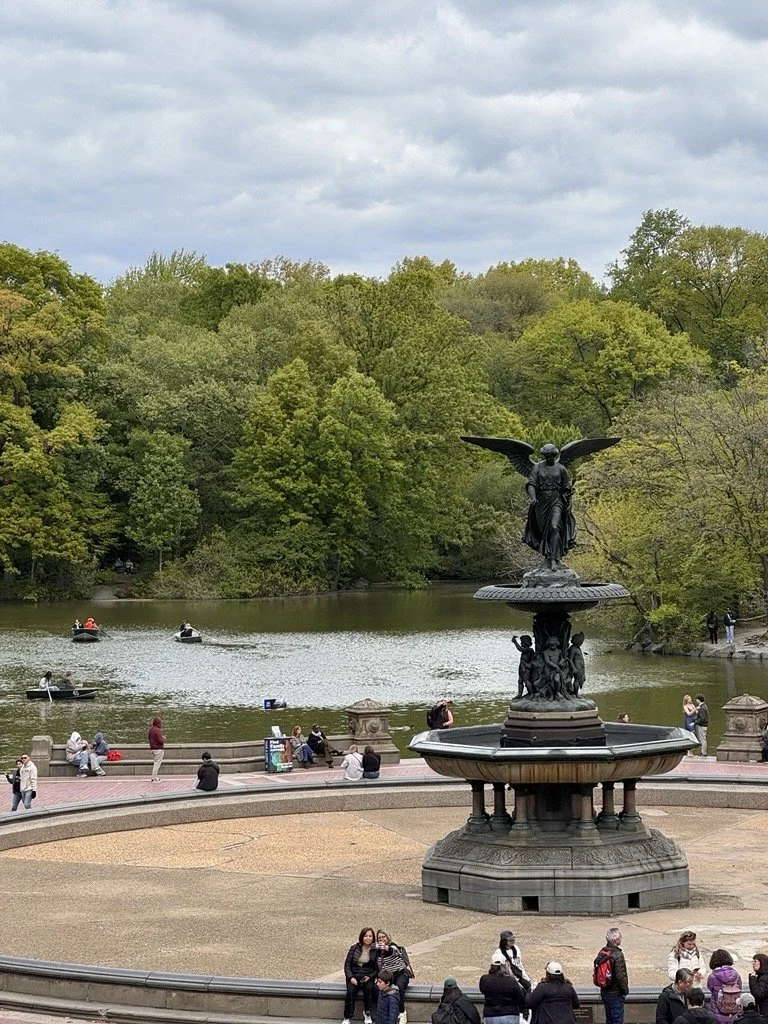
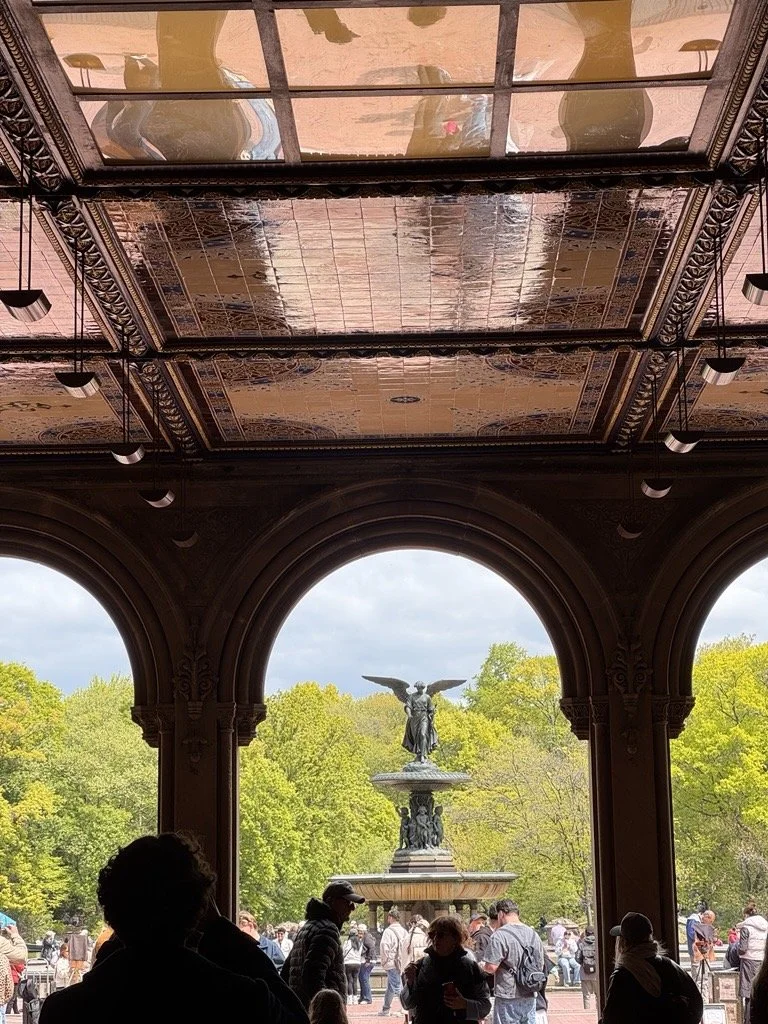
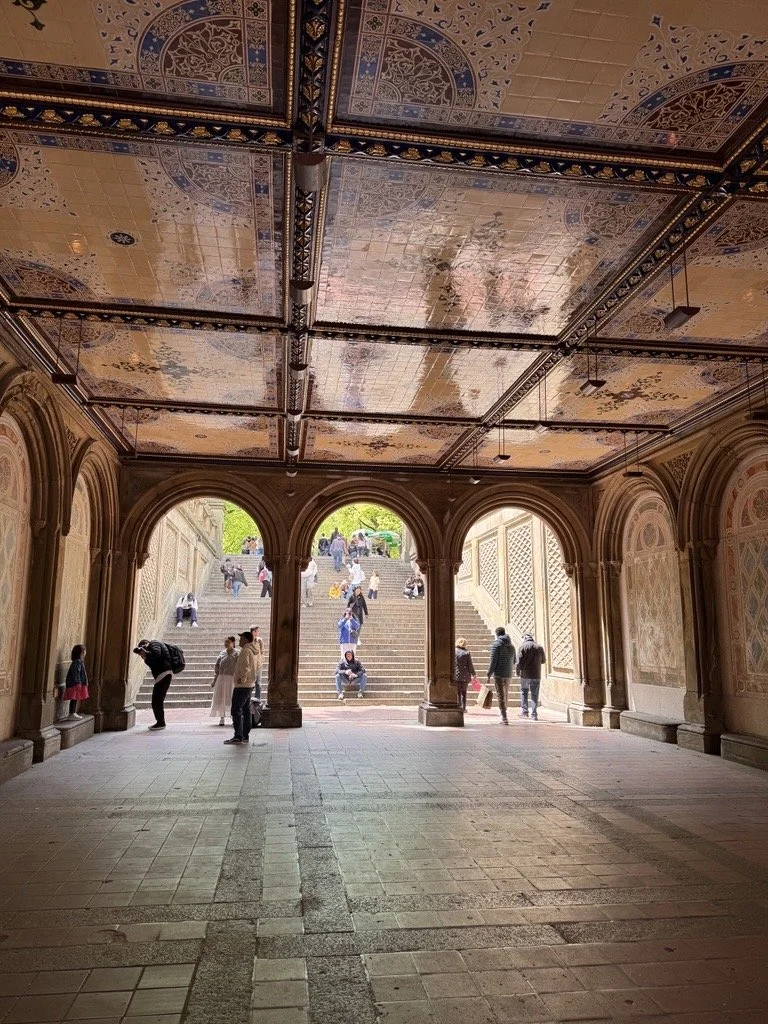
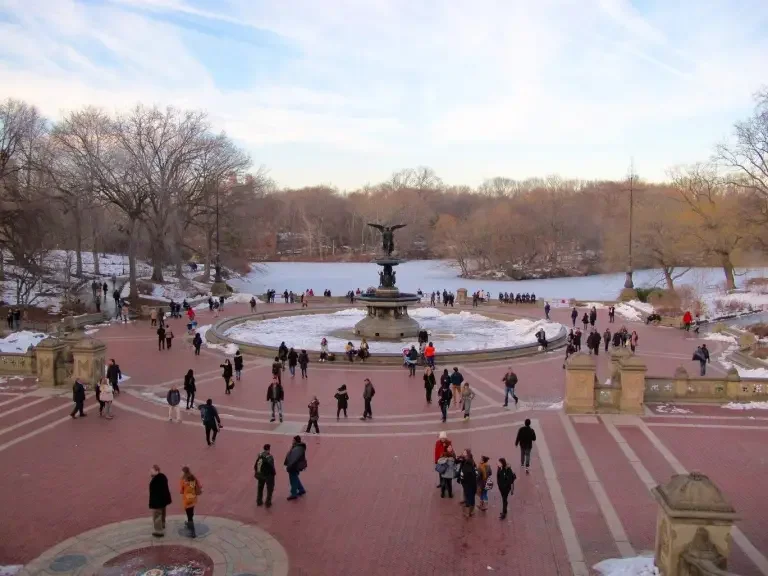
Bethesda Terrace and Fountain is the park's emotional center, the grand sandstone staircase descending to the lakeside plaza, with the Angel of the Waters fountain at its heart. It appears in so many films and television series that arriving there for the first time can feel like a déjà vu. Arrive on a weekday morning before the crowds, and the light through the arches of the underpass is extraordinary. Singers often set up underneath, where the acoustics are remarkable, and the combination of voice and stone and water is one of those unrepeatable New York moments.
From Bethesda, Bow Bridge is a short walk west, a cast iron bridge arching over the Lake, photographed so many times it risks becoming a cliché, and yet in person it earns every frame. There is something about its proportions and its setting, the water on both sides, the rowboats passing underneath, the skyline beyond the trees, that makes it genuinely moving rather than merely picturesque. I have no entirely rational explanation for why this bridge affects people the way it does. It just does.
For the best of the park's wilderness feeling, the Ramble is where to go. A 36-acre woodland in the middle of the park, deliberately designed as a labyrinth of winding paths, streams, and dense plantings, genuinely disorienting its visitors. You can enter from the lakeside near Bow Bridge and spend an hour finding your way through without seeing the same view twice. It is also one of the finest birdwatching spots in the northeastern United States; during migration season, over 200 species have been recorded passing through.
Belvedere Castle, perched on Vista Rock at the park's geographic center, offers the best elevated view of the surrounding landscape, the Great Lawn stretching north, the reservoir glinting beyond it, the skyline rising at every compass point. The castle itself is a Victorian folly, built in 1869 with no particular purpose beyond providing a picturesque focal point and a place to stand and look. It still serves both functions perfectly.
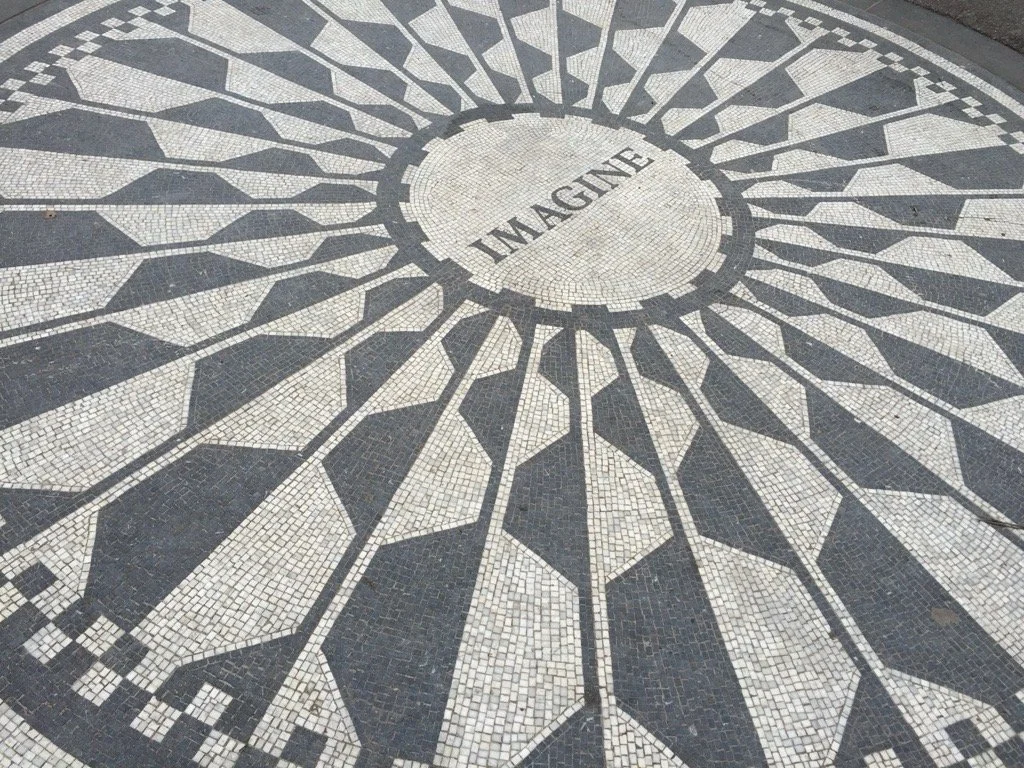
Strawberry Fields, just inside the 72nd Street entrance on the west side, is quieter and more affecting than its fame suggests. Yoko Ono created the memorial garden in 1985 in memory of John Lennon, who lived across the street at the Dakota and was shot outside it in 1980. The Imagine mosaic at its center is always surrounded by flowers, photos, and people sitting in silence. It is one of the few places in New York where strangers consistently behave as though they are in a place of mourning, because they are.
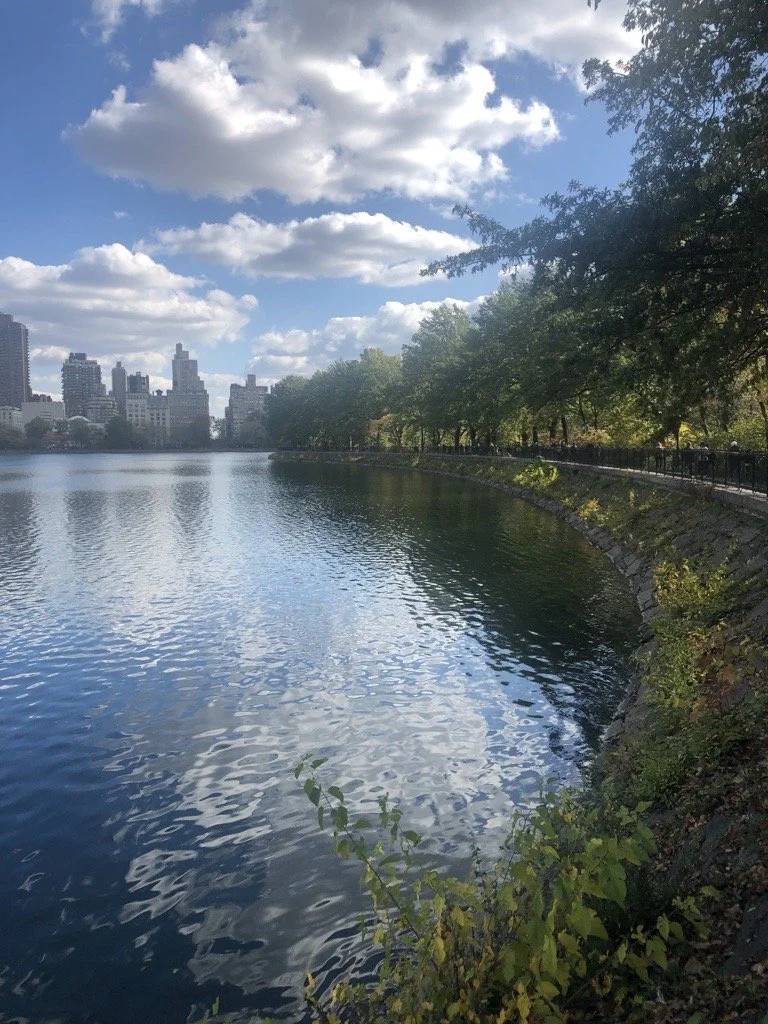
The Reservoir, officially the Jacqueline Kennedy Onassis Reservoir, occupies 106 acres in the upper half of the park, with a 1.58-mile running track encircling it. Running around it in the early morning, with the water catching the light and the skyline visible in every direction, is one of the more straightforwardly beautiful things you can do in New York. It requires no special knowledge or timing. You just show up and run.
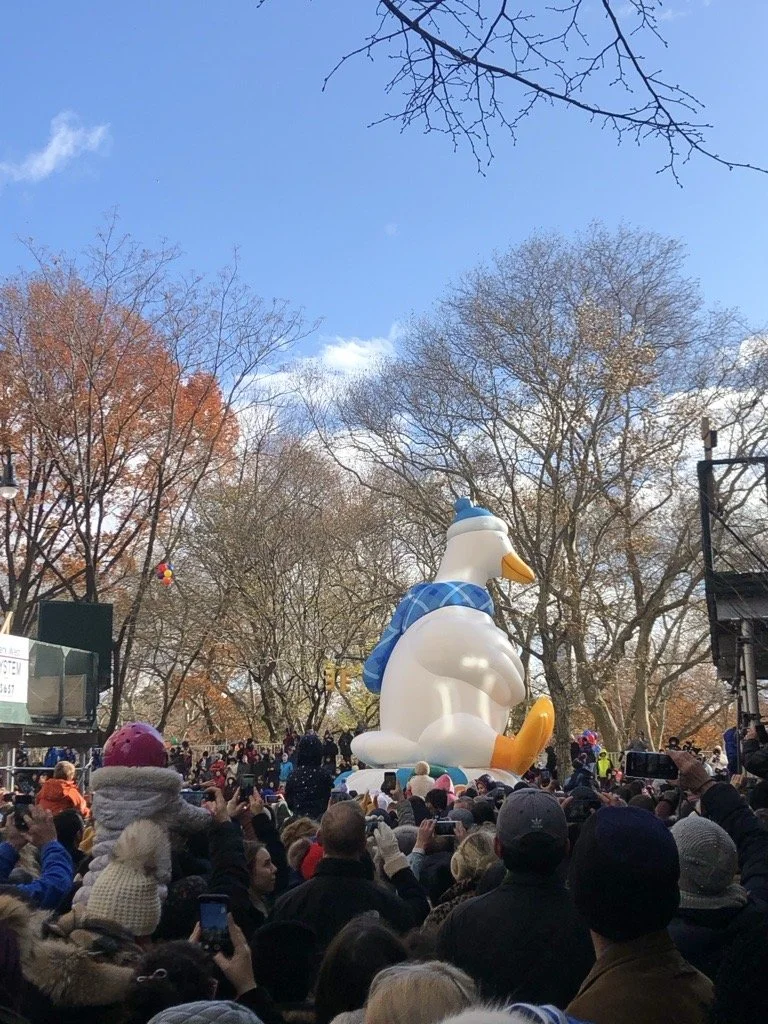
But Central Park is not only a place of private discovery. It is also where New York stages its largest collective rituals. The New York City Marathon, run each November since 1970, passes through the park twice, once near the start and again at the finish on East Drive, drawing over 50,000 runners and two million spectators who line the paths and bridges to watch. The Macy's Thanksgiving Day Parade assembles its giant balloons on the streets bordering the park's western edge the night before, and on Thanksgiving morning the procession moves south along Central Park West in a spectacle that has defined the American holiday calendar since 1924. These are not tourist attractions that happen to occur near the park. They are events the park makes possible, a space large enough and central enough to hold the whole city at once, to give its most defining moments a stage.
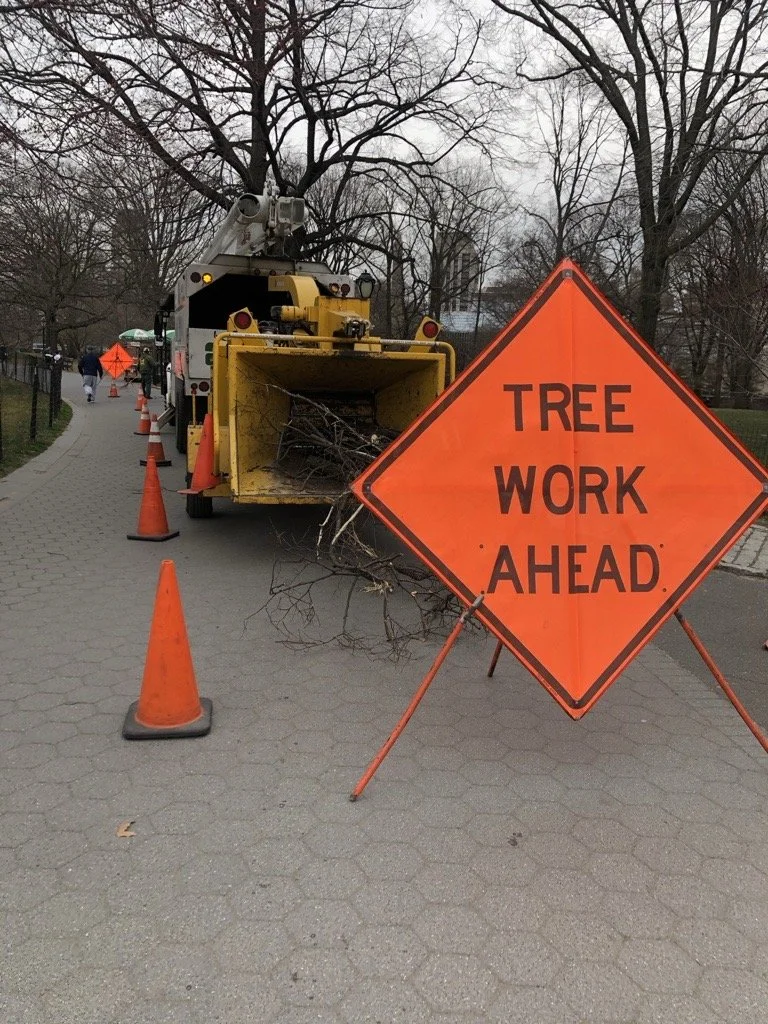
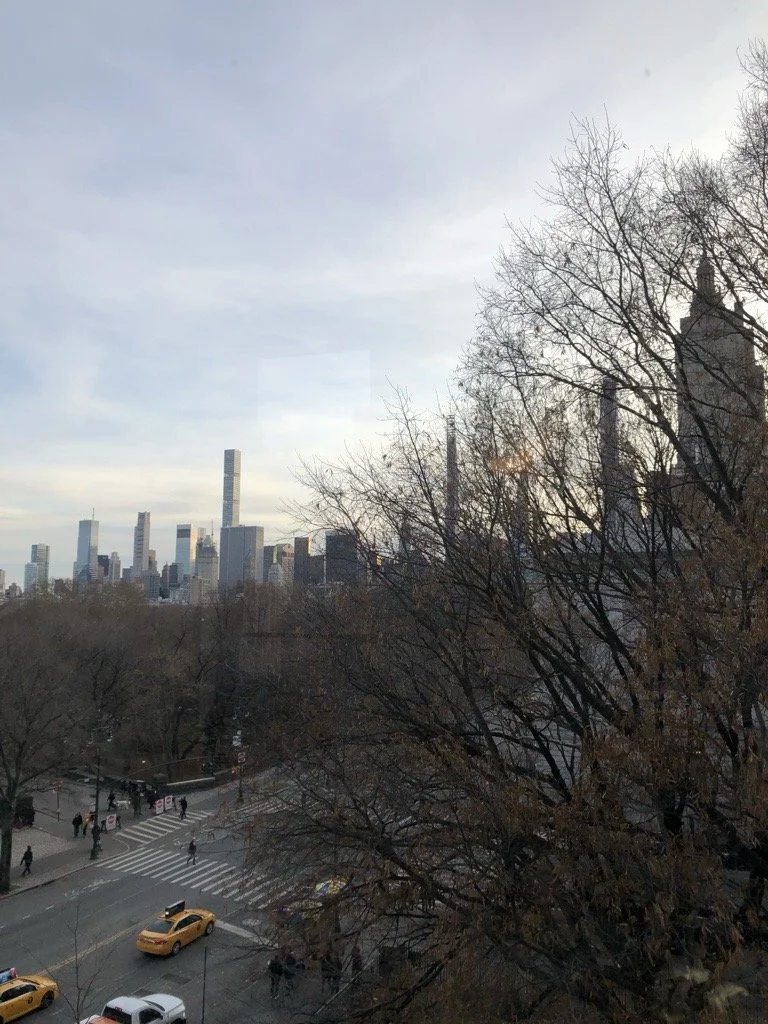
If you want to cover more ground, rent a bike. The park's loop road is closed to cars on weekends and holidays, and cycling its perimeter gives you both the geography and the feeling of the park in a way that walking can't: the hills, the sudden openings onto the skyline, the sensation of the city pressing in and then receding. Get slightly lost. The park rewards it.
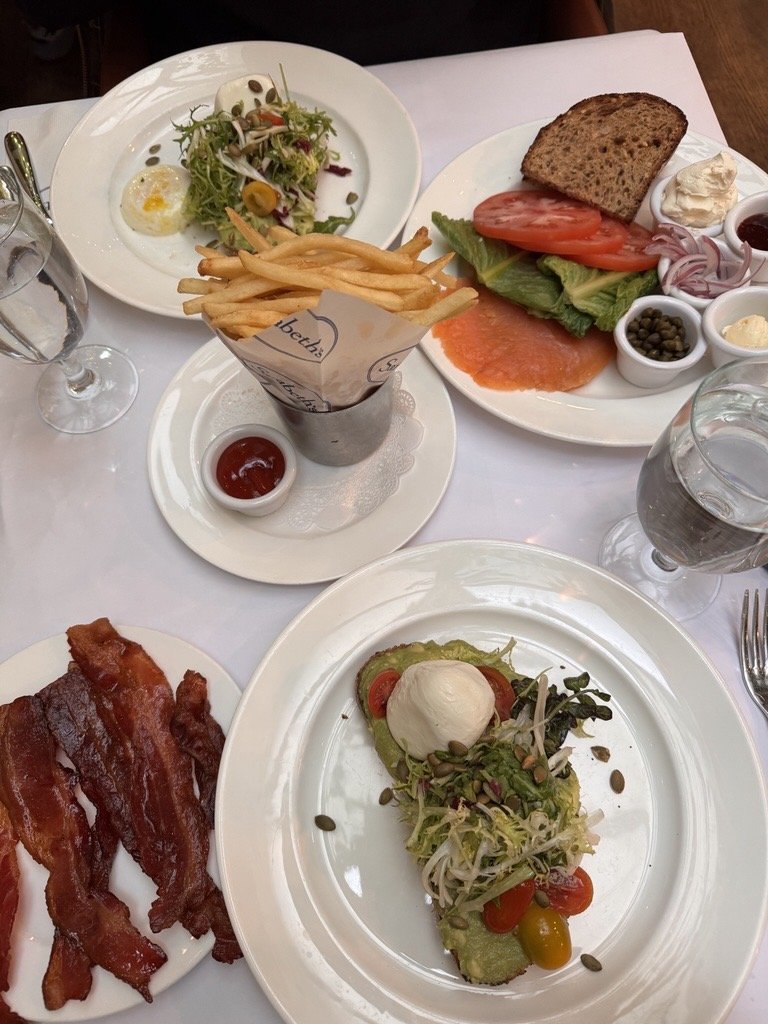
For brunch before or after, Sarabeth's at Central Park South is my consistent choice. It has the quality of making you feel like a local even when you've just arrived: warm service, an unhurried room, and a menu where you order more than planned and don't regret it. The avocado toast is reliable, but it's the bacon that earns its reputation: thick, serious, the kind that makes you reconsider everything you thought about breakfast meat. The fries, if you're there late enough for them, are worth staying for.
Central Park is the city's one unchangeable thing. Everything around it has been torn down, rebuilt, reinvented, or priced beyond recognition. The park sits in its rectangle and remains, its rocks older than almost anything alive, its paths worn by 42 million visitors a year, its trees growing quietly above the noise. It holds the private and the collective, the hidden path and the marathon, the Japanese artist and two million people lining the streets for a parade. Walking into it still feels, every time, like finding a door in a wall you didn't know was there.
See & Do
The Mall and Literary Walk, mid-park, enter at 72nd St
Central Park Zoo, east side, 64th St and Fifth Ave
Bethesda Terrace and Fountain, mid-park, 72nd St transverse
Bow Bridge, west side, near 74th St
The Ramble, mid-park, south of the 79th St transverse
Belvedere Castle, mid-park, 79th St
Strawberry Fields, west side, 72nd St entrance
The Reservoir, upper park, 86th St transverse
Bike rental, multiple vendors at park entrances
Eat & Drink
Sarabeth's, 40 Central Park South
The Loeb Boathouse (Lakeside Restaurant, Outiside Bar, Express Cafe): East 72nd Street
Tavern on the Green, 66th street, Central Park West