Reading New York: SoHo, Surface and Depth
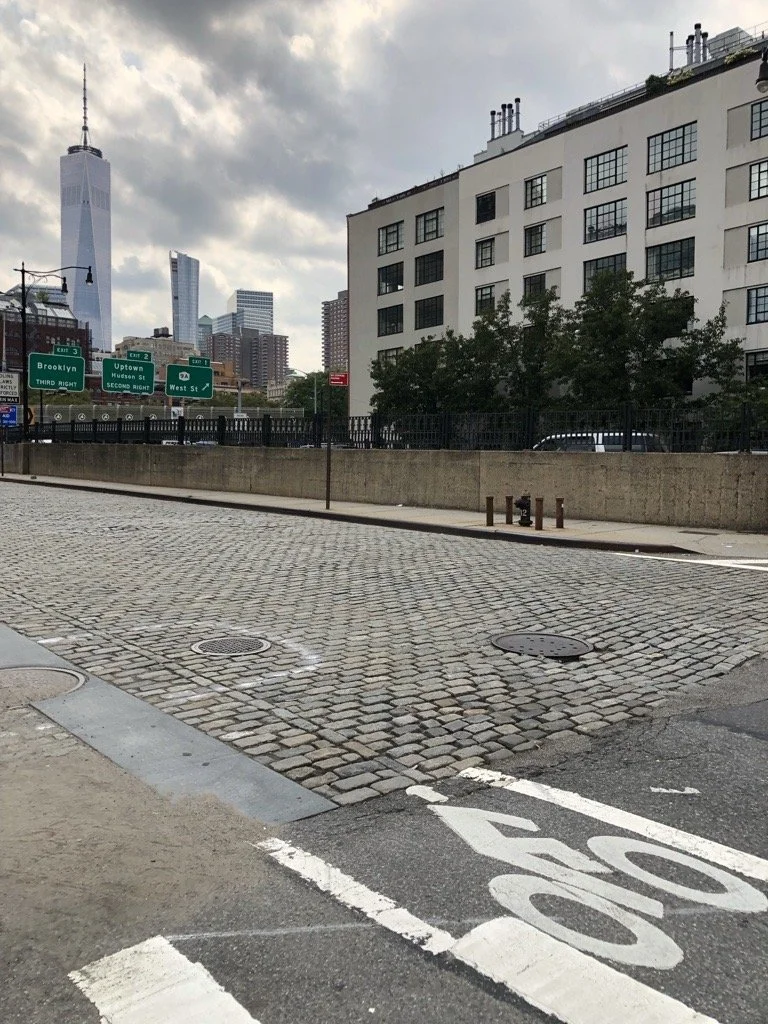
There are streets in SoHo where the original cobblestones are worn smooth by a century and a half of use, now mostly by delivery trucks and tourists pulling roller bags. Look up, you’ll see the cast-iron facades rise four, five, six stories - with their columns, arches, cornices, built cheaply in the mid-1800s to imitate stone, now landmarked and some of the most expensive real estate in Manhattan and beyond. SoHo is full of contradictions: the extraordinary architectural bones, emptied and refilled so many times that the buildings are the only stable thing about it.
The acronym is about geography, South of Houston - and never ask a cab driver to bring you to Houston st pronouncing it like you would for the Texan city, but rather here it’s HAUSTON (something that still leaves me perplexed today). Nonetheless, the history is what gives the streets their texture. In the 60s and 70s, this was mostly abandoned warehouses and light manufacturing spaces; here artists moved in to take advantage of the vast floor spaces, high ceilings, low rents. SoHo became the center of the New York avant-garde: painters, sculptors, and performers. The galleries followed the artists, the boutiques followed the galleries, the flagships followed the boutiques - with each wave pricing out the previous one.
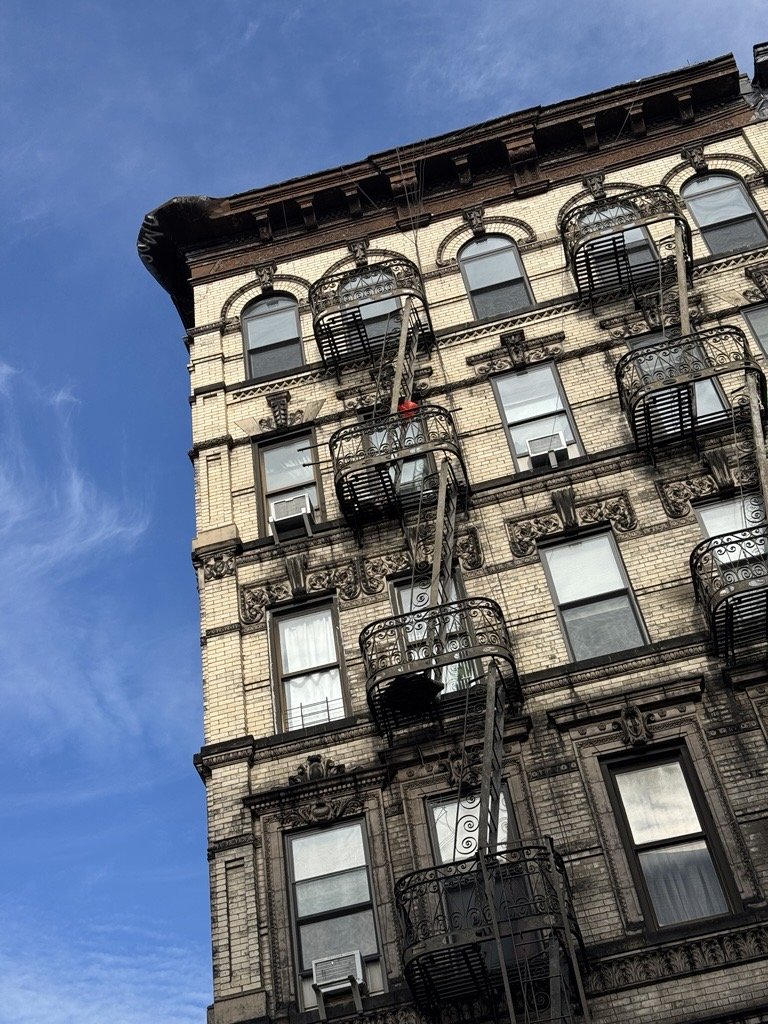
Walking around streets like Greene or Mercer is one of the best things you can do in Manhattan. The architecture invites you to stop and think about where you are, not the surface layer of what the neighborhood has become, but what it was. While the city keeps its incessant pace, try to slow down to take it in.
What is hard to see today, beyond the glamour of the exclusive flagship stores, is what remains of the cultural layer. The Drawing Center on Wooster Street is one of the few institutions in the world dedicated entirely to drawing as an art form, from Old Masters to contemporary practice: small, serious, and almost always worth whatever is on view. A few blocks away, at 101 Spring Street, the Donald Judd Foundation is the five-story cast-iron building where the artist lived and worked from 1968 until he died in 1994, with his own art and that of others permanently installed exactly as he intended. Tours are by appointment and limited, making it more like a private world than a museum. On Wooster Street, the Leslie-Lohman Museum is the only institution in the world dedicated to LGBTQ+ art, born from a private collection assembled in a SoHo loft in the 1970s and expanded during the AIDS crisis to preserve the work of dying artists.
Then there is CIMA, the Center for Italian Modern Art on Broome Street, which occupies a floor that was once a private apartment rather than a gallery. CIMA itself is something quite rare: an intimate, seriously curated space dedicated to Italian modernism, with staff who treat a visit as a conversation. I went years ago and left knowing more than I expected. It is the kind of place that reminds you what a gallery can be when it has nothing to prove; it gives you the time and space to get to know what you’re viewing without the “performative” experience of visiting a public museum. The place also carries its own story, as it is where Heath Ledger died in 2008, a detail you can find in the police tape stuck to the emergency staircase, which brings its own pathos to the place.
There are many versions of SoHo that no longer exist. Local staples such as Dean & DeLuca, with its original location on the corner of Broadway and Prince, closed permanently during the pandemic. For years it was one of the best food shops in the city: the cheese counter, the prepared foods, the ritual of wandering through it on a Saturday morning. I still hold on to the insulated mug I bought there over 15 years ago. Its disappearance is not unusual for New York. The city has always consumed its own landmarks, and SoHo makes this tendency more visible than most places. The buildings stay; everything inside them is provisional. Even the things that felt permanent turned out not to be.
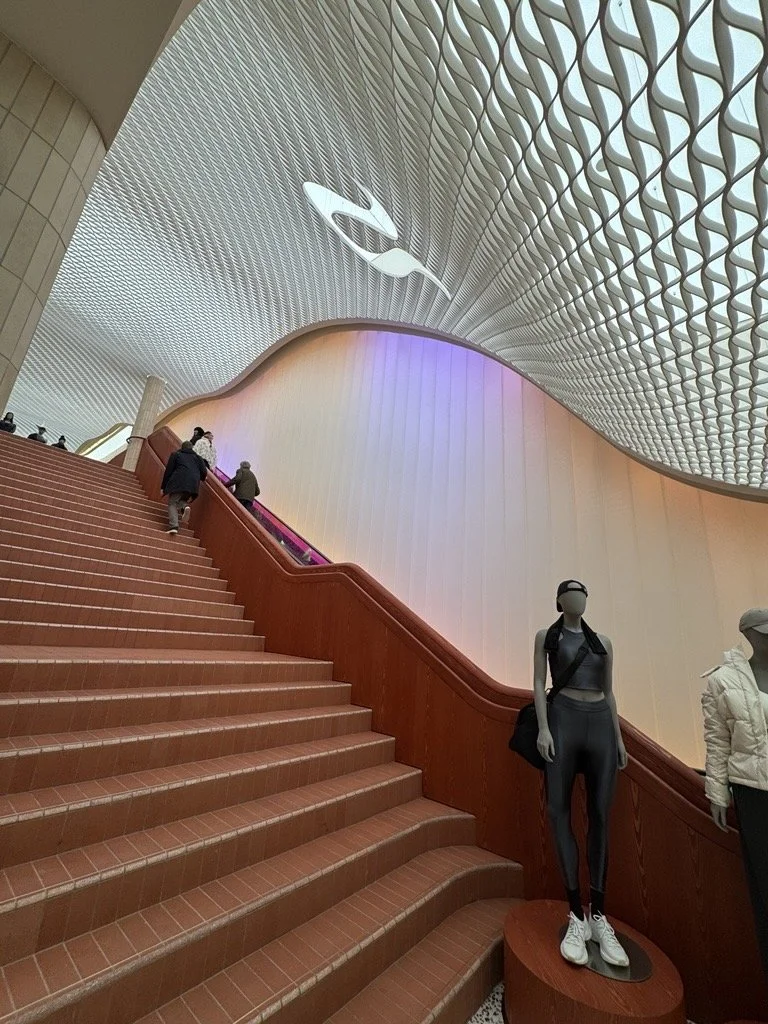
Of course we can’t forget about the shopping. SoHo has more flagship stores per block than almost anywhere in the world, and on weekends the foot traffic can feel more like an airport terminal than a neighborhood. But within it there are still discoveries worth making. Pearl River Mart at 452 Broadway, founded in 1971 as a friendship store connecting New York to Chinese goods and culture and a survivor of multiple closures and relocations, has returned to SoHo with its own art gallery on the mezzanine dedicated to Asian American artists. It is colorful, surprising, and one of the few genuinely singular retail experiences left in the neighborhood. The MoMA Design Store on Spring Street is exactly what it should be: a well-edited selection of objects where design and art overlap, the kind of place where you spend more than planned without regret. For vintage, What Goes Around Comes Around on West Broadway carries some of the best curated secondhand designer pieces in the city. And if you find yourself in the Lululemon store on Broadway, look past the activewear: the 3D-printed benches, wall paneling, and ceiling structures are worth the detour on their own terms.
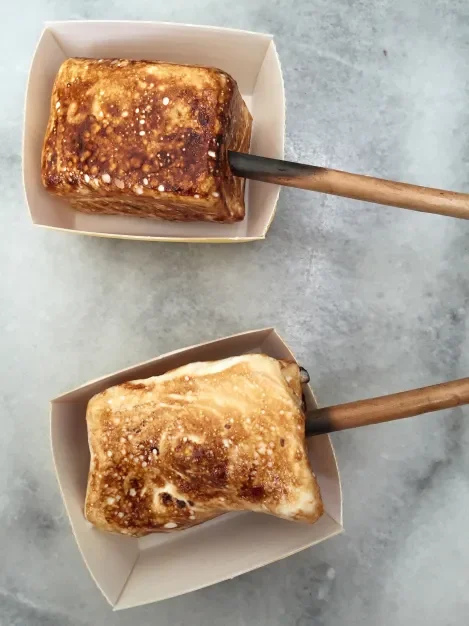
Dominique Ansel, S’mores
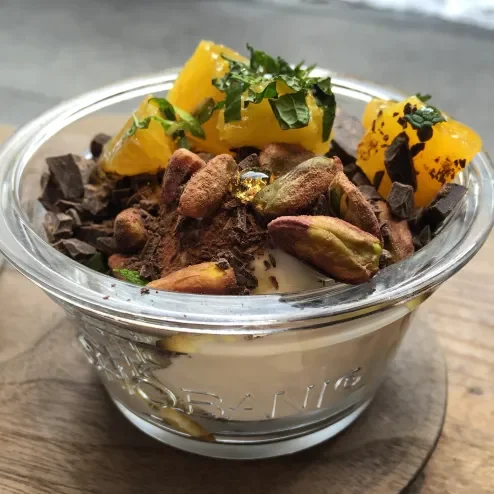
Chobani, Pistachio-Orange-Chocolate
If you’ve got a sweet tooth like me, a morning in SoHo starts with the key decision of where to stop for a bite. Dominique Ansel Bakery on Spring Street is where the cronut was invented, but the rest of the menu is consistently inventive and worth the queue. The Chobani flagship on Prince Street is quieter and offers a lighter start to your morning: Greek yogurt with great combinations - from my personal favorite pistachio, orange, and chocolate to savory combinations, or PB&J. Jack's Wife Freda on Lafayette is my preference for a proper sit-down breakfast, warm, unpretentious, the kind of place that still feels like a neighborhood restaurant even when the neighborhood has mostly become a mall. Nomo Kitchen, inside the Nomo SoHo hotel on Crosby Street, is worth knowing for a more relaxed brunch without the usual hotel restaurant stiffness.
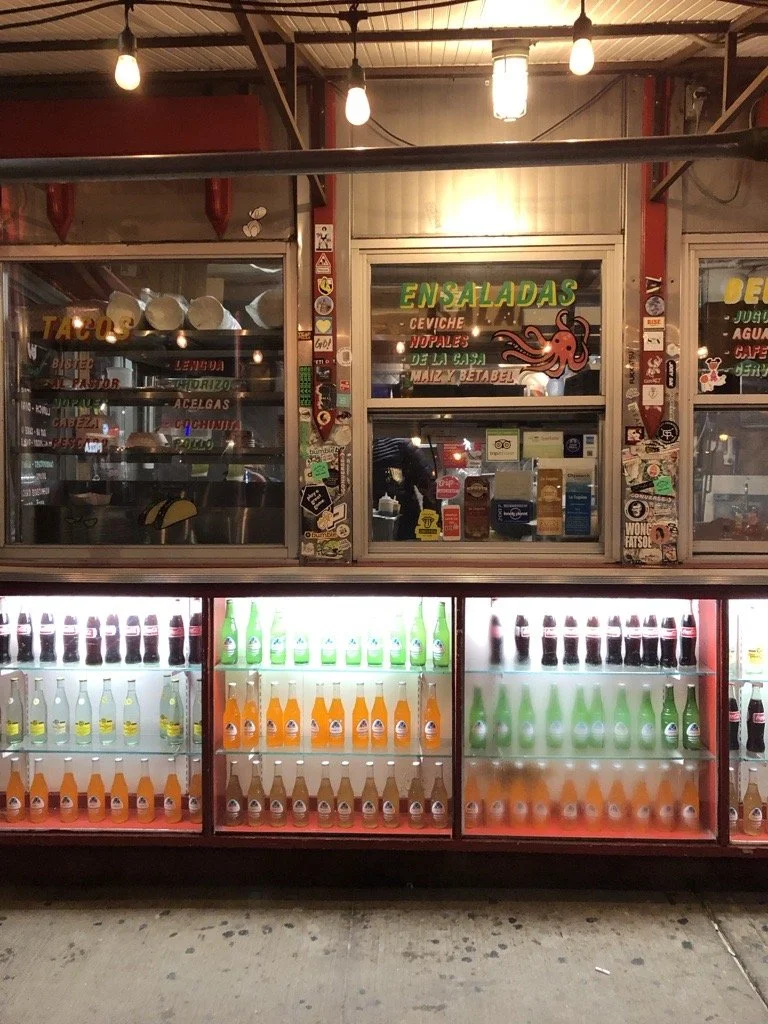
For dinner, La Esquina retains its appeal: a taqueria above ground, a hidden basement with a Mexican restaurant below, accessed through an unmarked door that has somehow remained an open secret for years. Some places do last. Balthazar on Spring Street is the classic, a French brasserie open since 1997, still full every night, still delivering, the kind of institution SoHo keeps trying to reproduce but still hasn't managed to. Piccola Cucina Estiatorio was for a long time my favorite Italian restaurant in the neighborhood: Sicilian-inspired, warm, the kind of room where you forget you're in Manhattan and feel briefly, comfortably elsewhere. Something shifted post-COVID; the energy changed in a way I couldn't quite name when I went back, but the pasta still holds.
Felix, on the corner of West Broadway and Grand Street, is one of SoHo's most reliable pleasures and one of its stranger ones. A French bistro with good steak frites and a strong wine list, French doors flung open in summer for the best people-watching corner in the neighborhood, and then on weekend evenings the chairs get stacked in the corner, and reggaeton fills the room, the bar crowds in, and the city's Latin energy takes over the space. It has been doing this for over thirty-five years. It is completely absurd and completely SoHo: refusing to be just one thing, layering identities that shouldn't coexist and somehow do.
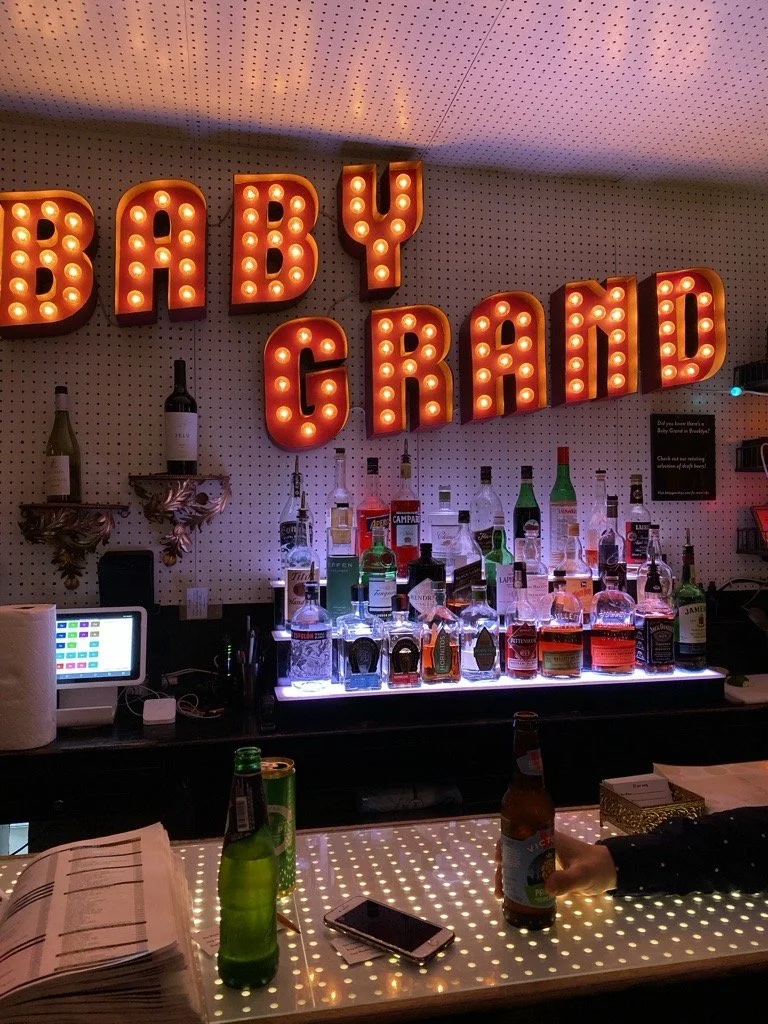
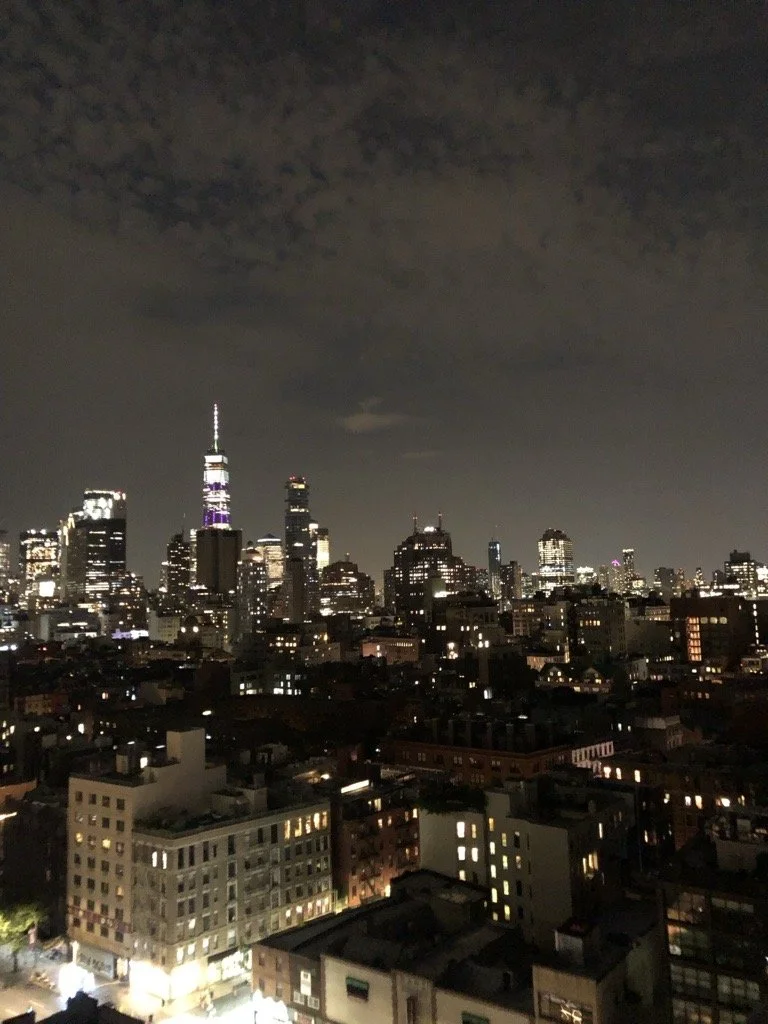
For a drink with a view, the Jimmy rooftop at the James Hotel on Thompson Street offers one of the better downtown perspectives on the Manhattan skyline, particularly at sunset. Not far is also the PUBLIC rooftop, usually busier than the former but always a great view and drink. And for an evening that goes somewhere unexpected, 161 Lafayette, which most people still call by its former name Baby Grand, is my favorite karaoke bar in the world and one of my favorite places in Manhattan. What makes it different from the usual karaoke circuit is its crowd: locals, regulars, people who can actually sing. The bartenders perform between pours. You start to recognize faces after a few visits. It is, in the middle of one of the most commercial neighborhoods in the city, something genuinely intimate: a room where people show up for the pleasure of it, not the spectacle.
SoHo will keep changing. The cast iron will stay; the contents will most likely not. But the tension between what the neighborhood looks like and what it still contains, the galleries behind the storefronts, the cobblestones under the delivery trucks, the karaoke bar around the corner from the luxury flagships, is what makes it worth more than a single afternoon of shopping. You have to want to find the depth. It is there.
See
Cast Iron District: Greene, Broome, Mercer Streets
The Drawing Center, 35 Wooster St
Donald Judd Foundation / 101 Spring Street, by appointment
Leslie-Lohman Museum, 26 Wooster St
CIMA, 421 Broome St
Shop
Pearl River Mart, 452 Broadway
MoMA Design Store, 81 Spring St
What Goes Around Comes Around, 351 West Broadway
Lululemon, 481 Broadway
Eat & Drink
Dominique Ansel Bakery, 189 Spring St
Chobani, 152 Prince St
Jack's Wife Freda, 224 Lafayette St
Nomo Kitchen, 9 Crosby St
La Esquina, 114 Kenmare St
Balthazar, 80 Spring St
Piccola Cucina Estiatorio, 184 Spring St
Felix, 340 West Broadway
Jimmy Rooftop, James Hotel, 15 Thompson St
161 Lafayette (Baby Grand), 161 Lafayette St